

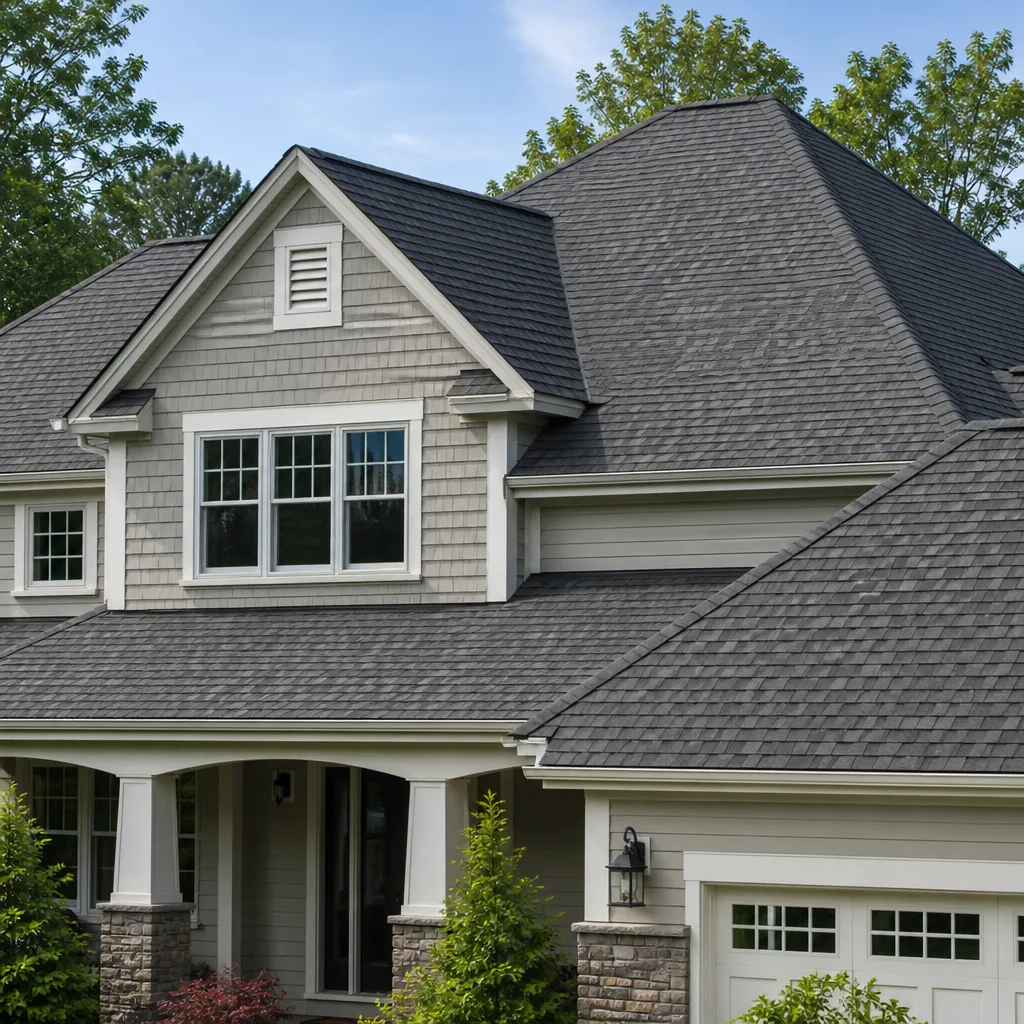
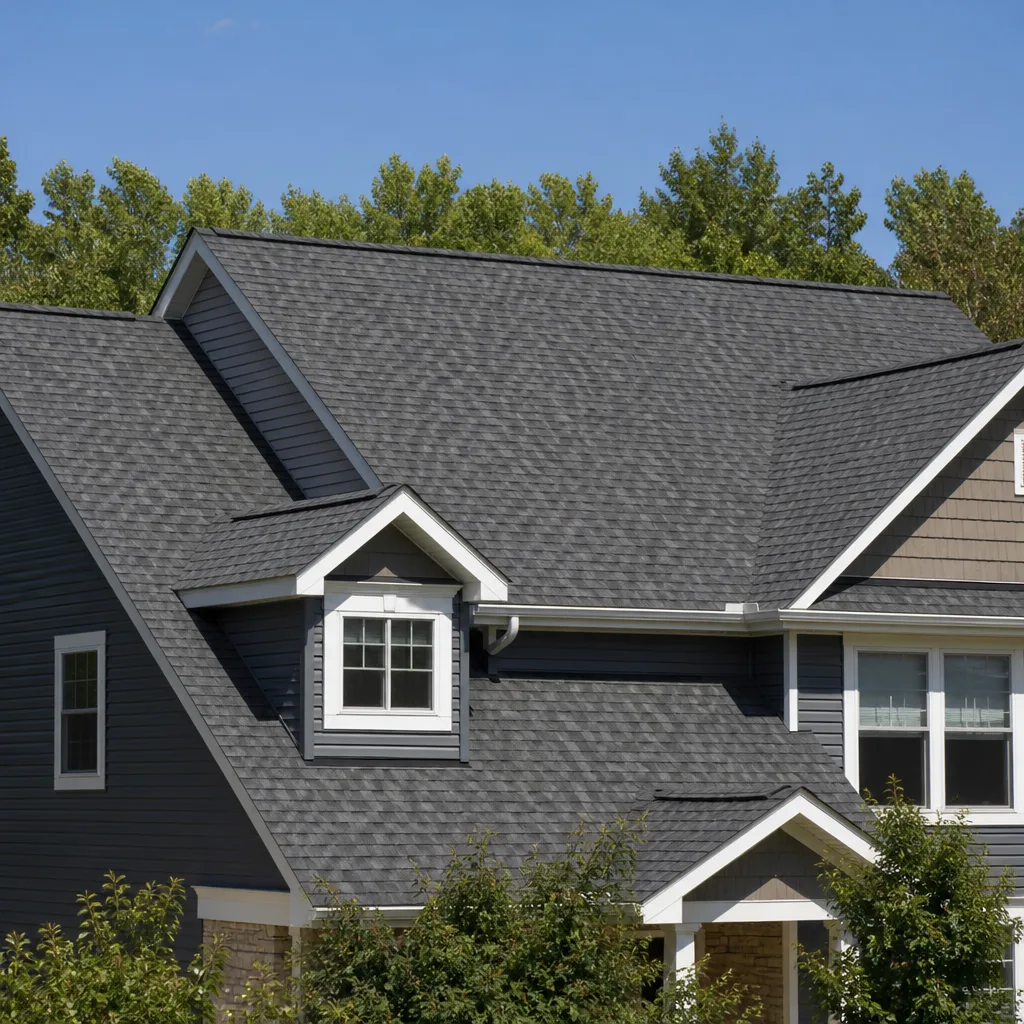
 Architectural shingles
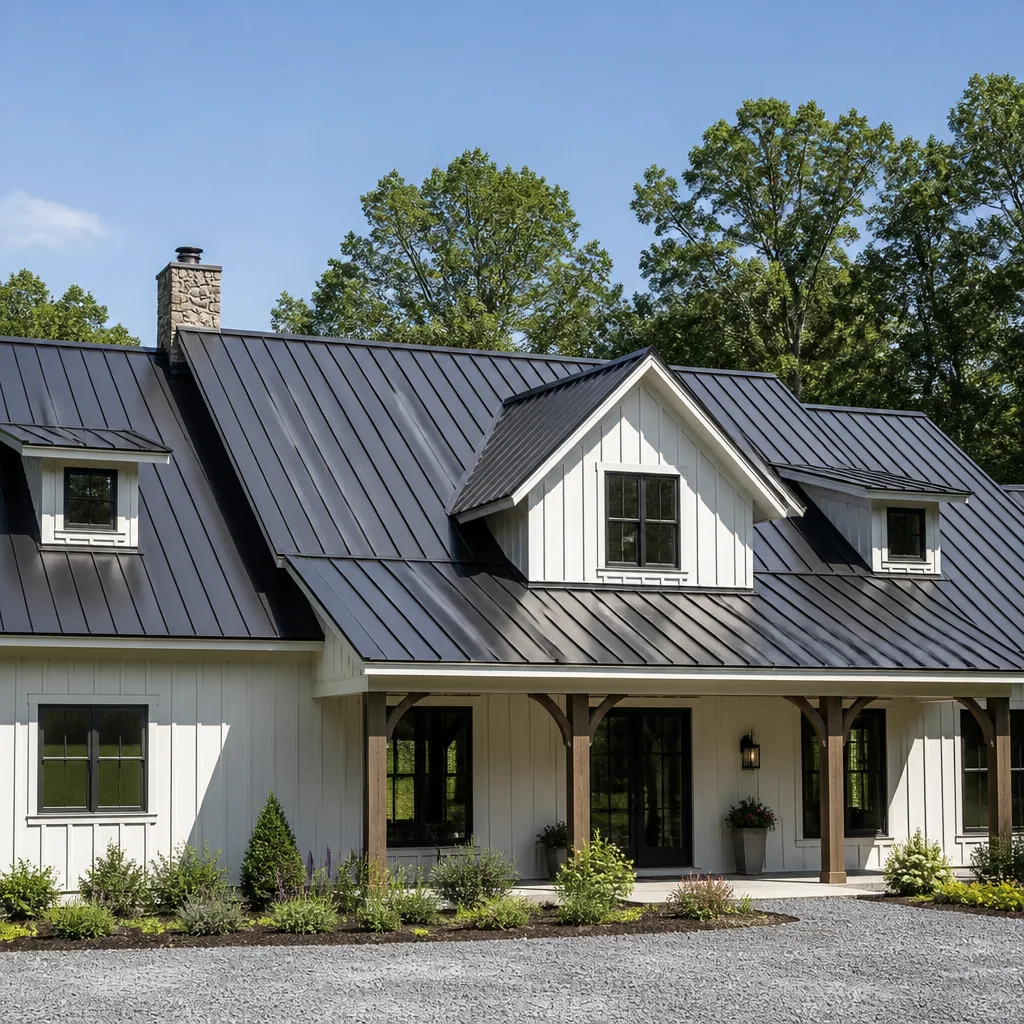 Metal roofing
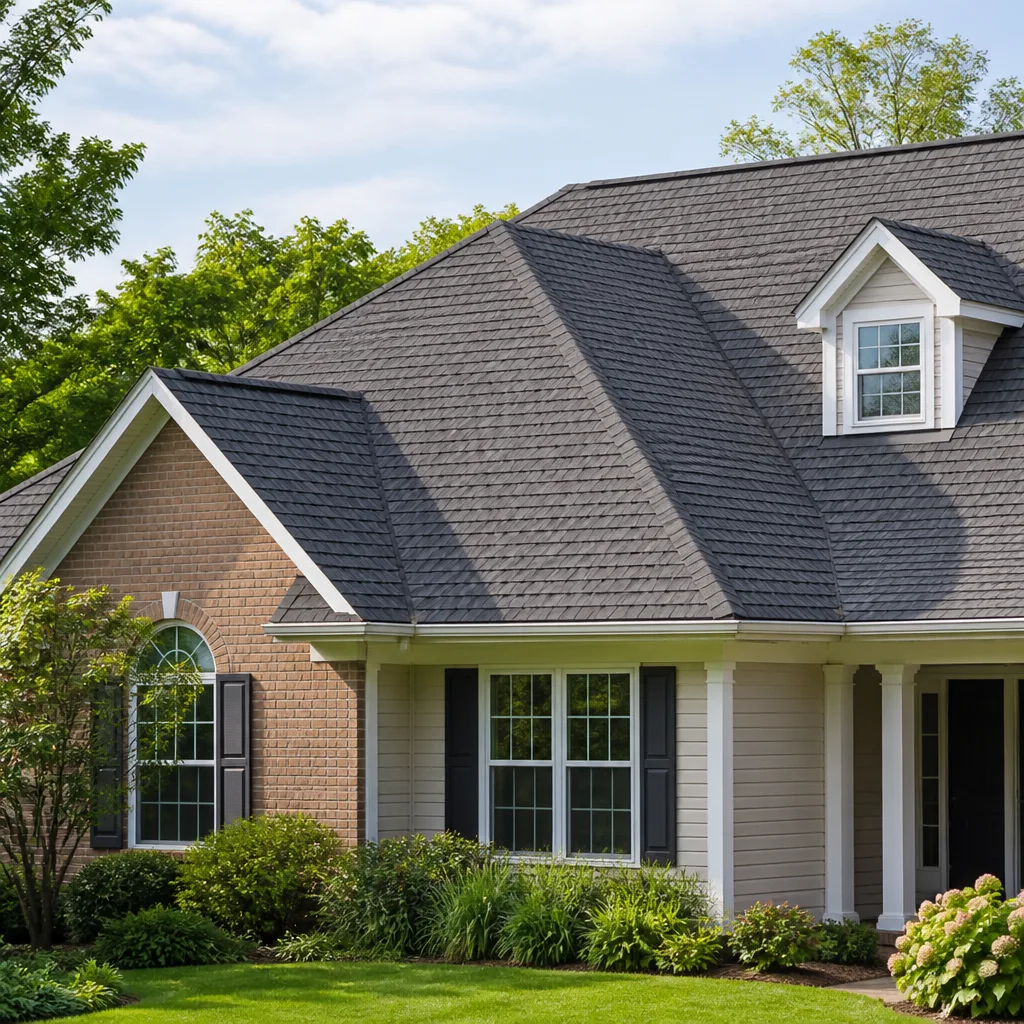
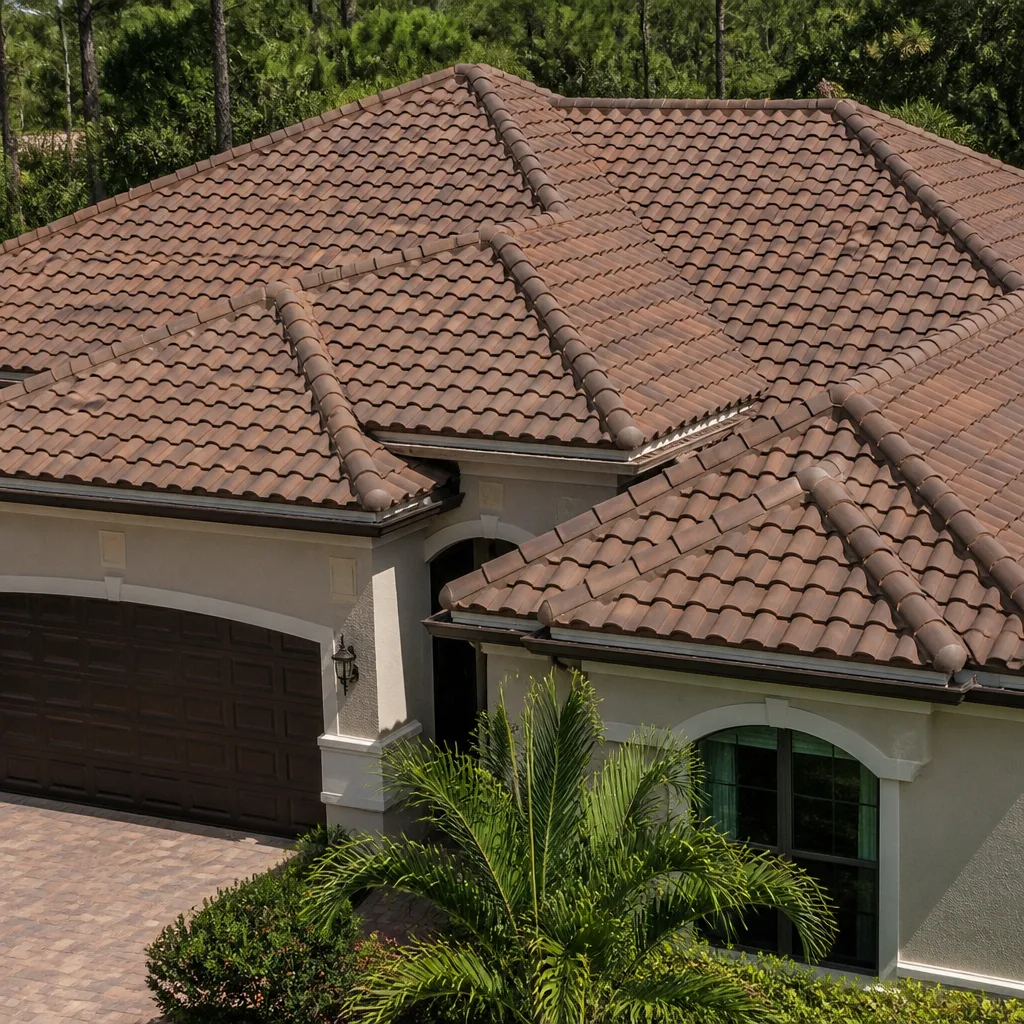 Tile roofing
 GAF
 Owens Corning
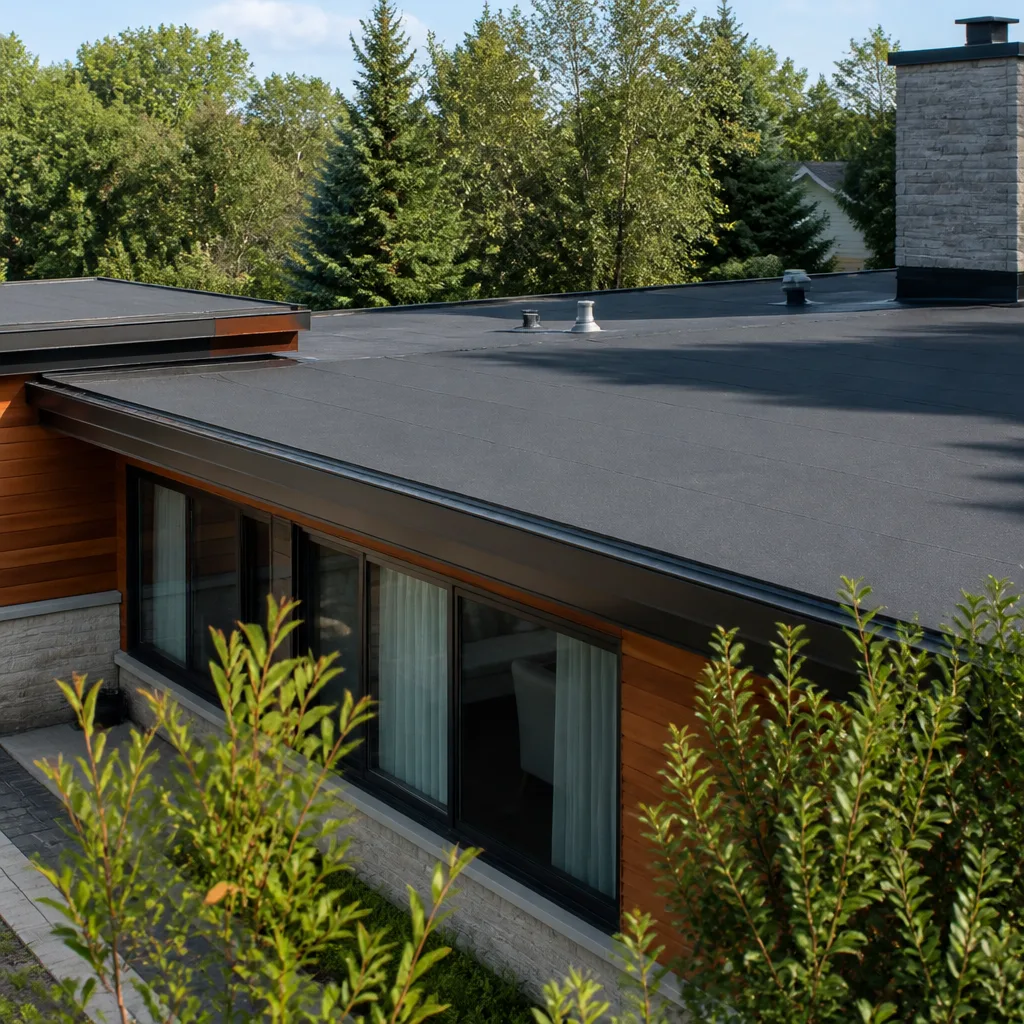 Flat & low-slope
Free roof inspection with deck photos before we talk money - GAF and Owens Corning certified installation
Fast, Reliable Roof Replacement Across March Air Force Base
Roof replacement in March Air Force Base usually runs $8,500 to $16,000 for a standard asphalt shingle tear-off on a mid-century base-era home, with flat or low-slope roofs landing between $12,000 and $22,000 because of added membrane and edge-detail work. We operate across ZIP 92551 every week, and we schedule around military life, not against it. If you’re staring down a PCS move or a deployment window and need a roof that passes inspection the first time, call Ridgeway Roof Repair at (877) 588-7942.
This is not a normal suburban roofing market. Base-era homes from the 1950s through the 1970s, privatized military housing with its own inspection standards, and tight move-out windows all shape how a roof gets replaced here. Most of these roofs have been patched before, and cheap patches on sun-baked, Santa Ana wind-exposed flat and low-slope sections fail at flashings and penetrations first. We know what we’re going to find because we work this specific housing stock constantly.
Why Ridgeway Roof Repair Is March Air Force Base’s Preferred Roof Replacement Company
We only do roofing. That’s the core of it. Ridgeway Roof Repair is not a general contractor splitting attention across plumbing, siding, or handyman calls. Every technician we send to a March Air Force Base job is there to inspect, repair, or replace a roof, nothing else. Roland Cifuentes built the company around that single-trade focus because the problems on base-era and military-managed housing are specific enough that a generalist misses them.
The seven-brand material access matters here more than in a typical suburb. We install GAF, CertainTeed, Owens Corning, IKO, Atlas, Tamko, and Boral, and we pick based on what your roof actually needs in this climate. A low-slope section that gets hammered by Inland Empire UV and Santa Ana wind wants different material than a steep gable that mostly catches heat. When a March Air Force Base homeowner asks us which brand to use, the answer is never “the one we happen to stock.” It’s the one that fits the structure and the inspection standard you have to satisfy.
We’ve worked enough jobs near the base to know that scheduling is the silent factor that wrecks roof projects here. Deployment dates shift, PCS windows compress, and a roofer who treats your job like a normal suburban calendar is going to fail you. Our team stages tear-off and dry-in in compressed blocks when the job demands it. We plan the material order, the dumpster, the crew, and the inspection sequence so a tight window doesn’t force a rushed, sloppy cover-up.
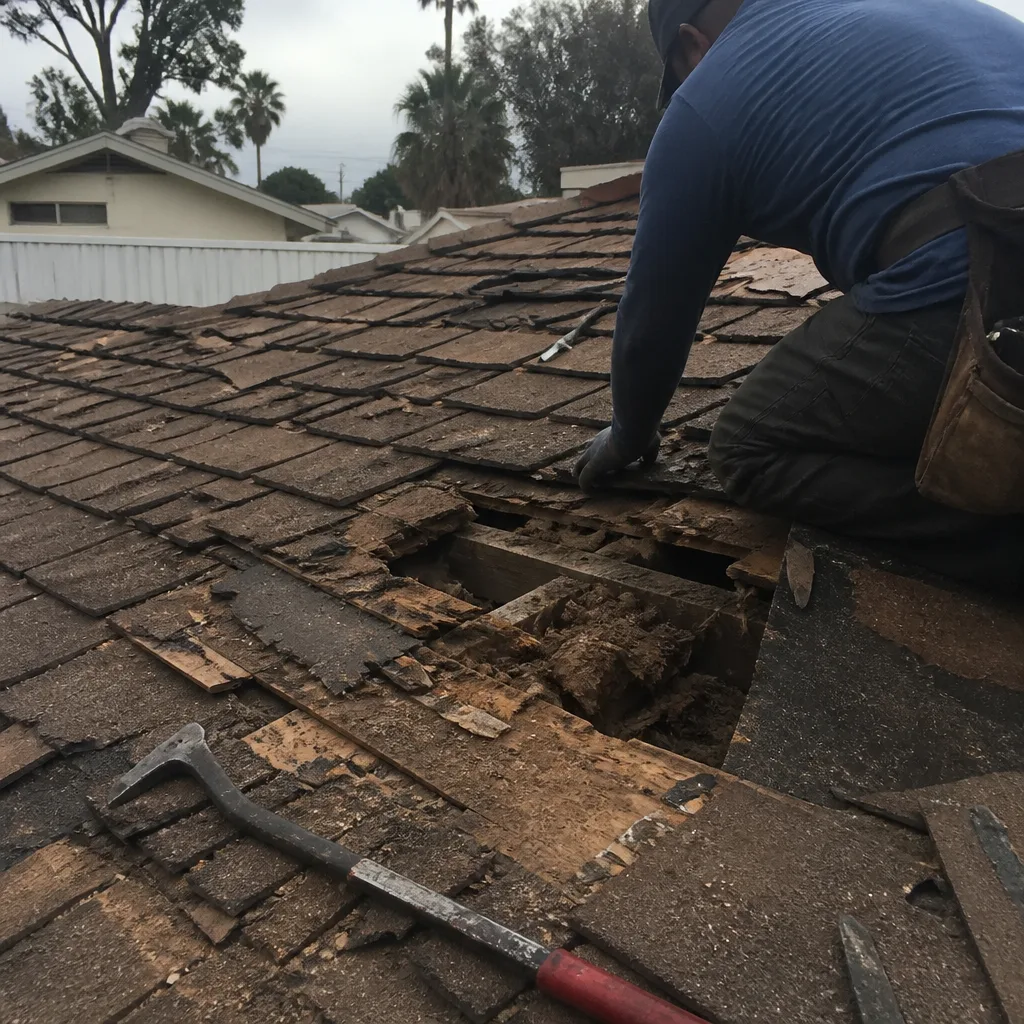
One of our field notes from a 1960s base-era home near March ARB should tell you how this works. We opened the old low-slope roof and found failed underlayment, rusted-out flashing at every penetration, and decking soft enough that our crew sistered framing before any new cover went down. Because the homeowner had a PCS window, we staged the tear-off and dry-in in one compressed block, added ice and water shield plus new drip edge, and had the surprise framing repairs priced and approved in writing before we laid a single architectural shingle. That is the standard, not the exception, on this housing stock.
Key takeaways for March Air Force Base homeowners:
- Roofing-only contractor: inspections, repairs, and full replacement handled by one specialized team, not handed off.
- Free estimates with line-item pricing so you know exactly what you’re approving before anyone touches the roof.
- Written change-order process for any hidden framing or decking work discovered after tear-off.
- Familiarity with military housing inspection standards and privatized housing authority requirements in ZIP 92551.
Styles & brands we work with
New Roof Installation in March Air Force Base
New roof installation in March Air Force Base means a full tear-off down to the decking, replacement of damaged or rotted sheathing, new underlayment, new flashing at every penetration, and a complete cover install, all finished to the inspection standard your home requires. We see this most often on mid-century houses where the original roof has been overlaid once or twice and the decking underneath has reached the end of its life. It also comes up on rental turnarounds where a privatized housing authority or a property manager needs the roof certified before a new tenant or owner takes possession.
A full new roof installation on a standard asphalt shingle home in ZIP 92551 typically runs $8,500 to $14,000. If the home has a low-slope or flat section that needs membrane work, that adds $3,000 to $8,000 depending on square footage and the condition of the parapet walls and edge flashing. The big variable here is what we find when the old roof comes off. That’s why we inspect first and write allowances into the contract.
Base-Era Decking and Framing Reality
Houses built in the 1950s through the 1970s near the base often have 1x plank decking or thin plywood that has dried out and warped after sixty-plus years of Inland Empire heat. When we sister framing or replace decking, that gets priced and approved in writing before we proceed. No change orders that surprise you at the end. No re-quoting mid-job. You’ll know the number and the scope before we touch it.
Inspection-Ready Installations
Privatized military housing and base-managed properties can reject a finished roof over missing code upgrades like drip edge, starter strip, or ridge vent. We build those in as standard on every new roof installation in March Air Force Base. You should not be the one who discovers in the final walkthrough that a drip edge was skipped to save an hour of labor. We install it because the housing authority will check, and because it’s the right way to build a roof in a wind-exposed climate.
Reroofing in March Air Force Base
Reroofing in March Air Force Base means removing the existing roof cover and replacing it with a new cover, often without a complete tear-off down to the decking when the decking is still sound. This comes up on newer tract homes in ZIP 92551, on military housing units that have been maintained on a schedule, and on homes where the shingle layer is aging out but the structure underneath is in acceptable shape. It is a faster, less expensive path than a full tear-off, but it only works when the decking and existing underlayment are healthy enough to carry the new roof.

A reroof on an asphalt shingle home in March Air Force Base generally runs $6,500 to $11,000. If the home has a low-slope or flat section, expect $9,000 to $16,000 because membrane roofing requires different materials and more methodical detailing at transitions and edges. The honest caveat: on base-era low-slope structures, we frequently open the surface expecting a reroof and find underlayment failure or decking rot that turns the job into a full replacement. That is not upselling. It’s what the structure tells us once it’s exposed.
When Reroofing Makes Sense Here
If the decking is solid, the existing roof is a single layer, and the main issue is surface wear from UV and wind, a reroof gets you a new cover for a lower number and a shorter schedule. For a family shipping out on a PCS move, that schedule compression can be the deciding factor. We’ll tell you if reroofing is a sound option or a shortcut you’d regret in three years. Inspection first, recommendation after, never the reverse.
The Flat and Low-Slope Factor
Flat and low-slope roofs on 1950s-1970s base-era structures deteriorate differently than pitched shingle roofs. Water ponds, UV cooks membrane surfaces, and Santa Ana winds pull at edges and penetrations. A reroof on these sections needs reinforced seam details, proper drip edge, and penetrations flashed in a way that holds up to this exact climate. Generic suburban roofers often treat a low-slope section like an afterthought. We build it as a system.
Trusted Brands We Service in March Air Force Base
We install and service GAF, CertainTeed, Owens Corning, IKO, Atlas, Tamko, and Boral, and we maintain stock of the fast-moving components for the March Air Force Base market: drip edge, starter strip, ridge vent, ice and water shield, and underlayment rated for Inland Empire heat. That means when a job turns up hidden decking rot and the window shortens, we aren’t waiting on a supply run that eats your PCS schedule. If you’re looking at architectural shingles for a 1960s ranch near the base, we might recommend Atlas or CertainTeed based on wind-uplift performance. If you’re reroofing a low-slope section, Boral tile underlayment and edge detailing might be the better call. Seven brands, one recommendation, yours.
See the difference
 Before
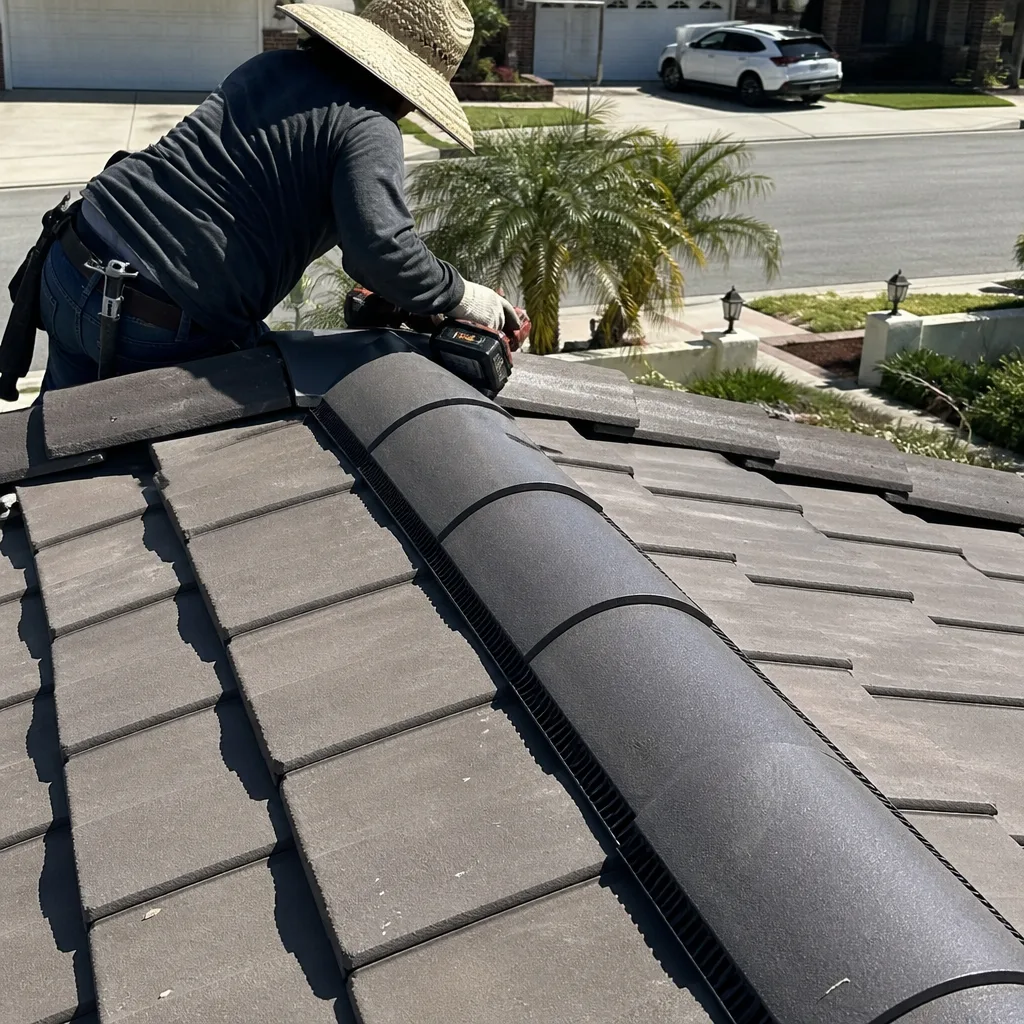 After
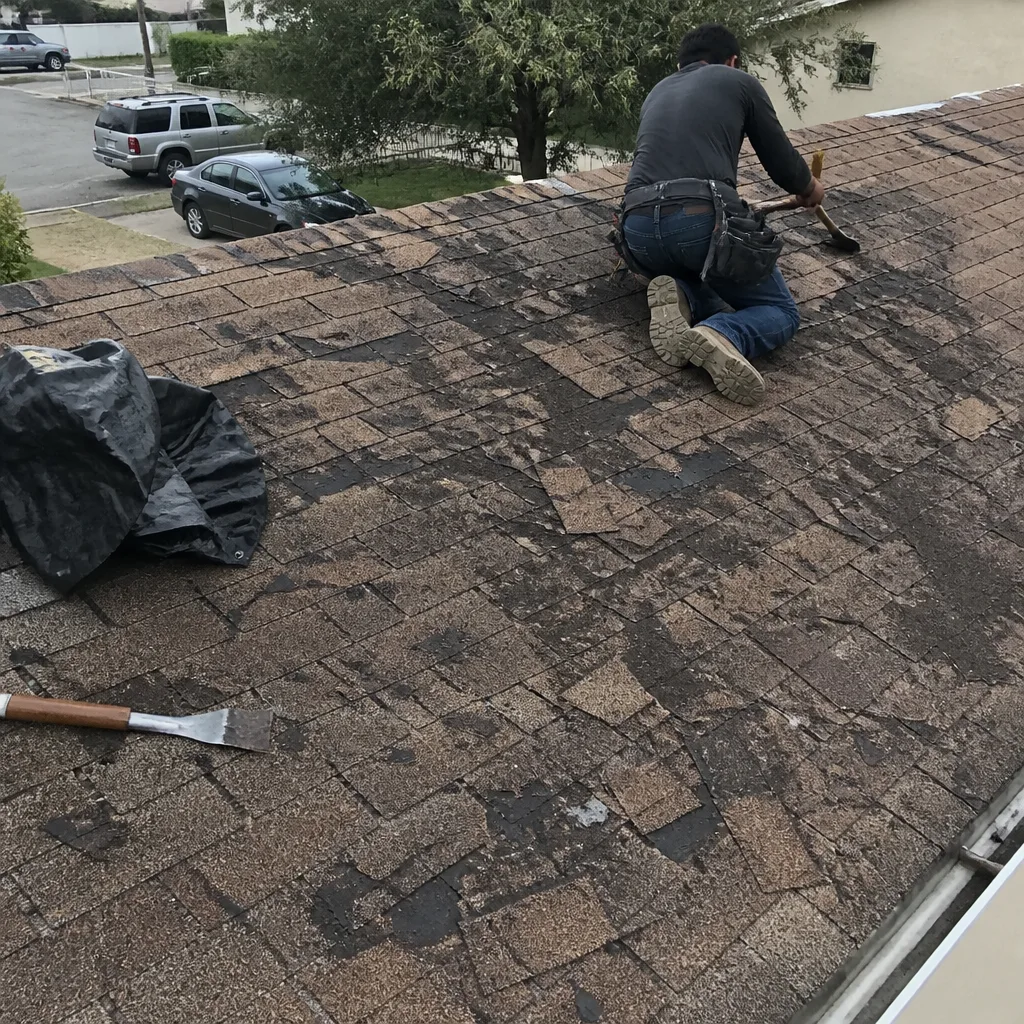 Before
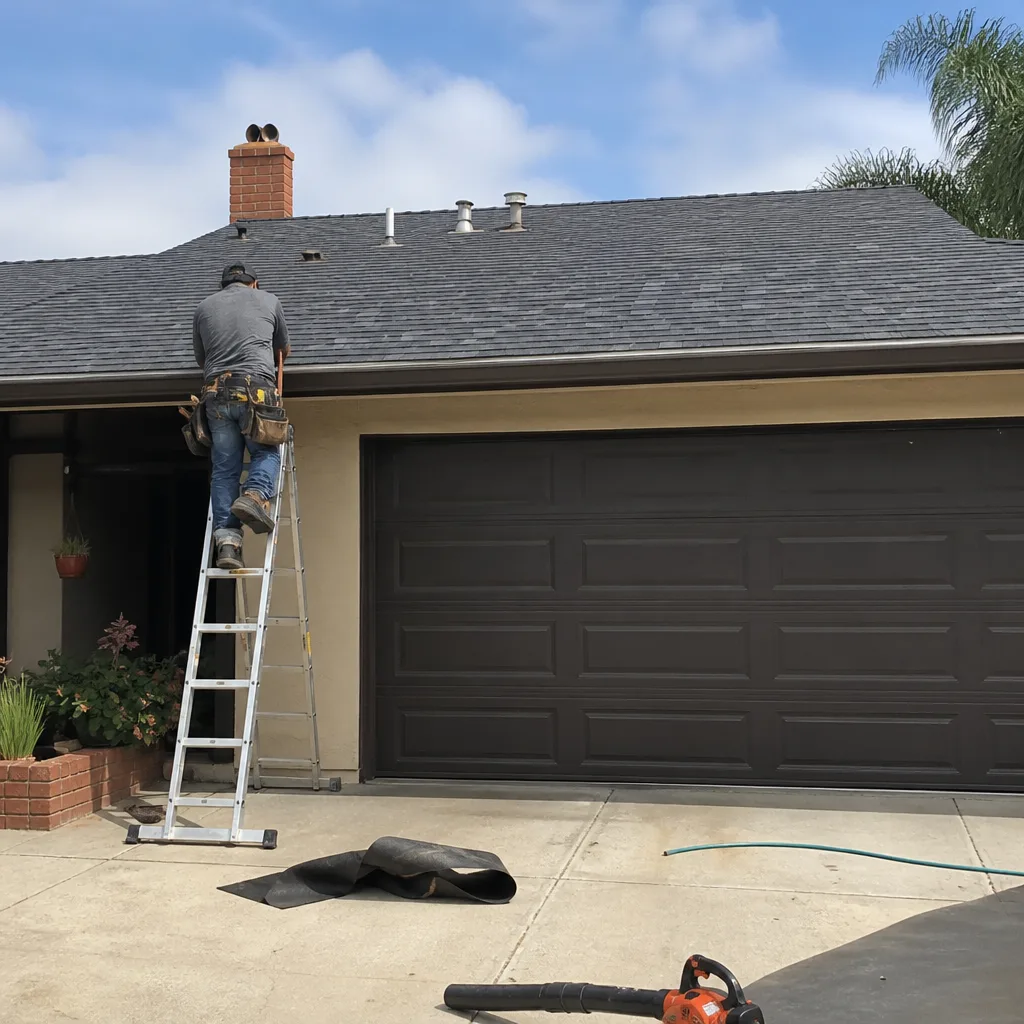 After
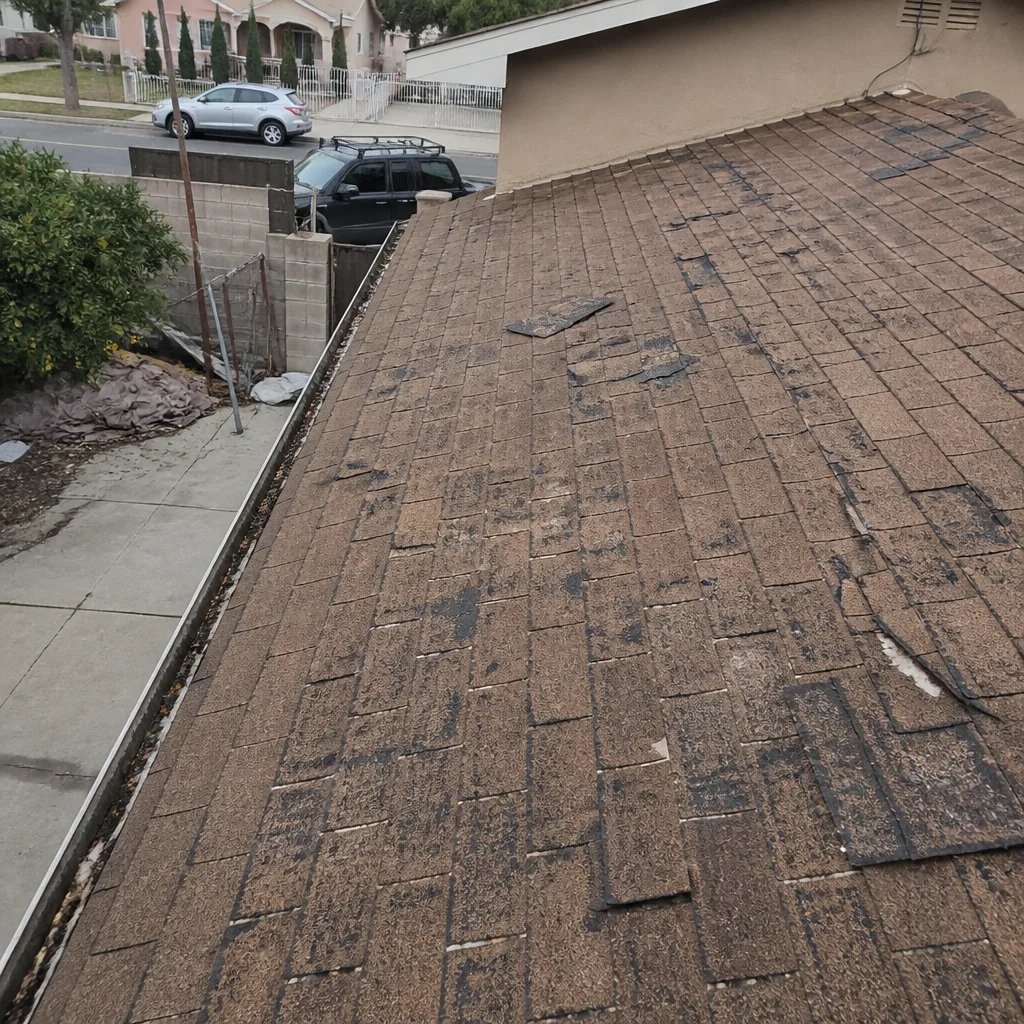 Before
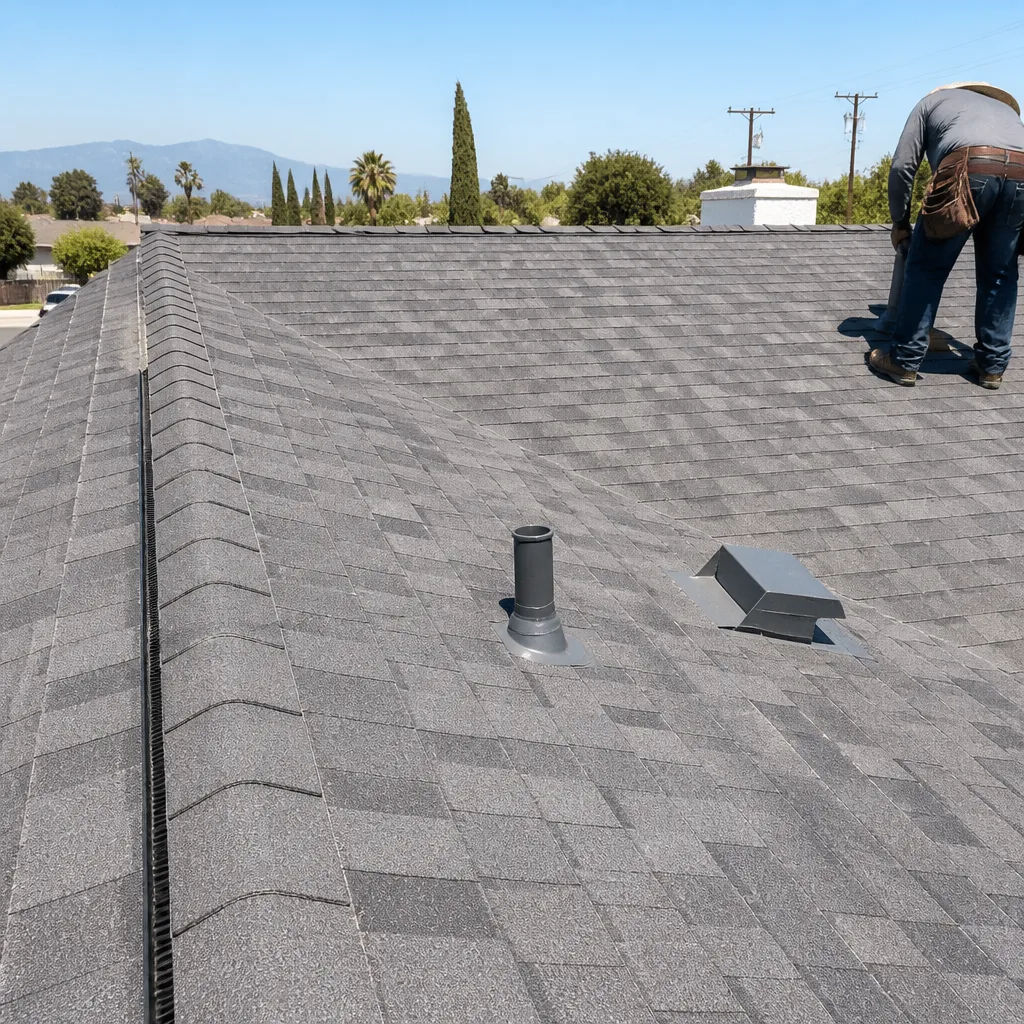 After
Common Roof Replacement Problems We See in March Air Force Base Homes
- Hidden decking rot under aging low-slope roofs. Compressed PCS or deployment windows push tear-offs to move fast, and on 1950s-1970s base-era homes, the decking under a low-slope section is often far worse than the surface suggests. Sistering framing and replacing sheathing mid-job is routine here, and it gets priced and approved in writing.
- Failed underlayment that the old shingles were hiding. Six decades of heat and intermittent wind cycles breaks underlayment down into brittle, cracked paper that no longer holds water. We find this on nearly every base-era full tear-off, and it’s the first thing we replace before any new cover goes down.
- Rusted-out flashing at penetrations. Plumbing vents, chimney bases, and exhaust stacks on older military-adjacent housing collect decades of thermal cycling. The flashing corrodes, water follows the gap, and the leak shows up far from the actual failure. Proper replacement flashing at every single penetration is non-negotiable.
- Missing or failed drip edge and edge detailing. Santa Ana wind events and fire-season ember exposure punish roof edges on this parcel more than most people expect. Homes without proper drip edge, or with rusted old edge metal, start failing at the rakes and eaves first. Military housing inspectors here check for exactly this because it is a known failure mode.
Pricing for Roof Replacement in March Air Force Base, CA
A standard asphalt shingle tear-off and replacement on a mid-century tract home in March Air Force Base runs $8,500 to $16,000. Full new roof installation with decking replacement and framing repairs when needed lands between $12,000 and $22,000. Reroofing over a sound deck starts around $6,500. Flat and low-slope sections add $3,000 to $8,000 depending on square footage and the condition of edge flashing and parapet walls. What moves your number is what we find when the old roof comes off: decking rot, failed underlayment, rusted flashing, and any code upgrades a permit triggers once the structure is exposed. Our fixed-price estimates include written allowances for those discoveries, and any change gets priced and approved before work continues. Call (877) 588-7942 to schedule a free estimate, and you’ll get a line-item scope you can actually read.
We Also Serve Cities Near March Air Force Base
Ridgeway Roof Repair handles full roof replacements across Riverside County, not just inside ZIP 92551. We work regularly in March Air Force Base, and our Roof Replacement team also covers Moreno Valley, Woodcrest, Riverside, and Colton. The same inspection-first process and written-allowance pricing applies everywhere we work. If you’re just outside base boundaries, you’re still in our service area.
Serving March Air Force Base, CA — Our Local Coverage Area
We’re based in the March Air Force Base area and know this community well. Use the map below to see our service coverage — if you’re nearby, we can almost certainly help.
FAQs About Roof Replacement in March Air Force Base
Yes, if the property is part of privatized military housing or under base housing authority management, the finished roof typically has to pass a housing inspection with specific standards for drip edge, starter strip, ridge vent, and edge detailing. We build those code items into every quote for March Air Force Base jobs so the roof clears inspection on the first pass.
On 1950s-1970s base-era homes, we most often find decking rot under low-slope sections, failed underlayment that has dried out and cracked, rusted-out flashing at every penetration, and missing or failed drip edge. These are not rare exceptions on this housing stock; they’re what we expect. We write allowances into the contract for exactly these discoveries and get written approval before repairing them.
Yes. We stage tear-off and dry-in in compressed blocks, pre-order materials and dumpster placement, and schedule crew coverage so the roof gets buttoned up before the move-out date. On one 1960s home near March ARB, we handled surprise framing repairs, new ice and water shield, and a full architectural shingle install within a tight PCS window because the scope was planned for surprises from day one.
Ask whether the quote includes written allowances for decking replacement, framing repair, underlayment replacement, and code-triggered upgrades like drip edge and ridge vent. Also ask whether the contractor is familiar with military housing inspection standards for privatized properties. If the quote is a single line item with no allowance structure, you’re pricing a surprise, not a roof.
Yes, on many March Air Force Base-area homes, opening the roof triggers upgrades like drip edge, starter strip, ridge vent, and sometimes improved nailing patterns that were not required when the house was built. We factor those into the quote up front, so the permit does not become a mid-job discovery. Call (877) 588-7942 for an exact quote, and we’ll walk you through what your specific home will need before work starts.
Written by Roland Cifuentes, Owner at Ridgeway Roof Repair, serving March Air Force Base and the surrounding Riverside County area.