Last updated October 31, 2026
 Metal roofing
 Architectural shingles
 Tile roofing
 GAF
 Owens Corning
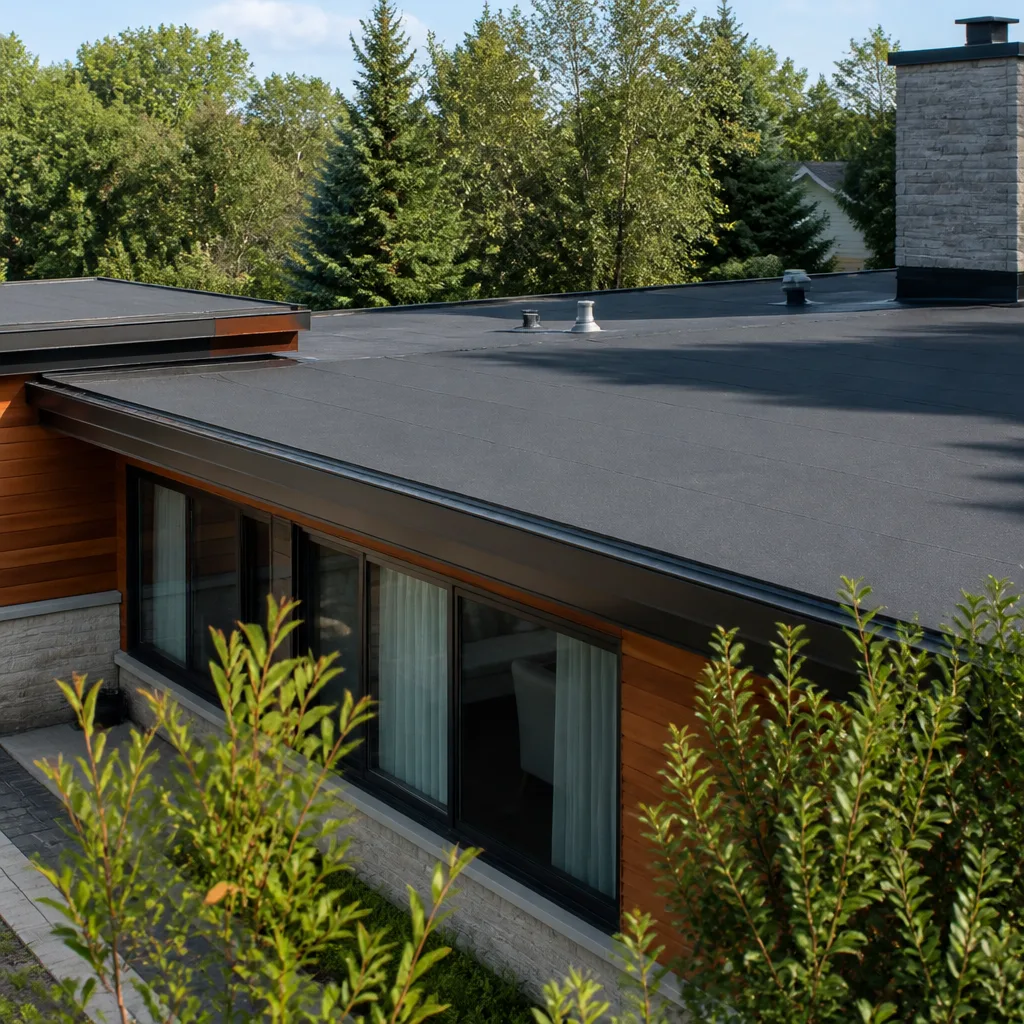 Flat & low-slope
Free roof inspection with deck photos before we talk money - GAF and Owens Corning certified installation
Roofing Emergency Preparedness Guide for Rialto Homes
When a Santa Ana wind event tears shingles off a Rialto roof in October, most homeowners do the same thing: they panic, call their insurance company immediately, and then scramble for a tarp. That sequence is backwards, and it costs Rialto residents thousands of dollars every single year. Filing an insurance claim before you have contractor documentation of the damage is one of the most common post-storm mistakes homeowners make in this city, and it puts the adjuster’s assessment ahead of yours permanently. This guide walks through the exact sequence of actions that protects your claim, your roof, and your home, whether you’re facing a sudden storm breach or the slow, cumulative damage that Rialto’s wind season leaves behind. For Roofing Warning Signs: A Rialto Homeowner’s Reference Guide, see our companion resource.
Styles & brands we work with
Quick Answer
If your roof is actively leaking in Rialto, document the damage with photos and video first, then apply emergency tarping to stop water intrusion, then call a roofing contractor for a documented inspection, and only then contact your insurance company. For Santa Ana wind damage without active leaks, schedule a professional roof inspection before filing any claim, since wind damage is often not visible from the ground and undocumented claims get denied. The goal in the first 24 hours is to create a paper trail that puts your contractor’s findings ahead of the adjuster’s assumptions.
Table of Contents
- The First Six Hours: A Step-by-Step Response
- Santa Ana Wind Damage vs. Storm Breach: Two Different Emergencies
- Emergency Tarping Done Right (Without Voiding Your Claim)
- What Temporary Mitigation Actually Covers Under Your Policy
- How Santa Ana Wind Events Affect Your Claim
- The October Pre-Storm Checklist for Rialto Roofs
- Common Mistakes to Avoid
- When to Call a Professional
- Frequently Asked Questions
- The Bottom Line
The First Six Hours: A Step-by-Step Response
What you do in the first six hours after roof damage determines whether your insurance claim succeeds, whether your repair costs stay contained, and whether your home avoids secondary water damage. The sequence matters more than the speed. Here is the exact order we recommend to homeowners in Rialto, based on what we’ve seen work and what we’ve seen fail.
- Stop the active leak from inside. Place buckets or bins under active drips. Move furniture, electronics, and anything absorbent away from the wet area. If water is pooling in a ceiling, poke a small hole at the lowest point of the bulge with a screwdriver to let the water drain into a bucket rather than spreading through the drywall and collapsing the ceiling.
- Document everything with your phone. Photograph the interior water damage first, then go outside and photograph the roof area from every angle you can safely reach. Take wide shots that show the full roof plane and close-ups of missing shingles, lifted flashing, or exposed underlayment. Video is better than photos for showing the extent of wind-blown debris patterns across the roof.
- Contains the water from above only if it is safe to do so. If you can access the damaged area from a ladder without stepping onto a wet or steep roof surface, a temporary tarp is appropriate. If the damage is on a second-story roof plane, a steep pitch, or near power lines, do not attempt this yourself. In Rialto, where many homes built in the 1980s and 1990s have tile roofs on 5/12 or steeper pitches, we see homeowners get seriously hurt trying to tarp their own roofs every wind season.
- Call a roofing contractor for a documented inspection. This call should happen before you call your insurance company. A professional roof inspection produces dated, written findings with photos that establish what the wind or storm actually did to your roof. That document becomes your evidence base when you file.
- Call your insurance company. Once you have contractor documentation in hand, file your claim. You can now describe the damage precisely, reference the inspection findings, and direct the adjuster to what your contractor found.
- Schedule the permanent repair. If the damage is limited, a roof repair may be all you need. If the roof is older or the damage is widespread, this is the moment to evaluate roof replacement options while the claim is open and the scope is clear.
The temptation is to call your insurer first because it feels like the responsible thing to do. But an adjuster’s job is to assess damage against policy language, and without independent documentation, the adjuster’s assessment becomes the baseline. Once that baseline is set low, it is hard to negotiate upward.
Santa Ana Wind Damage vs. Storm Breach: Two Different Emergencies
Rialto sits in a wind corridor that sees sustained Santa Ana conditions every fall, typically from late September through November, with gusts that regularly reach 40 to 60 mph and occasionally spike higher through the Cajon Pass. These events behave differently than a rain storm and demand a different response.
Santa Ana Wind Events: The Slow Emergency
Santa Ana winds come from the northeast, carrying dry desert air down through the pass and into Rialto’s residential neighborhoods. In our experience traveling across Rialto after wind events, we consistently see specific damage patterns: lifted shingle edges on the windward roof plane, displaced ridge caps, loosened tile, and debris impact punctures from tree branches. Our Seasonal Roofing Care for Rialto: Year-Round Homeowner’s Guide explains how to spot these issues before they worsen. The damage is rarely dramatic. A shingle that lifts just enough to break the adhesive seal does not leak immediately. It sits there, loosened, and fails weeks or months later during the first heavy rain of winter.
That’s the trap. Santa Ana wind damage rarely announces itself with a bucket in your hallway. It announces itself subtly, and homeowners who don’t catch it early find themselves with a flooded ceiling in January, when the damage actually happened in October. The correct response to a significant Santa Ana event is not to climb onto your roof. It’s to schedule a professional inspection that documents what the wind did, so that if a repair or replacement becomes necessary, you have an evidence trail tied to the weather event.
Storm Breach: The Acute Emergency
A storm breach is different. Rialto’s winter rains, while not as prolonged as coastal cities, arrive in bursts that can overwhelm roofs with pre-existing weaknesses. When water is actively entering your home during or immediately after a rain event, you are in the acute emergency category. The response sequence changes: containment first, documentation second, contractor call third. But the principle remains: your documentation and your contractor’s findings still need to exist before your insurance adjuster arrives.
Understanding which type of emergency you’re facing matters because it changes your timeline and your priorities. A Santa Ana event gives you a window of days to act deliberately. A storm breach gives you minutes to hours to contain. Most Rialto homeowners treat both the same, and that’s where costly mistakes happen.
Emergency Tarping Done Right (Without Voiding Your Claim)
Emergency tarping is the standard temporary mitigation measure after roof damage. Done correctly, it prevents additional water intrusion and preserves your home’s interior while you arrange permanent repairs. Done incorrectly, it creates new damage that your insurer may attribute to your own actions, not the original storm.
The principle behind proper tarping is simple: the tarp must shed water away from the damaged area without trapping moisture against the roof deck. That means the tarp needs to extend well past the damaged zone, with its upper edge secured beneath a course of intact shingles or tiles whenever possible, and its lower edge extending past the eave so runoff drains clear of the fascia.
What Correct Tarping Looks Like
- Minimum overlap of 4 feet on all sides of the damaged area. A tarp that barely covers the missing shingles will leak around the edges during the next rain event.
- Upper edge anchored under intact shingles or tiles. This creates a watershed surface. A tarp laid flat and nailed at the edges will pool water in the middle and make the problem worse.
- Secure fastening with cap nails or batten strips, not exposed nails through bare wood. Nails driven directly through the tarp into open decking create new entry points for water.
- No gaps where wind can catch the tarp edge. Santa Ana gusts will shred an improperly anchored tarp overnight, and the flapping tarp itself causes further shingle damage.
- Documented location and date. Photograph the tarp from multiple angles once installed. Your insurer needs to know the mitigation was timely and correctly placed.
When Tarping Goes Wrong
We’ve repaired roofs in Rialto where a well-intentioned homeowner tarped the wrong area entirely, or tarped a soffit vent thinking it was the leak source, or secured a tarp so tightly against wet decking that mold developed within two weeks. Emergency tarping is a stopgap measure, not a repair. It buys you time, and only time. The tarp needs to come off and the actual repair needs to happen, usually within 30 to 60 days depending on your insurer’s requirements for mitigation documentation.
A key point about insurance: most standard homeowner policies cover reasonable costs for emergency mitigation as part of the overall claim. But if your tarping causes additional damage, such as moisture buildup leading to mold in the decking, that secondary damage is often excluded. This is why we recommend having a roofing professional handle tarping whenever possible. The cost is usually covered under your claim’s mitigation allowance, and it protects you from a coverage dispute later.
What Temporary Mitigation Actually Covers Under Your Policy
Homeowner’s insurance policies in California are not interchangeable. The coverage for temporary mitigation, the deductible structure, and the claim process for wind and storm damage vary by carrier and policy type. But the basic framework is consistent enough to describe what Rialto homeowners should expect.
Standard HO-3 policies, which cover most single-family homes in Rialto, treat emergency mitigation as a covered expense under the dwelling protection portion of the claim. That means your tarping costs, the emergency inspection, and the temporary repairs necessary to prevent further damage are typically reimbursable. What many homeowners don’t realize is that these mitigation costs count against the same claim as the permanent repair. There is no separate bucket of money for “emergency stuff” that resets for the real work.
What Most Policies Cover
- Emergency tarping and board-up services. These are standard mitigation measures and are typically covered when the damage is from a covered peril.
- Temporary roof covering materials. The tarp, fasteners, and any temporary sealant used to stop active leaks.
- Water extraction and drying inside the home. If water breached the interior, interior mitigation is typically covered as part of the same claim.
- The inspection that documents the damage. Some policies cover the cost of a professional inspection as part of claim expenses.
What Many Policies Exclude or Limit
- Damage from pre-existing conditions. If your roof was already weakened by deferred maintenance, the insurer may attribute the failure to wear and tear rather than the storm event. This is the single most common reason Rialto claims get denied or underpaid, and it’s why your documentation needs to show the storm event caused the damage.
- Cosmetic damage without functional failure. If the wind creased some shingles but the roof is still watertight, many policies won’t pay for replacement. The damage exists but it’s not a covered loss until it causes a leak.
- Secondary damage from improper mitigation. If your DIY tarping causes mold or rot, that damage is on you, not the storm.
- Damage that exceeds policy limits on older roofs. Some insurers in California write ACV (Actual Cash Value) policies for roofs over 20 years old, meaning the payout is depreciated. A 25-year-old roof in Rialto might only trigger a small payout, leaving the homeowner covering most of the replacement cost.
The smart move before any emergency happens is to read your policy’s declarations page and understand your deductible, your roof’s valuation method (replacement cost vs. ACV), and whether your policy has a separate wind deductible. Rialto is not in a designated hurricane zone, but some carriers still apply separate wind and hail deductibles in high-wind corridors like the Cajon Pass inflow area. Know your numbers before the wind blows.
How Santa Ana Wind Events Affect Your Claim
Here’s a subtlety that costs Rialto homeowners real money: whether a weather event qualifies as a “named” event under your policy changes how your claim is processed, even though the physical damage is identical. Most homeowner’s policies for Southern California properties do not have named-storm exclusions the way coastal hurricane policies do. But the question of event classification still matters for two reasons.
First, if your insurer classifies a Santa Ana wind event as a general windstorm rather than a discrete named weather event, your claim falls under your standard peril coverage with your standard deductible. That’s usually good. Second, if the damage is part of a widespread event that triggers a FEMA declaration or a catastrophe designation, your insurer may process claims differently, sometimes with more flexible documentation requirements, sometimes with more scrutiny. Rialto has not historically been in FEMA disaster zones for Santa Ana events, but the windstorms of October 2007 and December 2011 both caused widespread roofing damage in the city that led to surge claim volumes for local insurers.
The practical question for homeowners is simple: does your policy classify the event as windstorm, which is a covered peril? The answer is almost always yes for Santa Ana events. What matters more than classification is proof of causation. Your claim’s success depends on demonstrating that the specific damage on your roof was caused by the specific wind event, not by gradual deterioration. That’s where contractor documentation becomes decisive.
When an adjuster walks a Rialto roof after a wind event, they’re looking for signs of age and neglect: brittle shingles, granule loss, cracked tile, rusted flashing. If the damage is on a roof that’s already near the end of its service life, the adjuster will attribute the failure to age unless you have evidence otherwise. A dated inspection report from before the wind event is the gold standard. If you don’t have a pre-event inspection, a detailed post-event inspection that identifies wind-specific damage patterns (uniform lifting along the windward plane, debris impact points, directional scuffing on tile) is your next best option.
The October Pre-Storm Checklist for Rialto Roofs
The best emergency response happens before the emergency exists. In Rialto, October is the month that matters. Rain typically arrives by November or December, and Santa Ana winds are already blowing. A roof that passes inspection in October is a roof that’s likely to survive the winter. Here’s what to check before Rialto’s rain season begins.
Exterior Checks You Can Do From the Ground
- Loose or missing shingles or tiles. Look at the roofline from the street, from your backyard, and from across the street if you can get a different angle. Shingles that curl upward at the edges are wind-vulnerable.
- Ridge cap condition. The ridge line is the first point of failure in high wind. Missing or cracked ridge caps expose the roof deck beneath.
- Flashing around chimneys, vents, and skylights. In Rialto’s mid-century and tract home neighborhoods, flashing corrosion is the most common source of slow leaks that go unnoticed until the first real rain.
- Gutter and downspout condition. Clogged gutters back water up under the roof edge, causing fascia rot and soffit damage. October in Rialto means leaf drop from the city’s mature shade trees, particularly in older neighborhoods like Las Colinas and the areas north of the 210.
- Tree limbs near the roof. Anything within 6 feet of the roof plane is a debris impact risk during Santa Ana gusts. Trim it or call an arborist before November.
Interior Checks That Reveal Roof Problems
- Attic inspection on a sunny day. Before it rains, go into the attic mid-afternoon and look for light penetration through the decking. Any pinhole of light is a future leak path.
- Water stains on ceiling drywall. New stains indicate active moisture. Old, dry stains indicate a past leak that may have already compromised the decking.
- Granule accumulation in gutters. In Rialto’s asphalt shingle neighborhoods, excessive granules in the gutters means the shingles are losing their protective surface and nearing the end of service life.
If any of these checks turn up concerns, schedule a professional roof inspection before the rain starts. A structured inspection produces a written report that documents your roof’s condition at a specific point in time. That report is worth its weight if you file a claim later, because it distinguishes pre-existing conditions from storm damage.
Common Mistakes to Avoid
- Calling your insurance company before documenting the damage. Once the adjuster’s initial assessment is in the file, it anchors all subsequent negotiation. Your photos, videos, and contractor findings need to exist first.
- Tarping without documenting the damage underneath first. Once the tarp is over the damaged area, the visual evidence is hidden. Photograph the exposed damage before covering it, every time.
- Assuming the insurance check will cover the full repair. If your policy is ACV on an older roof in Rialto, the payout may be significantly less than the replacement cost. Know your policy terms before you sign a repair contract.
- Ignoring Santa Ana wind damage because the roof isn’t leaking yet. The damage that doesn’t leak in October becomes the emergency leak in December. Wind-damaged roofs don’t heal themselves.
- Signing with the first contractor who knocks on your door after a storm. Storm chasers follow weather events. Rialto sees an influx of out-of-town contractors after major wind events, and many disappear before warranty issues surface. Work with local, established roofing companies.
- Waiting to file because you’re worried about premium increases. In California, insurers cannot raise your rates for filing a claim that wasn’t your fault, and windstorm damage is not considered an at-fault claim. Delay only reduces your odds of full coverage.
- Putting the tarp on wrong and creating mold. The tarp needs to shed water, not trap it. Improper tarping causes more damage than it prevents, and insurers won’t cover secondary mold from botched mitigation.
When to Call a Professional
Some roof issues are safe to address on your own, but many are not. Call a professional if you see active water intrusion that you cannot immediately stop, if the damage is on a steep or high roof plane where falls are a serious risk, if you suspect structural compromise from a fallen limb or debris impact, or if you simply don’t know what you’re looking at and don’t want to guess wrong with your insurance claim on the line.
Ridgeway Roof Repair offers free estimates in Rialto. If you’ve sustained wind or storm damage, call (877) 588-7942 for a documented inspection before you file your claim. We only do roofing, so the assessment you get is a roof assessment, not a general contractor’s upsell.
Frequently Asked Questions
First, document the damage with photos and video from the ground and from inside your home, then contain any active leaks with buckets and tarps if it’s safe to do so, then call a roofing contractor for a written inspection. Contact your insurance company only after you have documentation in hand. The sequence matters because your documentation establishes the baseline for the claim.
Emergency tarping and temporary mitigation in Rialto typically runs between $250 and $600 depending on the size of the damaged area and roof accessibility. The cost of permanent repair or replacement depends entirely on the scope of damage and your roof’s material. Call (877) 588-7942 for an exact quote, estimates are free.
Most standard homeowner policies cover windstorm damage as a named peril, which includes Santa Ana events. The key variable is whether your insurer attributes the damage to the wind event or to pre-existing wear and tear. Having a dated contractor inspection that documents wind-specific damage patterns is the strongest evidence you can provide.
California law requires insurers to provide a minimum of one year from the date of loss, but most policies allow 12 to 24 months depending on the carrier. File within the first 30 days if possible. Delays allow the insurer to argue that additional damage occurred after the event and that the loss scope is no longer verifiable.
You can, but it’s risky, both physically and financially. On a single-story, low-slope roof where you can safely work from a ladder without stepping onto the damaged area, DIY tarping is reasonable in a pinch. On steeper roofs, tile roofs, or any situation where you’d need to walk on the damaged surface, call a professional. Improper tarping can void portions of your claim if it causes secondary damage.
Yes. A pre-season inspection costs a fraction of a post-storm emergency, and it establishes a documented baseline of your roof’s condition. If a Santa Ana event damages your roof later, the inspection report proves what was sound before the storm and what the storm actually caused. That documentation is often the difference between a paid claim and a denied one.
The Bottom Line
Roof emergencies in Rialto follow a pattern: Santa Ana winds in the fall create hidden vulnerabilities, winter rains expose them, and homeowners who skipped documentation face uphill insurance fights. The sequence that protects you is always the same: document before you repair, inspect before you file, and work with contractors who can produce written findings that stand up to adjuster scrutiny. Whether you’re facing a storm breach in January or wind damage in October, preparation and documentation are the difference between a smooth claim and a financial loss. If you want a professional assessment before trouble finds you, Ridgeway Roof Repair home inspections are available year-round. Call (877) 588-7942 to schedule yours.
Written by the team at Ridgeway Roof Repair, serving Rialto since 2018. Explore more guides & resources on protecting your home.
See the difference
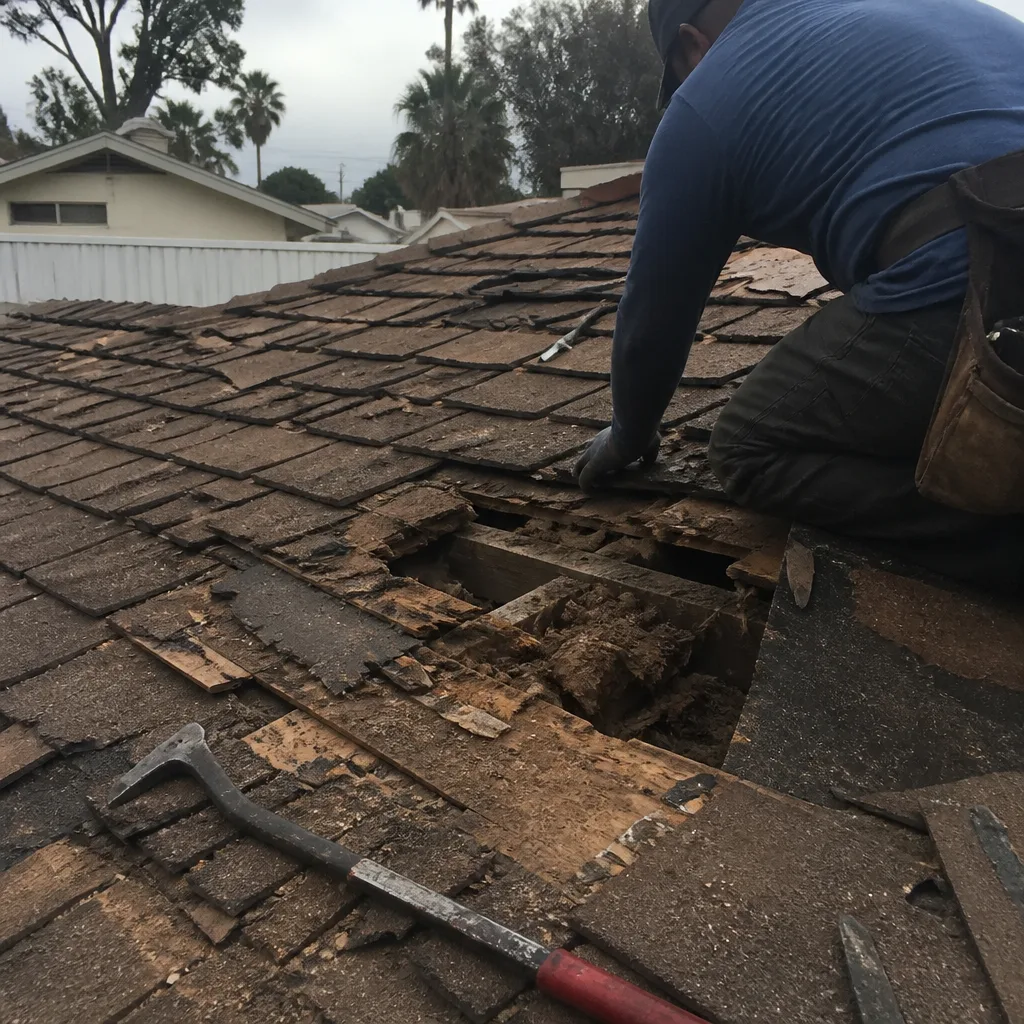 Before
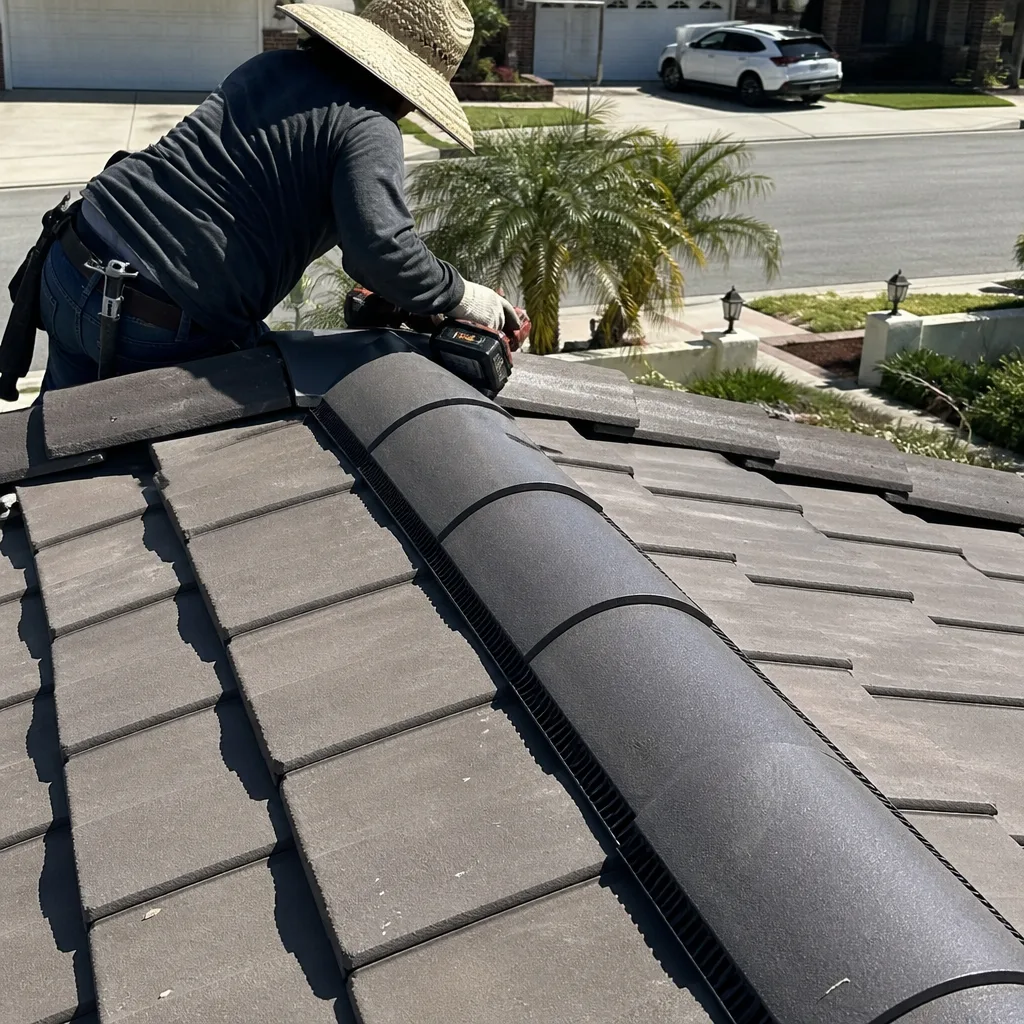 After
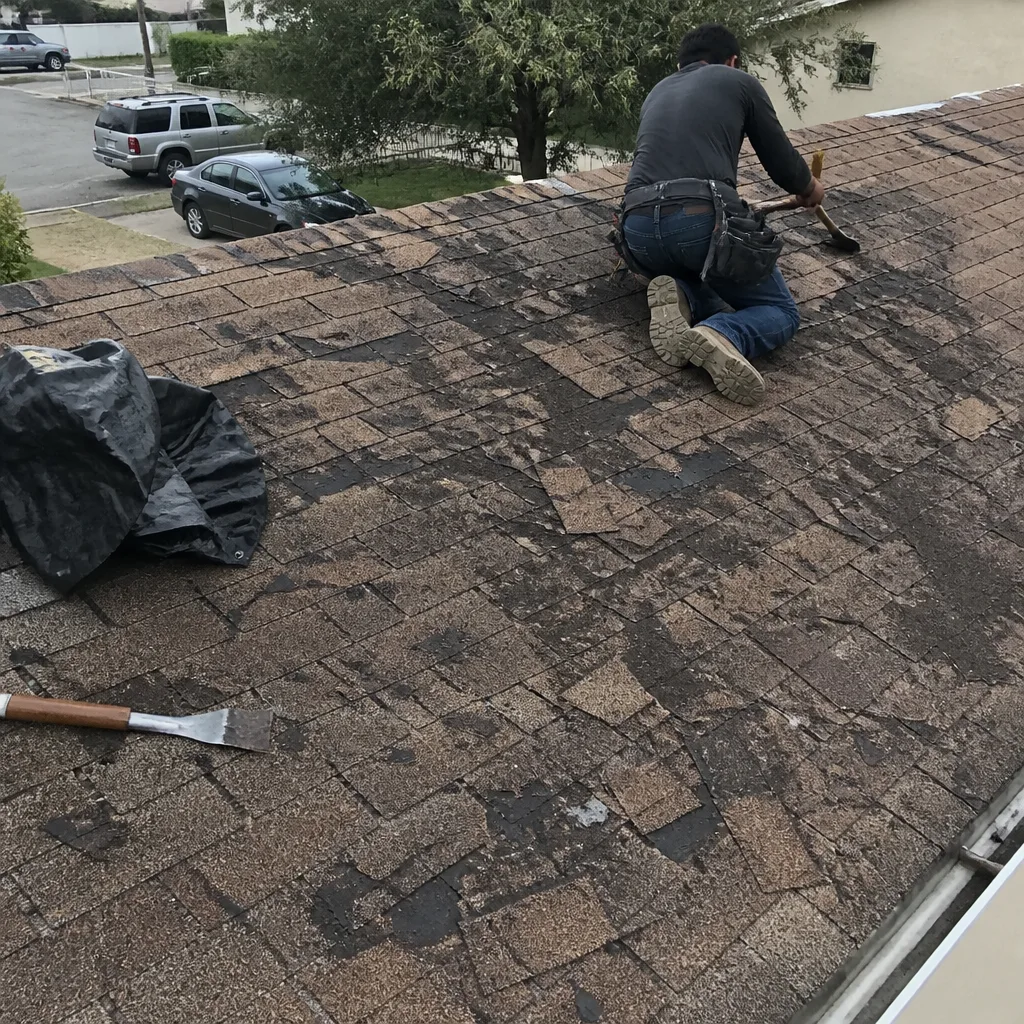 Before
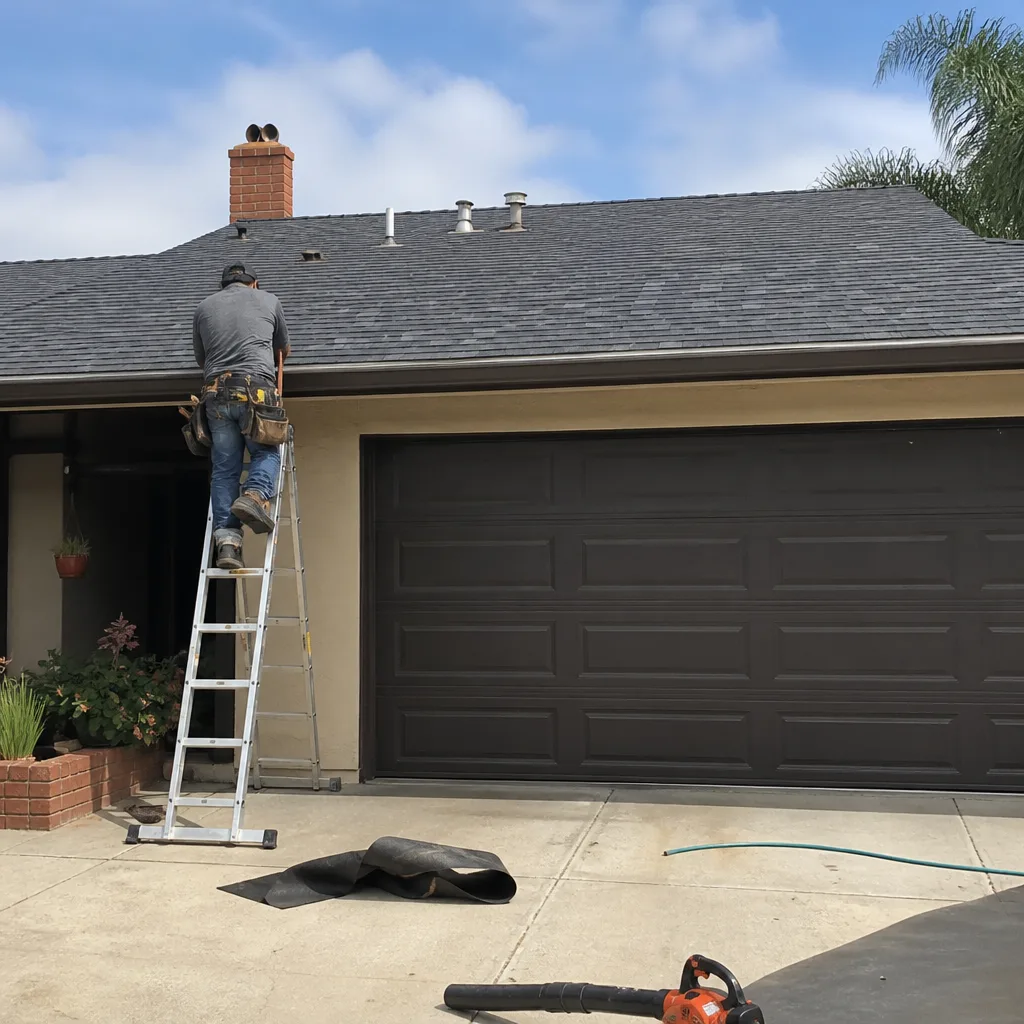 After
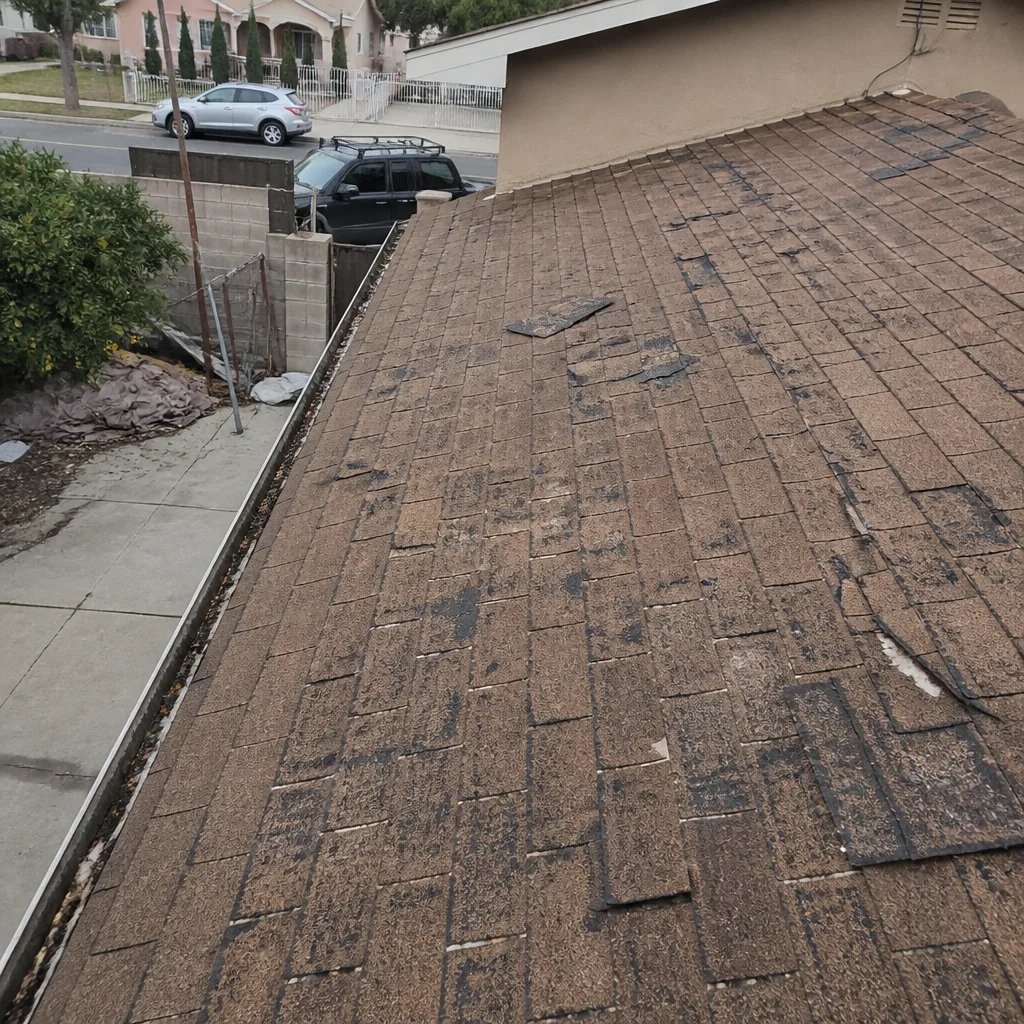 Before
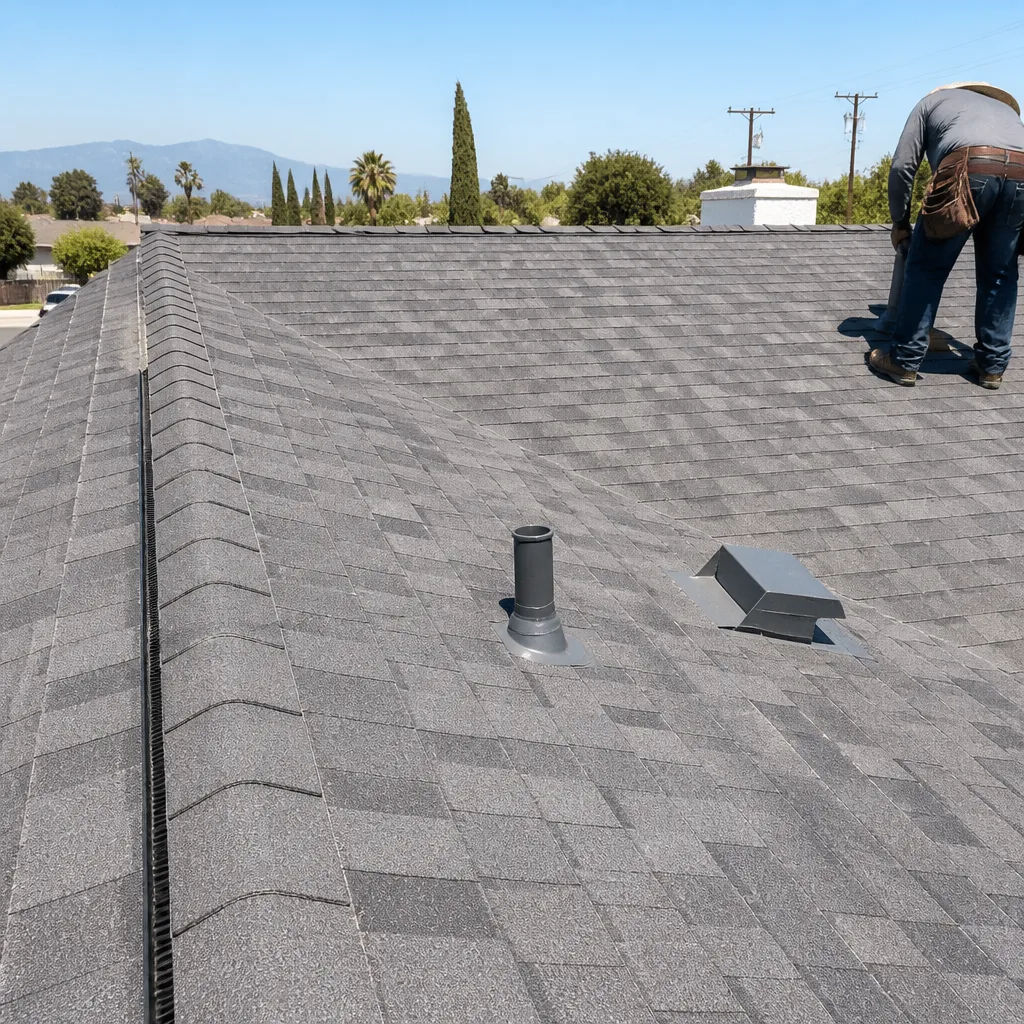 After