Last updated October 31, 2026
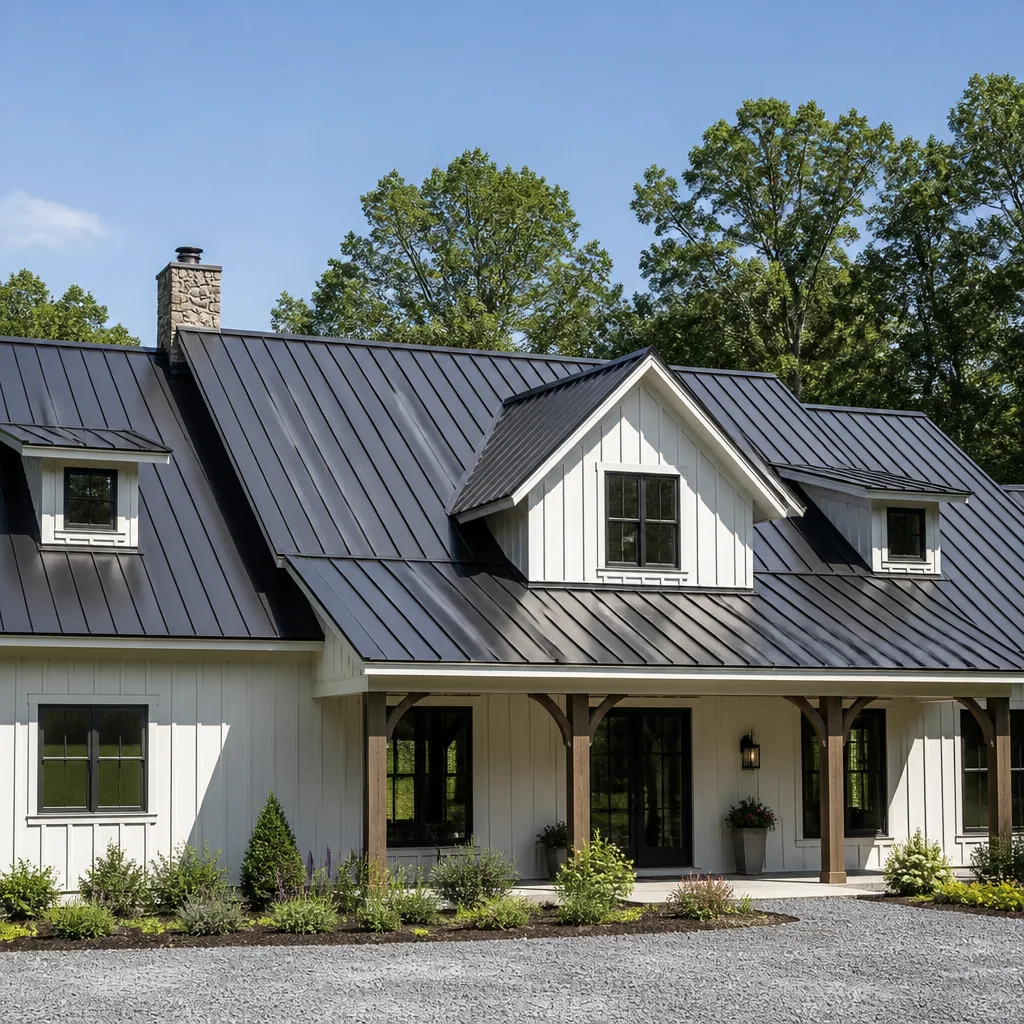 Metal roofing
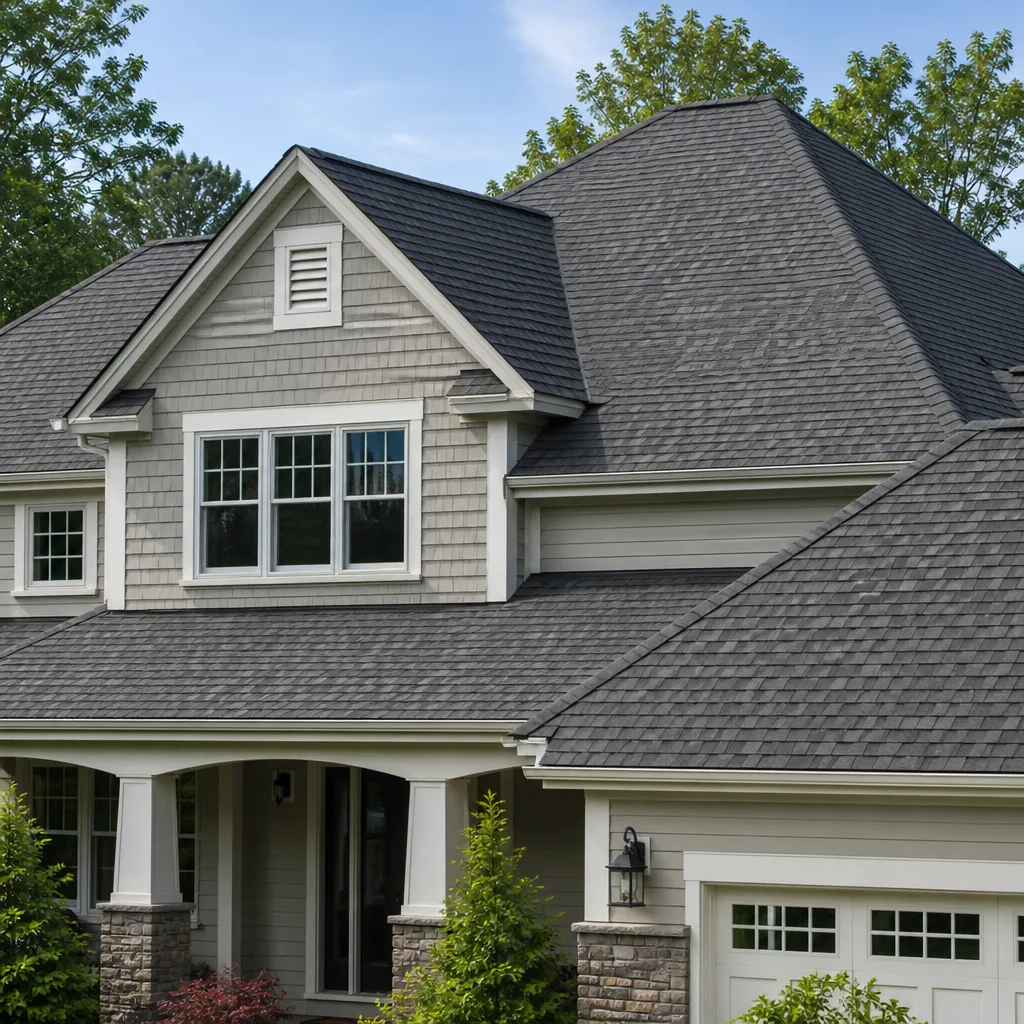 Architectural shingles
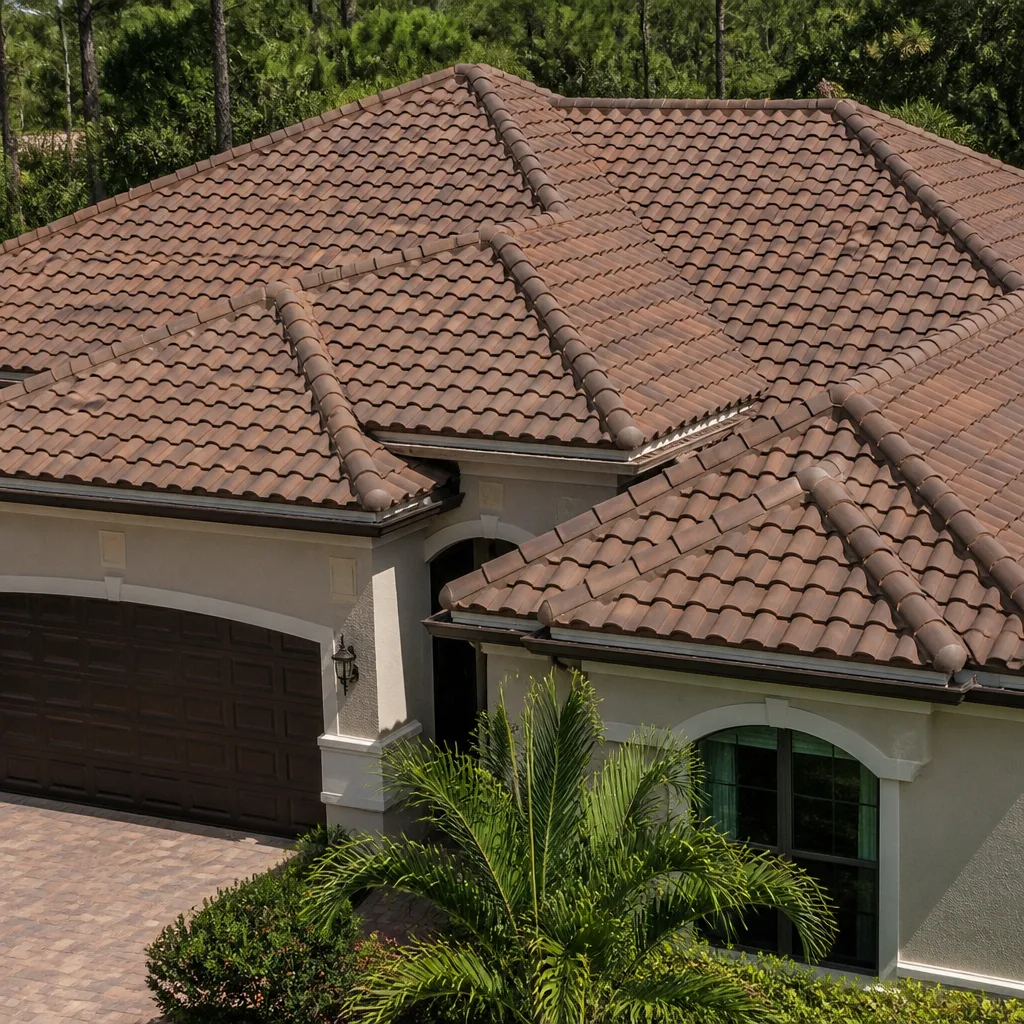 Tile roofing
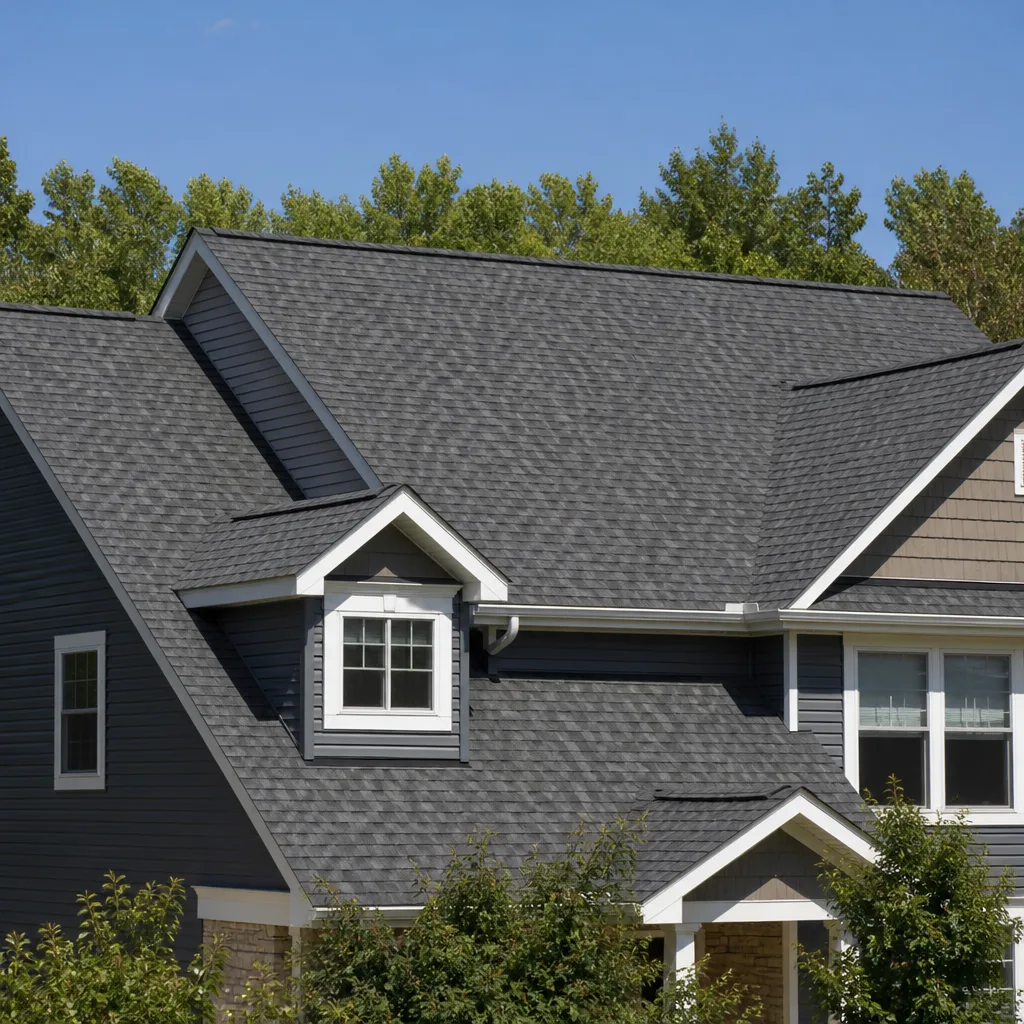 GAF
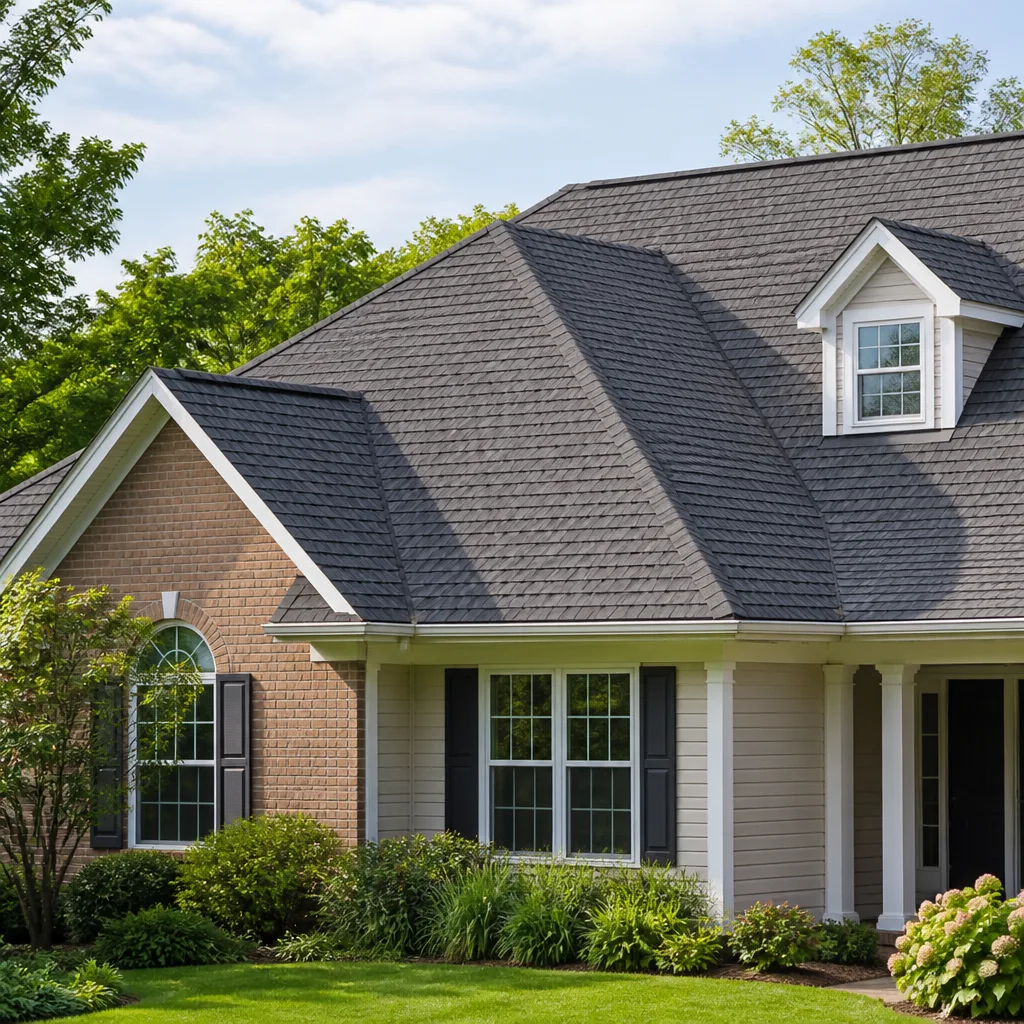 Owens Corning
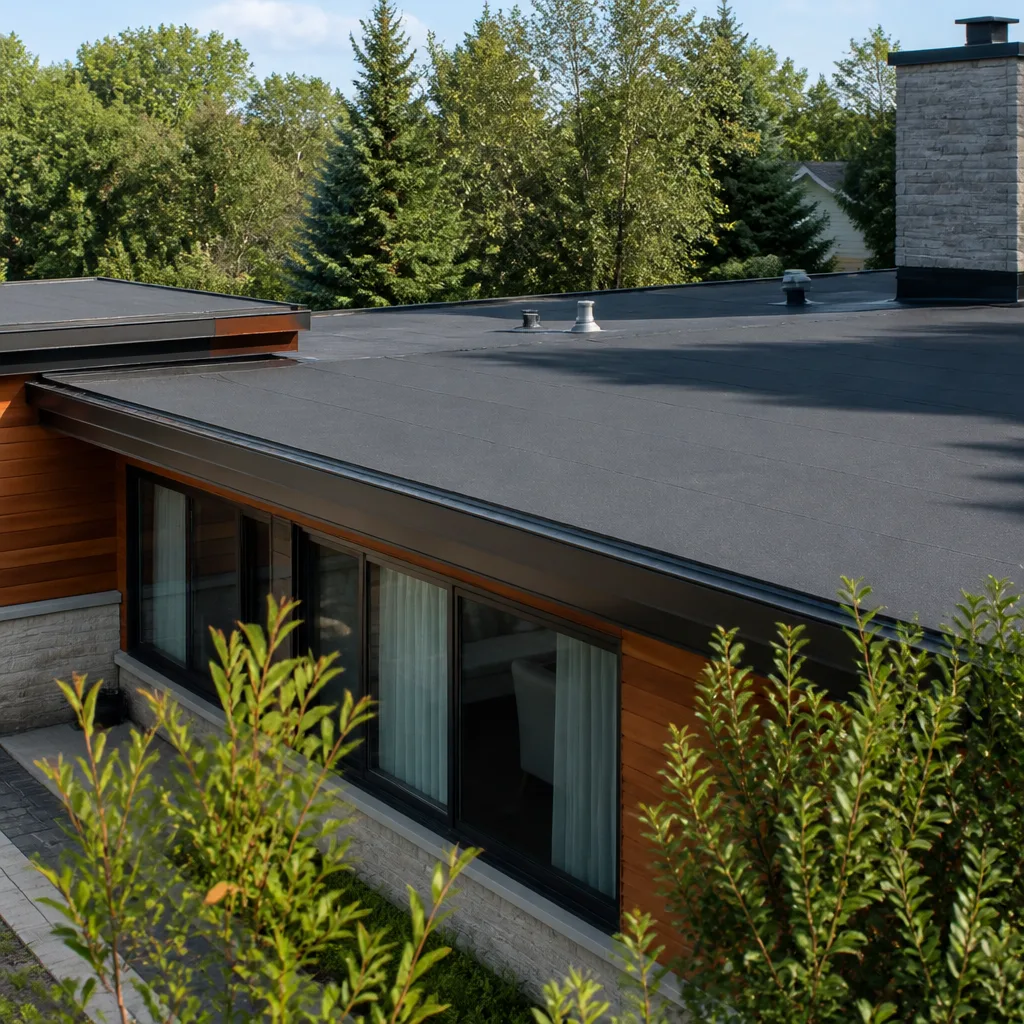 Flat & low-slope
Free roof inspection with deck photos before we talk money - GAF and Owens Corning certified installation
Roofing Permits, Codes & Inspections in CA: What You Need to Know
In California, a roof replacement without a permit isn’t just a code violation. It’s an unpermitted material alteration that can legally allow a buyer to rescind a sale or an insurer to deny a storm claim. Most homeowners in Rialto and across San Bernardino County never think about roofing permits until something goes wrong, and by then the problem is already expensive. This guide explains what actually triggers a permit requirement, what inspectors look for, and why skipping the paperwork is a financial trap that follows your property for years. For Roofing Warning Signs: A Rialto Homeowner’s Reference Guide, see our companion post. You’ll learn the specific California Building Code thresholds, how cool roof requirements affect your re-roof, and how to check permit history before you buy a home.
Styles & brands we work with
Quick Answer
Most full roof replacements in California require a building permit, and repairs covering more than 10% of the roof area within a 12-month period also cross the threshold in many jurisdictions. The permit process includes plan review, an in-progress inspection, and a final inspection that verifies materials, fastening, and underlayment against current code. Skipping a permit typically costs more to fix later than it saves upfront.
Table of Contents
- When a Roofing Permit Is Required in California
- Title 24 Cool Roof Rules for Re-Roofing in San Bernardino County
- What a Roofing Inspection Actually Checks
- How to Look Up Permit History Before Buying a Home
- Building Permit vs. HOA Approval in Rialto
- What Roofing Permits Cost in San Bernardino County
- Common Mistakes to Avoid
- When to Call a Professional
- Frequently Asked Questions
- The Bottom Line
When a Roofing Permit Is Required in California
Here’s the direct answer most homeowners don’t get: California Building Code Section 105.1 requires a permit for any roofing work that involves structural changes, and many jurisdictions interpret “re-roofing” broadly. A full tear-off and replacement always triggers a permit. A repair that replaces sheathing, changes the roof structure, or alters the roof’s drainage pattern also triggers one. What surprises people is the repair threshold: many California AHJs (Authority Having Jurisdiction) require a permit when repairs exceed 10% of the roof surface within a 12-month period.
The logic behind the 10% rule is simple. Small patches and isolated shingle replacements are maintenance. Once you’re re-covering a meaningful portion of the roof, you’re changing the building envelope, and the city wants to verify the work meets current standards for fire resistance, fastening, and weatherproofing. In Rialto, the Building & Safety Division follows this framework, and inspectors here are familiar with the specific wind and heat conditions that affect roofing performance in the Inland Empire.
Here’s what commonly triggers a permit requirement:
- Full tear-off and re-roof: Always requires a permit, regardless of whether you’re changing materials or going back with the same product.
- Repairs exceeding 10% of roof area in 12 months: Multiple smaller repairs that add up cross the threshold.
- Sheathing replacement or structural repair: Any time plywood or OSB decking is replaced, the structure is exposed and the city wants to verify nailing patterns and thickness.
- Changing roof pitch or adding dormers, skylights, or solar mounts: Structural alterations always require permits and often require engineered drawings.
- Re-roofing over an existing layer: Some jurisdictions allow a second layer without full tear-off, but the permit is still required, and the inspector will verify the existing layer is sound.
One nuance worth knowing: a “repair” that involves replacing a few shingles after a windstorm doesn’t need a permit in most cases. But the moment your contractor starts talking about replacing felt, flashing, or decking, you’re likely in permit territory. In our experience, honest contractors don’t try to talk you out of a permit. They explain what’s required and factor the fee and inspection schedule into the bid.
Title 24 Cool Roof Rules for Re-Roofing in San Bernardino County
Here’s where it gets specific to our climate. California’s Title 24 energy code requires cool roof materials on most residential re-roofs in climate zones that experience significant cooling loads. San Bernardino County sits squarely in climate zones 10 and 14, which means your re-roof almost certainly needs to meet minimum solar reflectance and thermal emittance values. The exact standard depends on your roof slope and whether you’re installing a steep-slope or low-slope system.
For steep-slope residential roofs (the common case in Rialto’s neighborhoods), the current Title 24 requirement is a minimum aged solar reflectance of 0.20 and thermal emittance of 0.75. That’s achievable with most modern asphalt shingles, but not all. Some dark architectural shingles fall below the reflectance threshold, which means the permit reviewer may ask for a product data sheet before approving your plans. Low-slope roofs have stricter requirements: a minimum aged solar reflectance of 0.63 and thermal emittance of 0.75, which effectively pushes you toward reflective single-ply membranes, coatings, or specific tile profiles.
What many homeowners don’t realize is that the AHJ in San Bernardino County enforces this at the permit counter, not at the jobsite. You can’t simply install any shingle you like and claim energy efficiency. The roofing contractor must submit manufacturer documentation showing the product meets Title 24 for your climate zone. Products from Ridgeway Roof Repair home suppliers like GAF, CertainTeed, and Owens Corning all maintain California-specific compliance sheets that make this step straightforward, but it still has to happen.
There’s an exception worth knowing: if you’re repairing less than 50% of the roof area, Title 24 cool roof requirements generally don’t apply. The code treats partial repairs as maintenance, not a re-roof. That’s another reason the 10% permit threshold and the 50% cool roof threshold are worth tracking separately. A homeowner could replace 30% of their roof without needing cool roof materials, even though they need a permit for the work.
What a Roofing Inspection Actually Checks
A residential roofing inspection in California is not a formality. The inspector is comparing installed work against the approved plans and current code, and they can stop the job or require corrections at any point. Here’s what the inspector is actually looking at, in the order they check it.
- Underlayment and decking: Before any roofing material goes on, the inspector verifies that the deck is sound, the underlayment is the specified type, and fasteners meet the spacing requirements in the manufacturer’s installation instructions. If decking was replaced, they check thickness and nailing pattern.
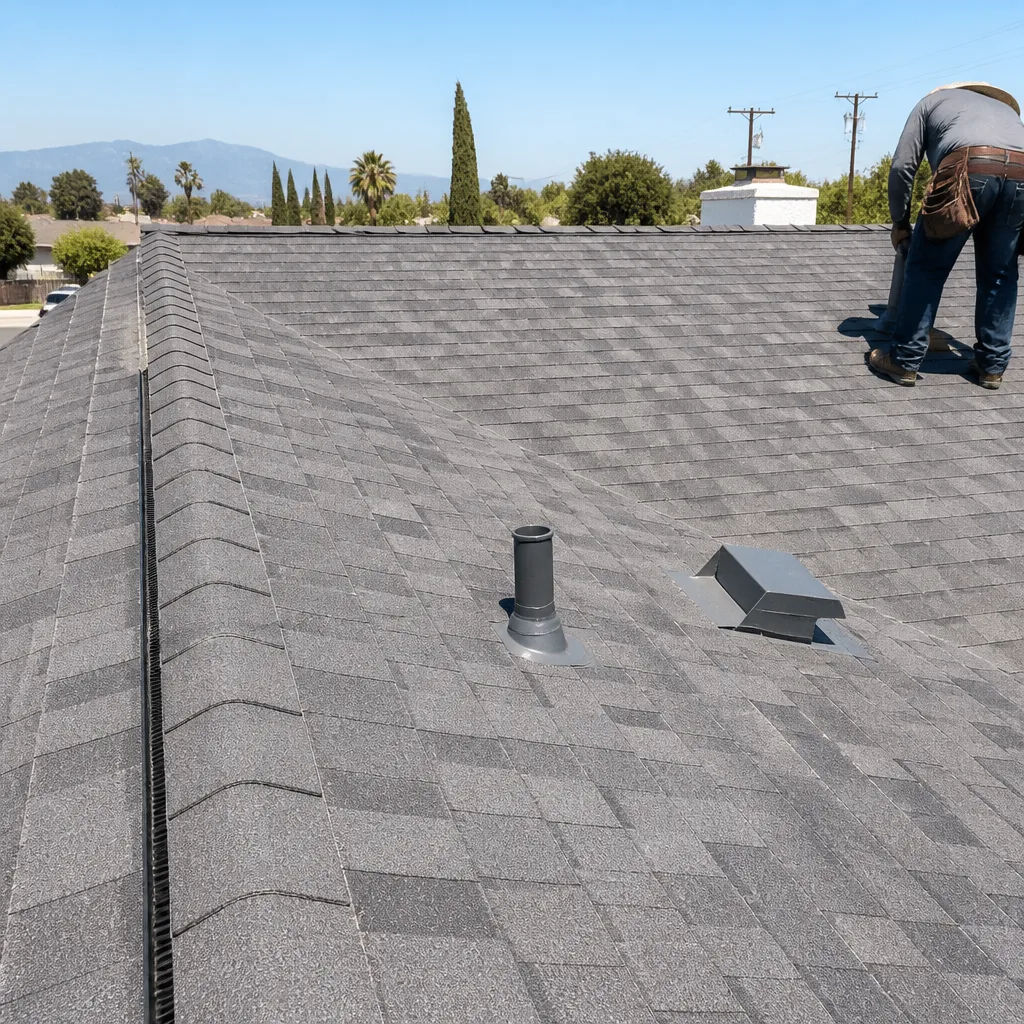
- Flashing and penetrations: The most common failure point on any roof. The inspector checks that pipe boots, chimney flashing, valley flashing, and wall step flashing are installed correctly and lapped in the right direction. Water flows downhill, and any lap that fights gravity is a correction.
- Roof covering installation: For shingles, the inspector verifies exposure, stagger pattern, and nailing (typically four nails per shingle in standard wind zones, six in high-wind areas). For tile, they check that every third course is fastened and that hips and ridges are secured. For flat systems, they check membrane adhesion and seam integrity.
- Ventilation: California code requires attic ventilation balanced between intake and exhaust. The inspector verifies that ridge vents, box vents, or gable vents match the approved plan, and that insulation isn’t blocking airflow at the eaves.
- Drainage: The inspector walks the roof and checks that water flows toward gutters and scuppers without ponding. On low-slope roofs, ponding water after 48 hours is a code violation.
The three most common failure points we see in Rialto are flashing at walls and chimneys, insufficient nailing on high-wind exposures, and missing or blocked ventilation. Each one means a re-inspection, which means time and money. A contractor who knows what the local inspectors focus on can get it right the first time.
How to Look Up Permit History Before Buying a Home
Before you buy a house, you can and should check the permit history on the property. Missing roofing permits are a red flag that predicts future problems. Here’s the step-by-step process for Rialto and San Bernardino County.
- Find the AHJ: In Rialto, building permits are handled by the City of Rialto Building & Safety Division. For unincorporated areas of San Bernardino County, it’s the County Land Use Services Department. The address of the property, not the city on the mailing label, determines your AHJ.
- Search online permit records: Rialto maintains an online permit portal where you can search by address. San Bernardino County also offers online permit history. Look for roofing permits, re-roof permits, or any record that says “reroof” in the description.
- Request a building record search if the portal is limited: For older homes, online records may not go back far enough. You can request a record search from the AHJ, usually for a fee. This pulls permit history from archived microfilm and paper records.
- Compare permits against visible work: If the home has a newer-looking roof but no permit on record, that’s a problem. Either the work was done without a permit, or the seller’s agent is misrepresenting the roof’s age. Both are negotiation points or deal-breakers.
- Verify final inspection status: A permit that was pulled but never closed means the work was never inspected and approved. An open permit is almost as bad as no permit at all, because the AHJ can require the work be brought up to current code at any time.
What missing roofing permits signal to a buyer is worth understanding. The roof may have been installed correctly, but without an inspection there’s no proof. Under California law, sellers must disclose unpermitted work, but many don’t realize a roof replacement falls into that category. If you discover unpermitted roofing work after purchase, your options are limited: you can retroactively permit the work (which may require exposing the roof for inspection), replace the roof with a permitted job, or take it up with the seller if you can prove they knowingly concealed the issue.
If you’re already in a home with unpermitted roofing work, the path forward starts with a Roof Inspection in San Bernardino to document the current condition. From there, you can decide whether the roof is sound enough to retroactively permit or whether replacement makes more sense.
Building Permit vs. HOA Approval in Rialto
Here’s a distinction that costs homeowners real money: a building permit and an HOA approval are two separate requirements, and having one doesn’t satisfy the other. Rialto has active HOA zones, and several of the city’s newer developments are governed by HOAs that have their own architectural review process for roofing projects.
The building permit comes from the City of Rialto. It verifies that your roofing work meets California Building Code, Title 24 energy requirements, and local amendments. The inspector only cares about safety, weatherproofing, and energy compliance. The HOA approval comes from your community association. It verifies that your roofing work matches the community’s architectural standards, which often include restrictions on material type, color, and profile. Some Rialto HOAs require that all homes in a tract use the same shingle color or tile profile, and they may restrict which materials you can use even if the building code allows them. For help selecting compliant products, see Choosing the Right Roofing Brand: A Buyer’s Guide for Rialto.
The sequence matters. Here’s how it needs to go:
- Check HOA CC&Rs first: Before you spend money on plans or products, read your CC&Rs and submit your proposed roofing materials to the HOA architectural committee. If the HOA says no, the building permit conversation is moot.
- Submit permit application to the City: Once HOA approval is in hand, your contractor submits the permit application with the approved material specifications.
- Schedule inspections: The City inspection process runs independently of the HOA. HOA approval doesn’t waive inspections, and inspections don’t satisfy the HOA.
The trap to avoid: signing a contract with a roofer before checking HOA restrictions. We’ve seen Rialto homeowners pick a tile profile they liked, pay a deposit, and then discover the HOA requires an exact match to the original material. The contractor isn’t at fault, but the homeowner eats the change order.
What Roofing Permits Cost in San Bernardino County
Roofing permit fees in Rialto and San Bernardino County are based on the valuation of the work, not a flat rate. Here’s a realistic picture of what to budget, based on current fee schedules in the region.
- Re-roof permit (standard residential): $200 to $450 for a typical single-family home, depending on the project valuation and whether plan review is required. This includes the permit fee, building inspection fee, and plan check fee when applicable.
- Re-roof with structural changes: $500 to $1,200 if sheathing replacement, structural repair, or plan review beyond the basic scope is involved. Structural changes often trigger a plan check fee that wasn’t part of the base permit.
- Solar mount or skylight addition: $150 to $400 additional for each structural penetration, since each one requires review and may require engineering.
- Re-inspection fee: $75 to $150 per visit if the work fails and the inspector has to come back.
The permit fee is the smallest line item on a roof replacement, but it’s the one that protects you most. A $300 permit verifies that a $15,000 roof was installed correctly. That’s the best insurance value you’ll get anywhere on the project.
Some contractors quote permits as a separate line item, and others include them in the bid. Both are legitimate, but you should always ask. A bid that’s suspiciously low because it omits the permit fee isn’t actually low. It just moves the cost and the risk onto you. If you’re comparing bids for a Roof Replacement in San Bernardino, ask each contractor to include the permit fee as a line item so you’re comparing apples to apples.
Common Mistakes to Avoid
- Believing the roofer when they say “you don’t need a permit for this.” A replacement roof always needs a permit in Rialto. If a contractor pushes back on pulling one, that’s a contractor you shouldn’t hire. The risk lands on you, not them.
- Assuming the HOA approval covers the building permit, or vice versa. They’re separate requirements with separate processes and separate consequences for skipping one. Get both, in the right order.
- Paying in full before the final inspection is closed. The final inspection is the moment the work is legally complete. Pay the balance after the inspector signs off, not before.
- Treating Title 24 as optional. Cool roof requirements aren’t a suggestion. The permit reviewer will reject your application if the specified product doesn’t meet the reflectance and emittance standards for your climate zone.
- Re-roofing over a failed roof to skip tear-off costs. Some homeowners think adding a second layer avoids the mess and cost of tear-off. It doesn’t, and in many cases the second layer fails faster because the underlying problems were never addressed. A proper job addresses what’s underneath.
- Buying a home without checking permit records. Ten minutes at the Rialto permit portal can reveal whether the roof you’re about to buy is legal or a liability waiting for the next rainstorm.
When to Call a Professional
Roofing code and permit questions are not the place for guesswork. If you’re planning a roof replacement, a repair that involves structural work, or you’ve discovered unpermitted roofing work from a previous owner, a professional who does this every day will save you more than they cost. The signs you need expert help: open permits on a property you own, a buyer’s inspection flagged the roof, your insurance company asked for documentation after a claim, or you’re unsure whether the materials you want meet Title 24. You don’t need to become a code expert. You need someone who already is one. Roof Repair in San Bernardino that’s done to code protects your property value, your insurance coverage, and your ability to sell. Ridgeway Roof Repair offers free estimates in Rialto, call (877) 588-7942.
Frequently Asked Questions
Yes, a full roof replacement requires a building permit in essentially all California jurisdictions, including Rialto and San Bernardino County. The permit verifies that the work meets current building code, Title 24 energy standards, and local fire and wind requirements. Any contractor who says otherwise is putting your home at risk. Call (877) 588-7942 if you want a straight answer on your specific situation, or browse more guides & resources.
A standard residential re-roof permit in Rialto typically runs $200 to $450 depending on the project valuation, with additional fees if structural work or plan review beyond the basic scope is involved. The permit fee is a small fraction of the total project cost and protects you from far more expensive problems later. Ridgeway Roof Repair includes permit handling in every quote, so you always know the full cost upfront.
Skipping a roofing permit creates three distinct problems: your homeowner’s insurance can deny a future claim related to the roof, a buyer can rescind a purchase or demand a price reduction if unpermitted work is discovered during escrow, and the city can require you to retroactively permit the work, which may mean opening up the roof for inspection. Retroactive permitting often costs more than doing it right the first time. Call (877) 588-7942 for guidance on bringing an unpermitted roof into compliance.
Title 24 cool roof requirements apply to re-roofing projects, not to minor repairs. The threshold is typically 50% of the roof area: if you’re replacing less than half the roof, cool roof material requirements generally don’t apply. If you’re replacing more than half, your contractor must submit product documentation proving the material meets aged solar reflectance standards for San Bernardino County’s climate zone.
California law allows homeowners to act as their own contractor on their primary residence, but that means you take full legal and safety responsibility for the work. You’re the one who has to pull the permit, schedule inspections, and fix anything the inspector flags. Given that roofing work involves heights, heavy materials, and waterproofing that fails invisibly over time, most homeowners decide the risk isn’t worth the savings. A professional handles the permit, the inspection, and the liability.
If your home is in an HOA-governed community, yes, you need HOA architectural approval separately from the city building permit. Many Rialto HOAs have material, color, and profile restrictions that go beyond what the building code requires. The HOA approval comes first, then the building permit. Skipping either one creates a legal and financial problem.
The Bottom Line
California roofing permits exist to protect you, not to tax you. The fee is modest, the inspection is thorough, and the result is a roof you can sell, insure, and sleep under without legal exposure. The people who get hurt are the ones who listen to a contractor who says permits are optional, or who buy a home without checking the permit record. In Rialto, the path is clear: check HOA rules first, pull the permit, meet Title 24, pass the inspection, and close the permit. Do that and your roof is an asset. Skip it and it’s a liability that will surface at the worst possible moment. Ridgeway Roof Repair handles permits, inspections, and code compliance as standard practice on every Roof Replacement in San Bernardino, repair, and inspection we do. Call (877) 588-7942 for a free estimate and a clear explanation of what your project actually requires.
Written by the team at Ridgeway Roof Repair, serving Rialto since 2018.
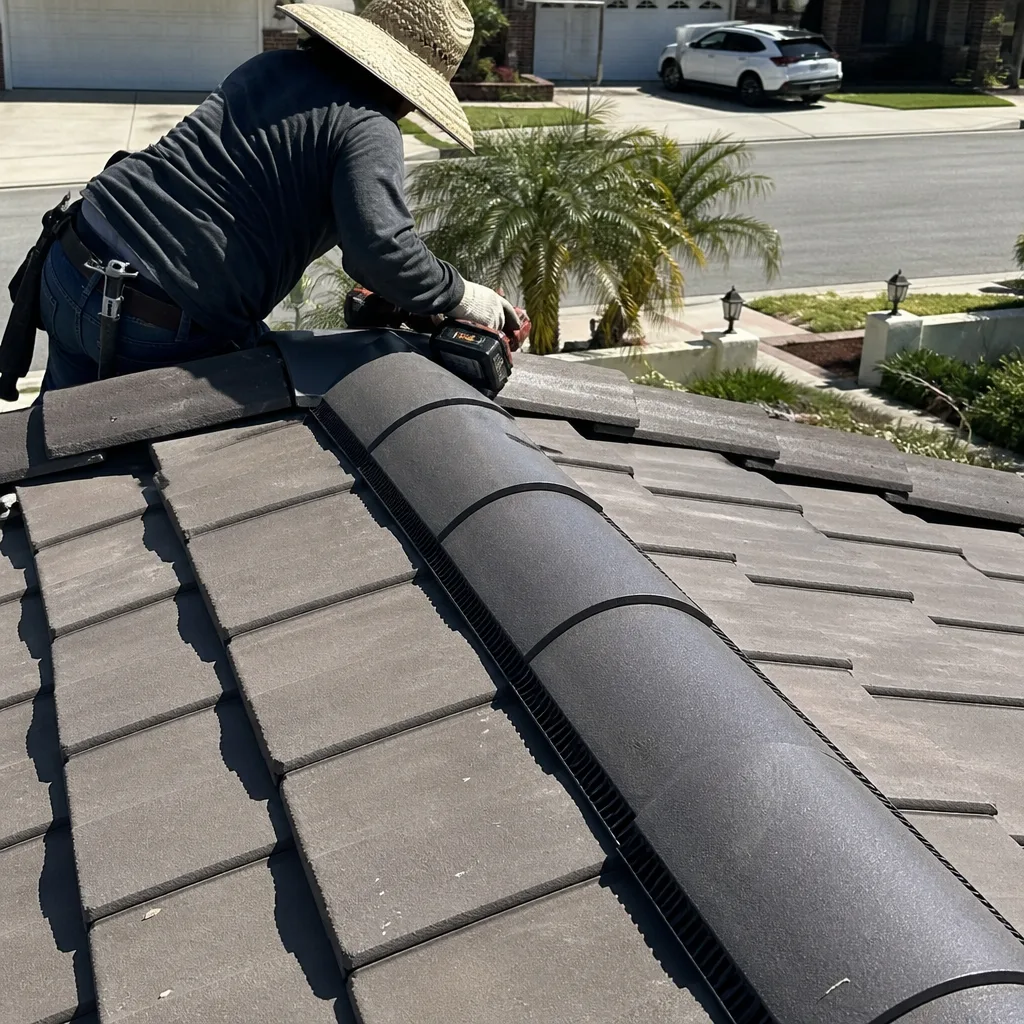
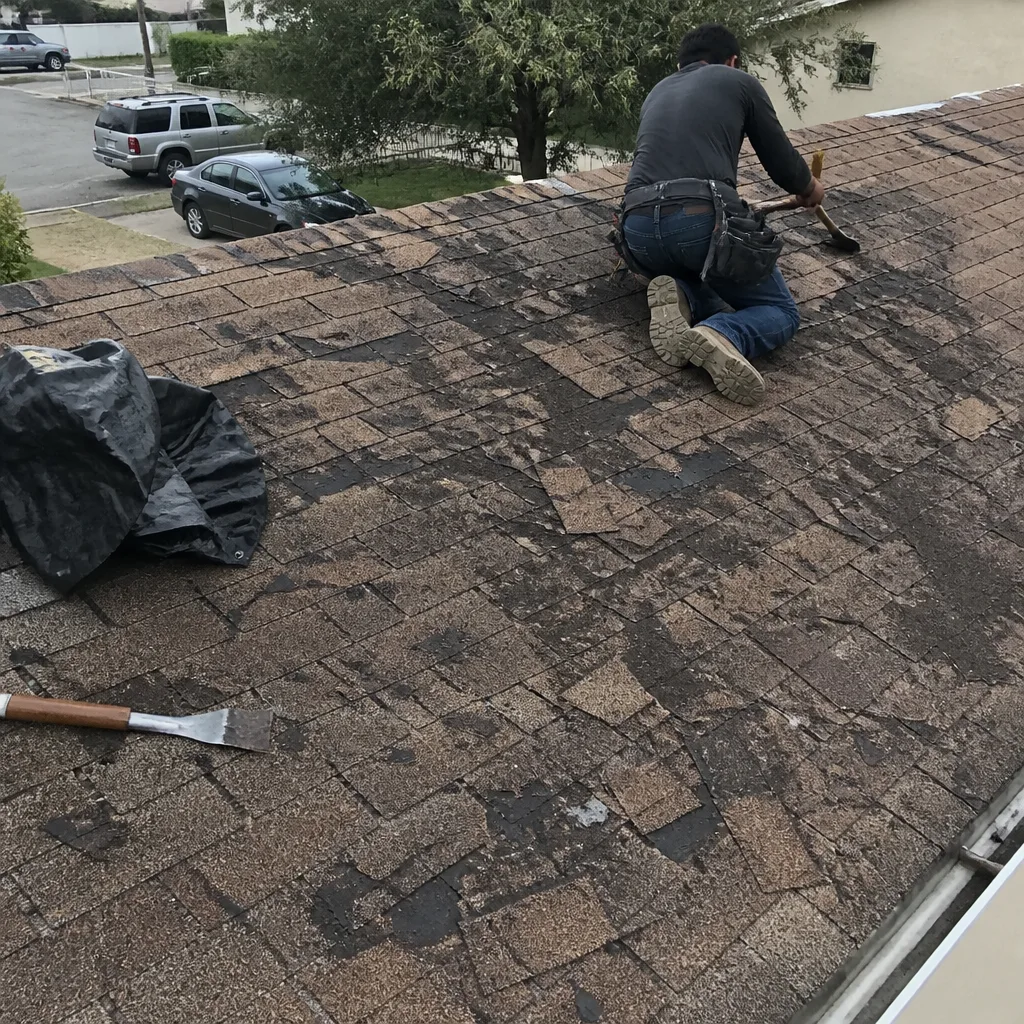
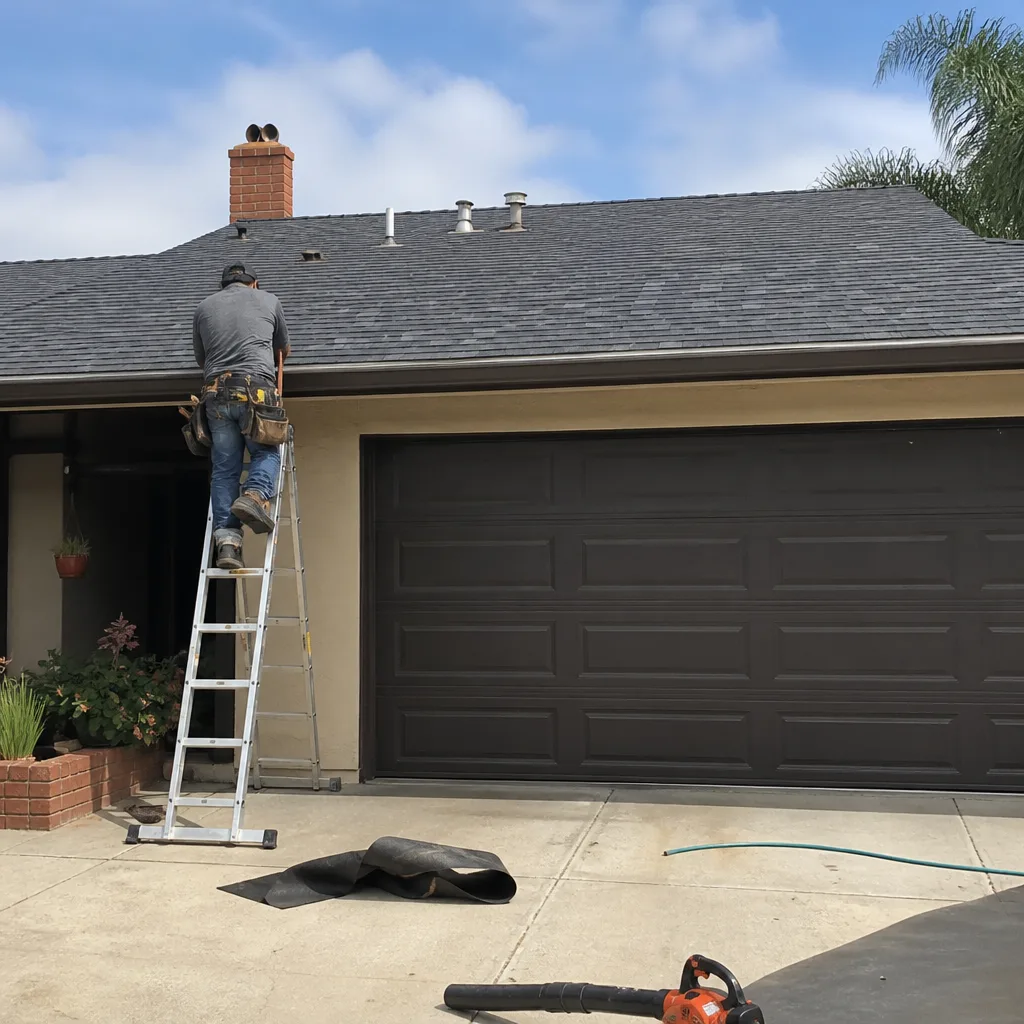
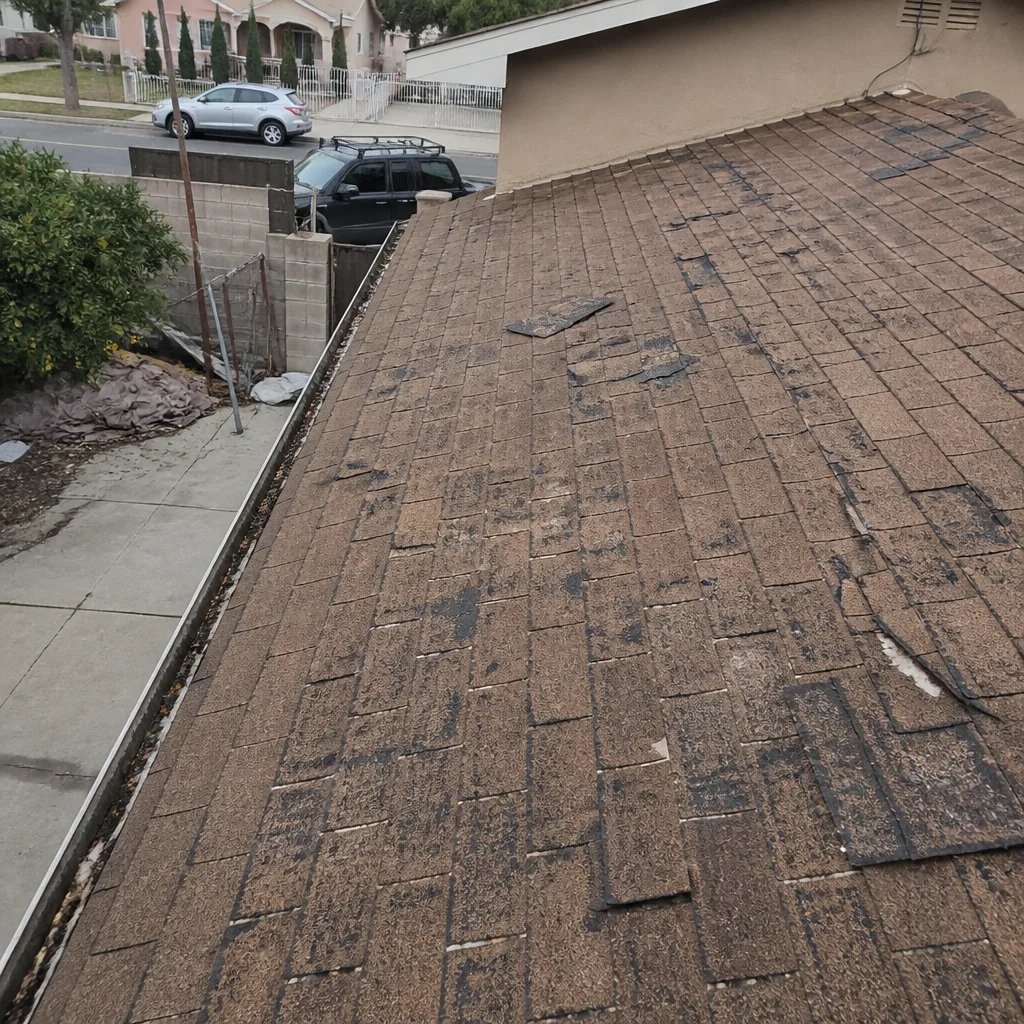
See the difference
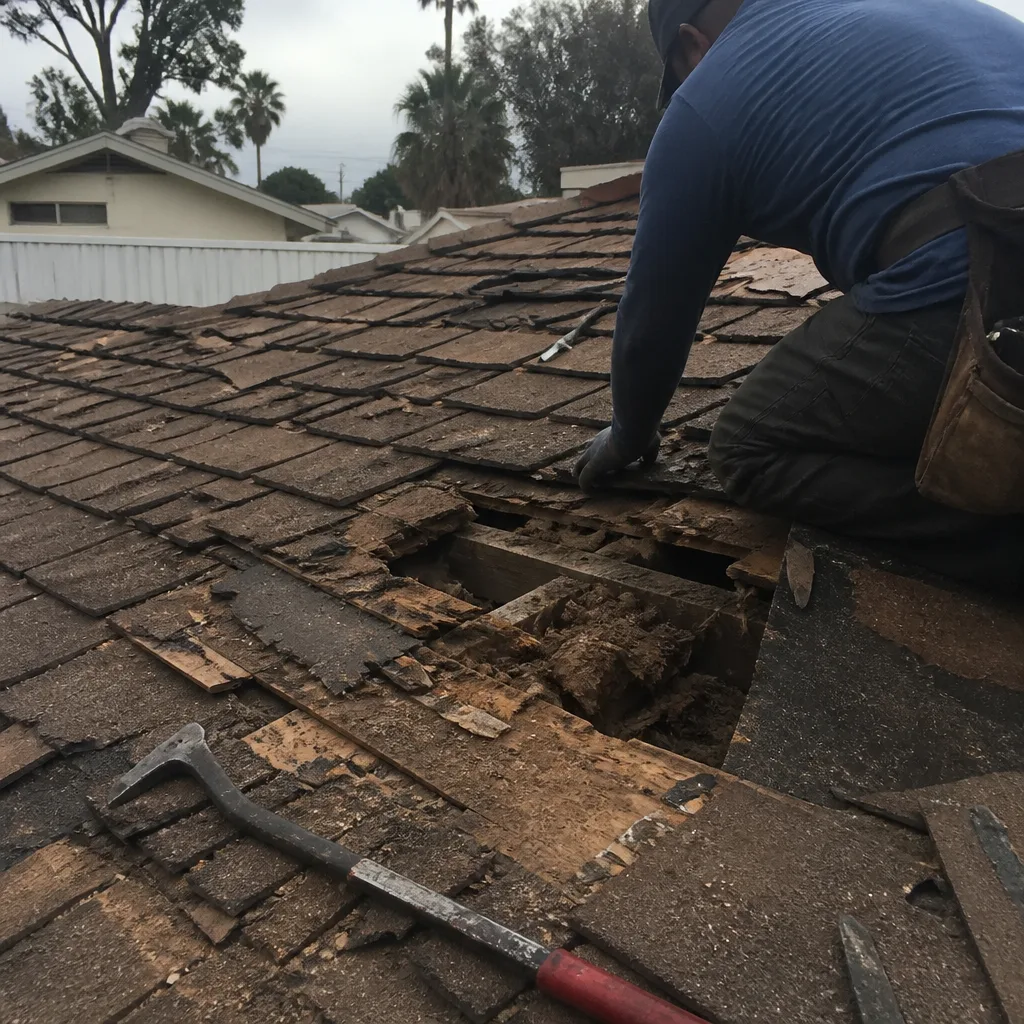 Before
 After
 Before
 After
 Before
 After