
Last updated October 31, 2026
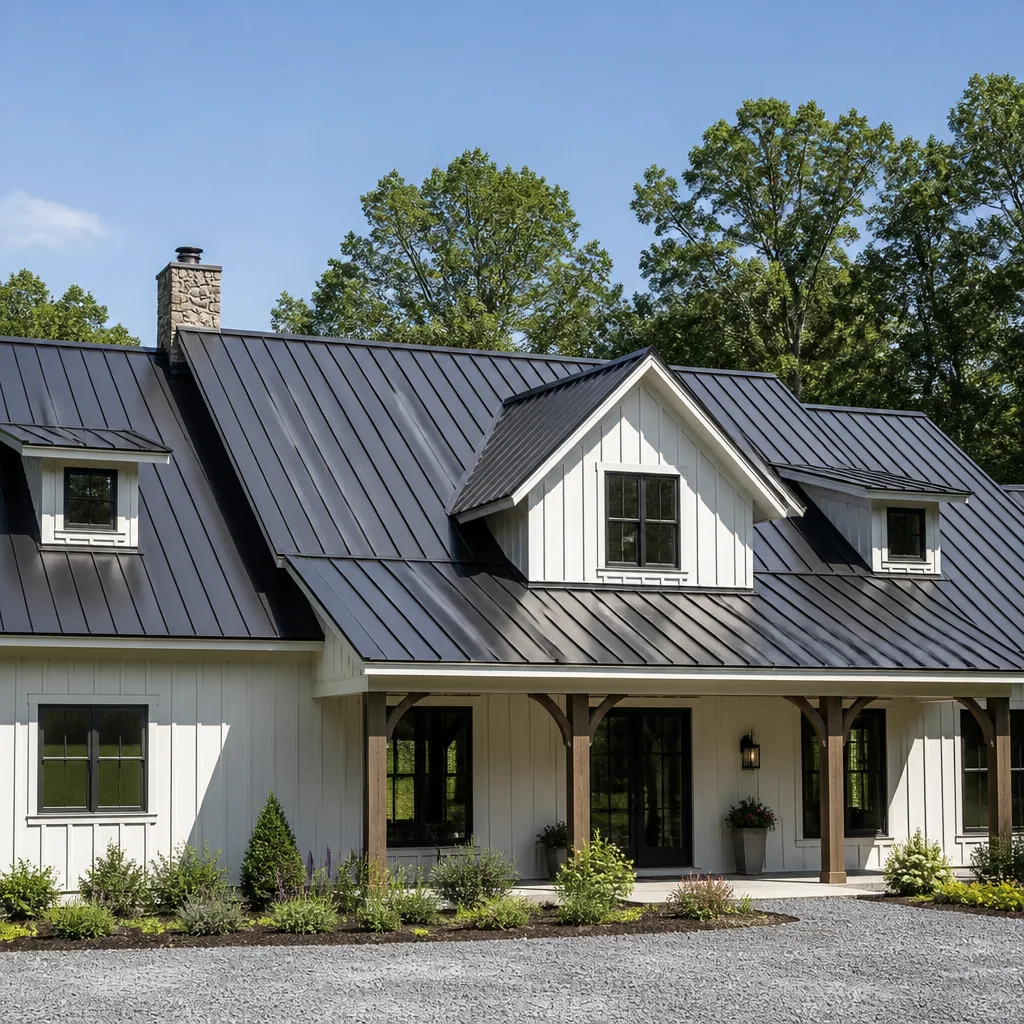 Metal roofing
 Architectural shingles
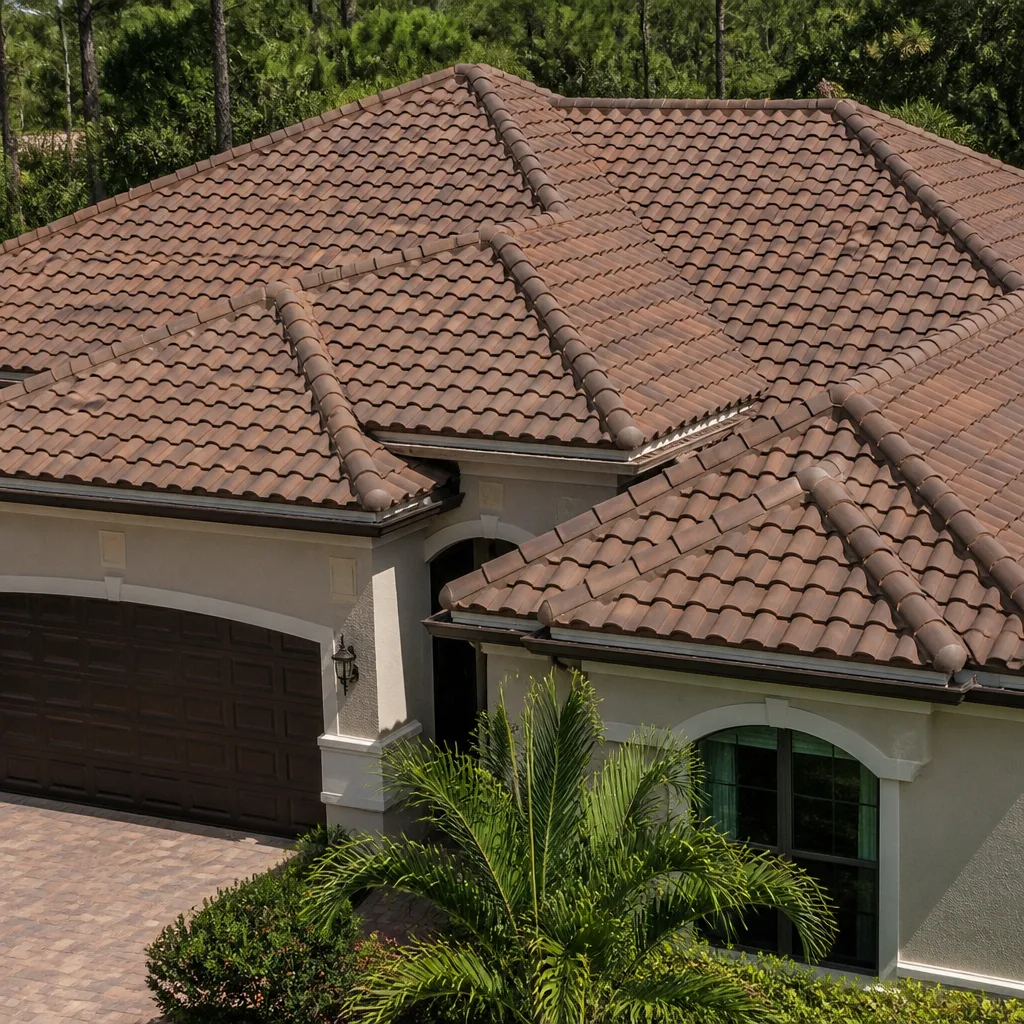 Tile roofing
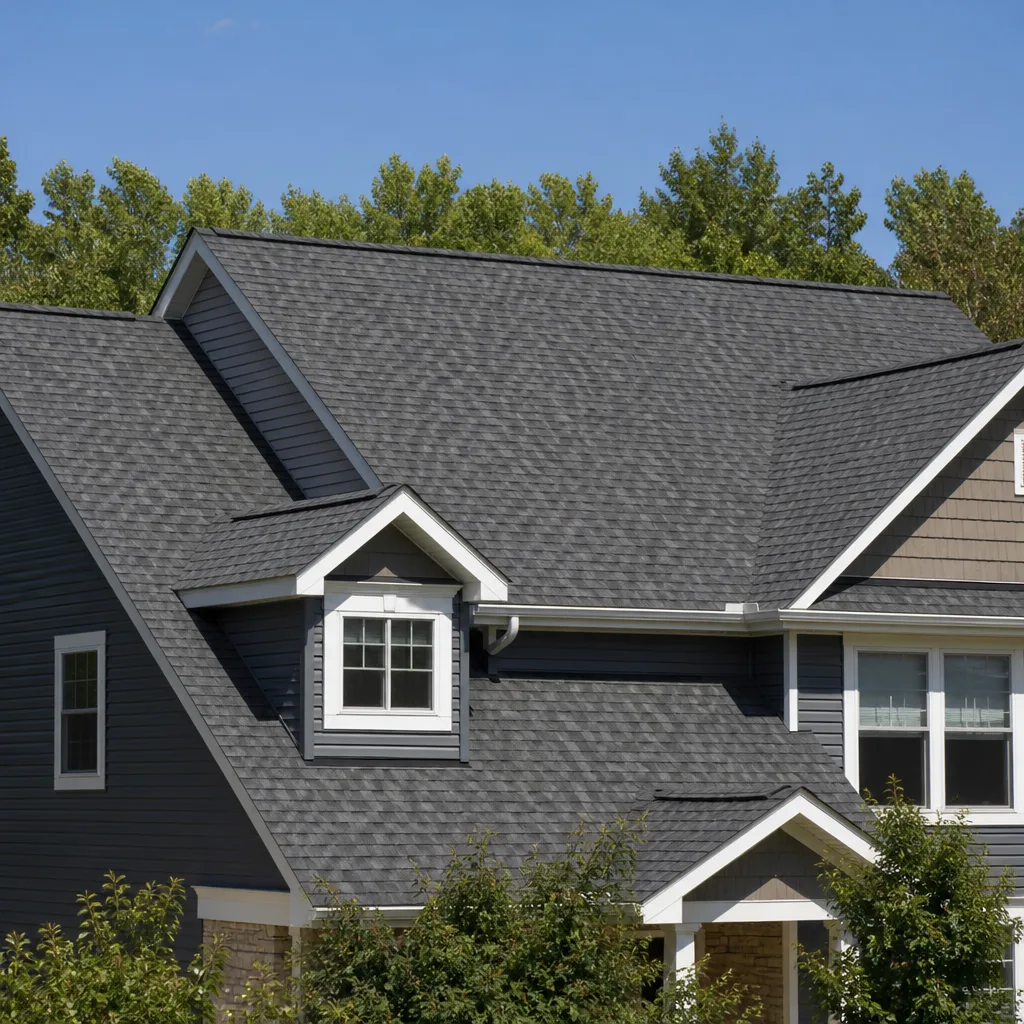 GAF
 Owens Corning
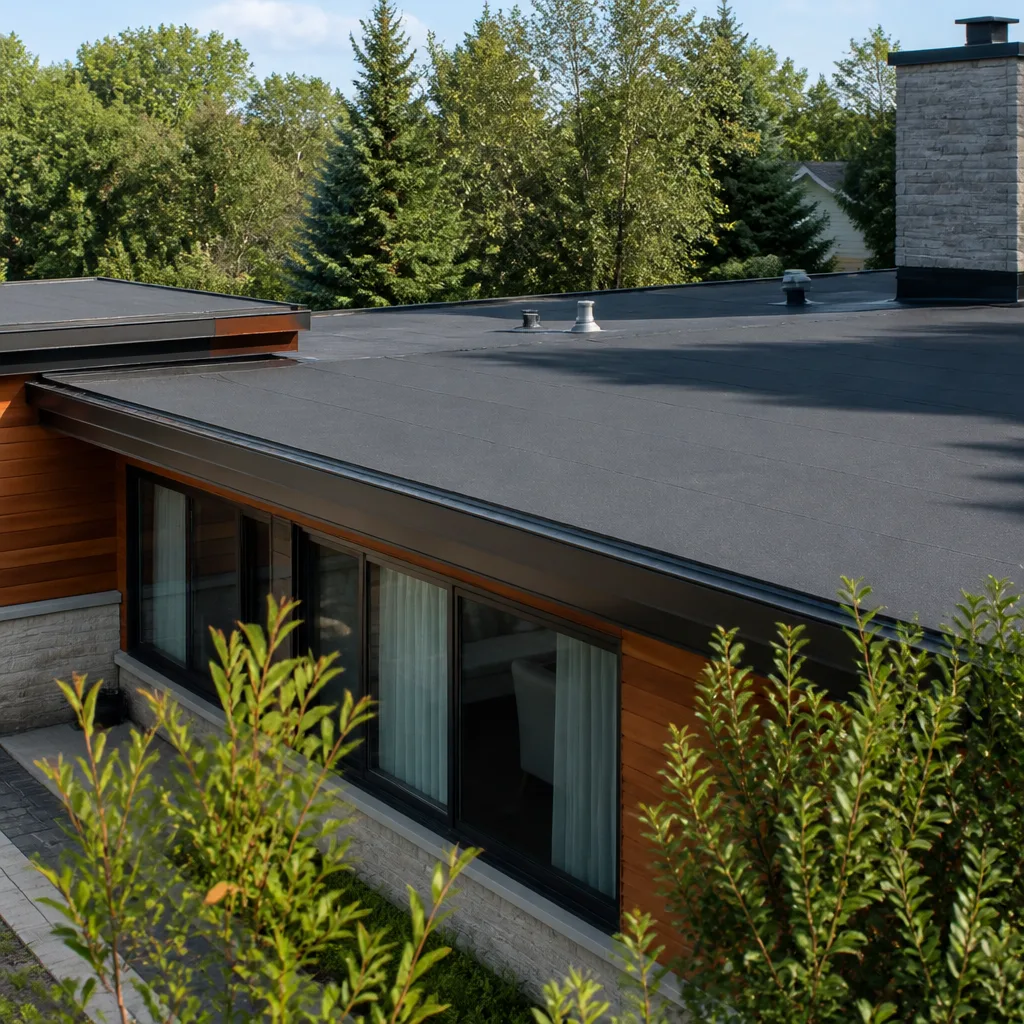 Flat & low-slope
Free roof inspection with deck photos before we talk money - GAF and Owens Corning certified installation
Roofing Warning Signs: A Rialto Homeowner’s Reference Guide
The most expensive roof failure in Rialto usually starts invisibly: a flashing seam that moved an eighth of an inch under thermal expansion and never resealed. By the time there’s a ceiling stain, the decking is already compromised. Our Complete Guide to Roofing in Rialto walks you through what actually happens to roofs in Rialto’s specific climate, which early signals appear years before the obvious ones, and how to tell the difference between a $900 repair and a $14,000 replacement. We’ll cover the Inland Empire failure patterns most generic guides skip entirely.
Quick Answer
The earliest roofing warning signs for a Rialto homeowner are rarely visible from the ground. Look for granule accumulation in gutters, flashing gaps at parapet walls and chimneys, attic rafters with water staining or soft spots, and ponding water on low-slope sections that lasts more than 48 hours after rain. If you’re seeing any of these, schedule a professional inspection before interior damage appears.
Styles & brands we work with
Table of Contents
- Early-Stage UV Degradation: What Asphalt Shingles Look Like Before They Fail
- Flashing Fatigue on Parapet Walls and Chimneys: Rialto’s Most Common Leak Origin
- Attic Signs That Predate Interior or Exterior Damage
- Why Low-Slope and Flat Sections Fail Differently in Rialto
- Cosmetic vs. Structural Cracking in Tile Roofs
- Granule Loss in Gutters: What It Actually Means
- When to Call a Professional
- Frequently Asked Questions
Early-Stage UV Degradation: What Asphalt Shingles Look Like Before They Fail
Asphalt shingles in Rialto don’t wear out the way they do in, say, Seattle or Portland. The failure mechanism here is ultraviolet radiation and thermal cycling, not moisture. A shingle that spends 300-plus days a year under direct Inland Empire sun degrades from the top down, and the earliest visible signal is not curling or cracking. It’s a change in surface texture.
In the first three to five years after installation, healthy asphalt shingles have a slightly gritty, uniformly granular surface. Under Rialto’s UV load, the asphalt binder that holds those granules begins to oxidize and harden. The first thing you’ll notice is a patchy, uneven sheen. Some areas look duller than others. Then you’ll see what roofers call “blistering” – small raised bumps on the shingle surface where volatiles in the asphalt have expanded under heat and created tiny gas pockets.
Blistering alone doesn’t mean your roof is failing. But it’s the canary. Once blisters pop, they leave small craters where granules no longer adhere. Those craters expose the asphalt mat underneath to direct UV, which accelerates degradation exponentially. From there, the progression is predictable: cracking along the crater edges, shingle edges beginning to curl upward, and eventually granule loss so heavy you can see the fiberglass mat showing through in patches.
Here’s what early UV degradation looks like in sequence:
- Uneven surface sheen – visible from the roof surface, not the ground. The shingles look patchy in direct sunlight.
- Small blisters – raised bumps, typically 1/8 to 1/4 inch across, concentrated on south and west-facing slopes.
- Popped blisters – tiny craters or pinholes where granules are missing, still too small to see from the ground.
- Edge curling – shingle corners begin lifting, which is the first sign visible from a ladder or the street.
If you catch UV degradation at stage one or two, the fix can be as simple as applying a protective coating or replacing individual damaged shingles. At stage four, you’re looking at a reslope or full replacement. This is why we recommend an annual Roof Inspection in San Bernardino for Rialto homeowners. The earliest stages are only visible from the roof surface itself.
Flashing Fatigue on Parapet Walls and Chimneys: Rialto’s Most Common Leak Origin
Ask any roofer who works in Rialto what causes the most leaks, and the answer isn’t shingles. It’s flashing. Specifically, the metal transitions where the roof plane meets a vertical surface: parapet walls on ranch homes, chimney bases, skylight curbs, and vent pipes. Flashing is where the roof system is most vulnerable because it’s the point where two different materials expand and contract at different rates.
Rialto’s temperature swings are the problem. A summer day can hit 105 degrees, and a winter night can drop into the 30s. That’s a 70-degree thermal range, and metal flashing expands and contracts with every degree of change. Over years, the sealant at flashing seams breaks down. The metal itself can develop fatigue cracks at bend points. The fasteners that hold flashing in place can back out slightly, creating gaps you’d never notice from the ground.
The specific failure pattern we see most often on Rialto homes involves parapet wall flashing. Ranch-style homes built from the 1950s through the 1980s frequently have low parapet walls around the roof perimeter. The flashing detail at the base of these walls involves a metal counterflashing that overlaps the step flashing. When that overlap shifts even an eighth of an inch, water gets behind it during rain. The water runs down the roof deck, follows a rafter, and eventually finds its way into the living space – often far from the original entry point.
Here’s what to look for:
- Gaps between the counterflashing and the wall surface – check where the metal meets stucco or siding. Any visible gap is a leak path.
- Dried, cracked, or missing sealant – old caulk at flashing joints pulls away from metal over time. If you can pick at it with a fingernail and it crumbles, it’s no longer sealing.
- Rust streaks on flashing or the wall below it – rust means the galvanized coating has failed and the metal is actively corroding.
- Staining on the ceiling near the chimney or along an exterior wall – this is the late-stage signal. The leak has already penetrated the decking.
The repair for early flashing fatigue is usually straightforward: remove old sealant, re-fasten the flashing, apply new sealant, and in some cases install replacement flashing sections. But if the leak has been active long enough to stain interior ceilings, the decking underneath may need partial replacement too. That’s the difference between a $400 flashing repair and a $3,000 decking and drywall job.
Attic Signs That Predate Interior or Exterior Damage
The single most useful thing a Rialto homeowner can do to catch roof problems early is go into the attic. Not the garage, not the crawl space – the attic. Most roof failures show up there months or even years before they’re visible anywhere else. And in Rialto’s climate, where we get intense heat followed by occasional heavy winter rain, the attic is where moisture problems declare themselves first.
Here’s the sequence of what you’ll see in an attic as a small roof leak develops:
- Water staining on rafters or decking – dark, irregular marks that follow the grain of the wood. These appear before any ceiling stain downstairs because the water sits on the decking and rafters before saturating the insulation and drywall.
- Soft or spongy decking – press on the underside of the roof deck with a screwdriver handle. Healthy plywood or OSB feels solid. Water-damaged decking gives slightly, like pressing on a damp sponge.
- Mold or mildew odor – a musty smell in the attic, especially after rain, indicates active moisture. Rialto’s dry climate means that smell dissipates quickly once the leak stops, but the damage remains.
- Dark streaks on insulation – fiberglass or cellulose insulation wicks water and holds it. Dark lines or clumped areas on the insulation surface are water tracks.
- Rust on exposed fasteners or vent pipes – nails that protrude through the decking will rust if water has been present. Look for rust halos around nail points.
The important point here is that none of these signs require roof access or special equipment. A flashlight and a careful look are enough. We’ve been in dozens of Rialto attics where the roof looked fine from the outside but the decking was already compromised. The earlier you catch it, the smaller the fix. A section of rotted plywood costs around $300 to $600 to replace. A full decking replacement adds $4,000 to $8,000 to a reroof.
Why Low-Slope and Flat Sections Fail Differently in Rialto
Rialto has a lot of homes with flat or low-slope roof sections. Mid-century ranch designs, additions, porches, and carports frequently use low-slope roofs because they were cheaper to build. These sections behave completely differently from the main sloped roof, and most generic roofing guides treat them as an afterthought—unlike our Seasonal Roofing Care for Rialto: Year-Round Homeowner’s Guide. That’s a mistake, because low-slope sections in Rialto are where we see some of the most expensive failures.
The issue is ponding. On a sloped roof, water runs off quickly. On a low-slope roof, water that doesn’t drain within 48 to 72 hours starts attacking the roofing membrane. In Rialto’s summer heat, standing water becomes a heat sink. The water absorbs solar energy and transfers it to the membrane below, accelerating degradation of the asphalt or modified bitumen. Then in winter, that same ponding water sits and seeps into any small crack or seam.
What to look for on Rialto low-slope sections:
- Ponding water that lasts more than 48 hours after rain – this is the single most important indicator. Brief ponding after a storm is normal. Persistent ponding is not.
- Membrane bubbles or blisters – trapped moisture between membrane layers creates raised areas. These will eventually crack open.
- Seam separation – on modified bitumen or built-up roofs, the seams where rolls overlap are the weak point. Look for lifted edges or visible gaps.
- Cracking along the perimeter flashing – the transition between the low-slope section and the main roof or walls is under constant stress from thermal cycling.
- Debris accumulation – leaves, dirt, and sand from Rialto’s wind events collect in low spots, hold moisture, and create biological growth that eats into the membrane.
The good news for Rialto homeowners is that most low-slope failures start small. A ponding area can be corrected with a tapered insulation system or a new drainage path. A split seam can be patched. But left alone, a small pond on a low-slope roof will turn into a full membrane replacement faster than almost any other roofing failure mode we see. If your home has a flat or low-slope section, make it part of your regular inspection routine.
Cosmetic vs. Structural Cracking in Tile Roofs
Rialto has a significant stock of concrete and clay tile roofs, particularly on homes built from the 1970s onward. Tile roofs have a reputation for lasting 50 years or more, and that’s mostly true for the tile itself. But the tile is just one layer of the roof system, and cracking tile is where homeowners get confused about urgency.
Not all tile cracking is equal. Here’s how to tell the difference:
Cosmetic cracking happens when a tile develops a hairline crack that doesn’t penetrate completely through the tile. These cracks are usually caused by foot traffic, minor impact, or normal thermal stress. The tile still sheds water because the crack doesn’t create a path through to the underlayment. Cosmetic cracks are worth noting and monitoring, but they don’t require immediate action. Many cosmetic cracks will never turn into a leak.
Structural cracking is a different animal. A structural crack penetrates completely through the tile, creating a direct path for water to reach the underlayment. These cracks are typically wider, often running across the full width of the tile, and may be accompanied by spalling (chunks of the tile surface flaking off). Structural cracks are usually caused by: improper installation, where the tile was fastened too tightly or the batten spacing was wrong; impact damage from falling branches or foot traffic; or substrate movement, where the roof deck shifted and transferred stress to the tiles.
Why this matters in Rialto specifically: our freeze-thaw cycle is mild but real. Water enters a structural crack, and on the rare winter morning when temperatures dip near freezing, that water expands and widens the crack. What started as a small split becomes a shattered tile within one or two seasons. Meanwhile, the underlayment below is absorbing water that should have been shed by the tile.
The action rule is simple: if you can see daylight through a crack when you hold a tile up, it’s structural and needs replacement. If the crack is a surface hairline that doesn’t penetrate, you can monitor it. When in doubt, have a professional look. Tile repair in Rialto typically runs $200 to $500 for a small area, while replacing rotted underlayment under several tiles can cost $1,500 to $3,000. Early action is cheap insurance.
Granule Loss in Gutters: What It Actually Means
Homeowners in Rialto often get concerned when they clean their gutters and find piles of granules. The first question we hear: “Is my roof failing?” The answer is more nuanced than a simple yes or no.
Asphalt shingles shed granules for two distinct reasons. The first is normal wear-in. A newly installed roof will shed a significant amount of granules during the first year or two as the shingles settle and excess granules applied during manufacturing wash away. If your roof is less than two years old, granule accumulation in gutters is normal and not a concern.
The second reason is genuine UV degradation, which is the concern for Rialto homeowners with roofs that are 10 years old or more. Under sustained Inland Empire sun, the asphalt binder oxidizes and loses its grip on the granules. The granules wash into gutters during the first rain of the season, leaving the shingle surface progressively more exposed.
Here’s how to interpret what you find in your gutters:
- Small amount, roof under 5 years old – normal wear-in. No action needed.
- Moderate amount, roof 10 to 15 years old – monitor. This is the beginning of accelerated degradation. Schedule an inspection to check shingle condition.
- Heavy granule deposits every year, roof over 15 years old – the shingles are near the end of their useful life. The granule loss is a symptom of widespread asphalt oxidation.
- Granules mixed with visible shingle fragments – the shingles are actively breaking apart. This is failure in progress.
The key distinction: granule loss alone doesn’t mean your roof is leaking or about to leak. It means the shingles are losing their UV protection, which accelerates the aging process. A roof with heavy granule loss may still be waterproof, but it’s on a faster track to failure than a roof of the same age with minimal granule loss. If you’re seeing significant accumulation, a structured inspection is the right next step. At Ridgeway Roof Repair, we treat Roof Repair in San Bernardino as a diagnosis-first process – we want to know exactly what’s failing before we recommend a fix.
Common Mistakes to Avoid
- Assuming a new roof means no problems for 20 years. We’ve inspected Rialto roofs that were five years old with failed flashing and rotted decking. Installation quality matters more than material age.
- Checking the roof only from the ground. The earliest warning signs of UV degradation, flashing fatigue, and ponding damage are invisible from the street. You need roof-level access or a professional inspection.
- Ignoring the attic because it’s hot and uncomfortable in Rialto. The attic is the earliest warning system you have. Five minutes with a flashlight in the fall and spring is worth more than any ground-level visual check.
- Treating all tile cracks the same. Hairline surface cracks can be monitored. Full-penetration cracks are an active leak path. The distinction determines whether you spend $300 now or $3,000 later.
- Assuming flat roof ponding is normal. Brief ponding after rain is acceptable. Ponding that lasts days is destroying your membrane. Rialto’s heat makes standing water especially destructive.
- Waiting for a ceiling stain before investigating. By the time water reaches your ceiling, it has already traveled through the decking, insulation, and drywall. The damage you can’t see is always worse than the stain you can.
- Caulking a flashing gap from inside the attic and calling it fixed. Surface sealant applied to the interior side of a leak doesn’t address the exterior failure point. The water is still getting in; you’ve just redirected where it shows up.
When to Call a Professional
Some roofing issues are worth a DIY look. Anything involving ladder access to the roof surface, high-tension components, or structural assessment is not. If you’re seeing active water intrusion, significant granule loss, structural tile cracking, or persistent ponding, call a roofing specialist. The cost of a professional inspection in Rialto is a fraction of what a delayed repair will cost once decking and drywall are involved. Ridgeway Roof Repair offers free estimates in Rialto – call (877) 588-7942. We only do roofing, so the person who shows up to assess your roof is the same person who’ll diagnose what’s actually wrong and give you honest options, not a sales pitch dressed up as an assessment.
Frequently Asked Questions
Once a year is the right cadence for most Rialto homes, ideally in the fall before winter rains arrive. Homes older than 10 years, or homes with flat or low-slope sections, benefit from twice-yearly checks. Annual inspections catch flashing fatigue and granule loss before they become leaks.
Professional roof inspections in Rialto typically run between $150 and $400, depending on roof complexity and whether the inspector includes attic access. Ridgeway Roof Repair provides free estimates for repair and replacement work. Call (877) 588-7942 to schedule an assessment.
Flashing failure at parapet walls, chimney bases, and vent penetrations is the most common problem we see in Rialto. The combination of high summer temperatures, winter rain, and the thermal expansion of metal flashing creates persistent leak paths on older homes.
In Rialto’s high-UV, high-heat environment, a quality asphalt shingle roof typically lasts 15 to 20 years, which is shorter than coastal California averages. Intense sun exposure accelerates asphalt oxidation. Homes with significant south-facing roof area may see reduced lifespan on those sections specifically.
Working on roof flashing involves ladder access to the roof surface and working at heights. It also requires knowing how to properly refasten and reseal metal transitions so the repair lasts. We recommend a professional for any flashing work. A poorly executed flashing repair is often worse than no repair at all.
Recurring granule accumulation after every rain event, especially on a roof more than 10 years old, indicates active asphalt degradation. The shingles are losing their UV protective layer. This doesn’t necessarily mean the roof is leaking, but it does mean the aging process is accelerating and the roof deserves a professional assessment. Call (877) 588-7942 for a free estimate.
Yes. Ridgeway Roof Repair installs and services roofing products from seven major manufacturers: GAF, CertainTeed, Owens Corning, IKO, Atlas, Tamko, and Boral. Material recommendations are made across competing brands based on what fits your roof and budget, not what we happen to have in stock. The right material for your roof, not just what we carry.
The Bottom Line
Rialto’s climate punishes roofs in specific, predictable ways. UV degradation attacks asphalt shingles from the top down. Thermal cycling breaks down flashing seals at parapet walls and chimneys. Low-slope sections fail from ponding that goes unnoticed for months. Tile roofs hide underlayment damage behind cosmetic cracks that look harmless. The homeowners who catch these problems early spend hundreds instead of thousands. The homeowners who wait for interior stains are already paying for decking replacement. Know what you’re dealing with before you commit. Schedule an inspection, check your attic, and don’t ignore what the gutters are telling you.
For a thorough assessment of your roof’s condition, Ridgeway Roof Repair provides Roof Replacement in San Bernardino guidance, repair services, and structured inspections under one roof. From inspection to repair to full replacement, the same specialist who finds the problem can fix it. Call (877) 588-7942 for a free estimate in Rialto.
Written by the team at Ridgeway Roof Repair, serving Rialto since 2018.
See the difference
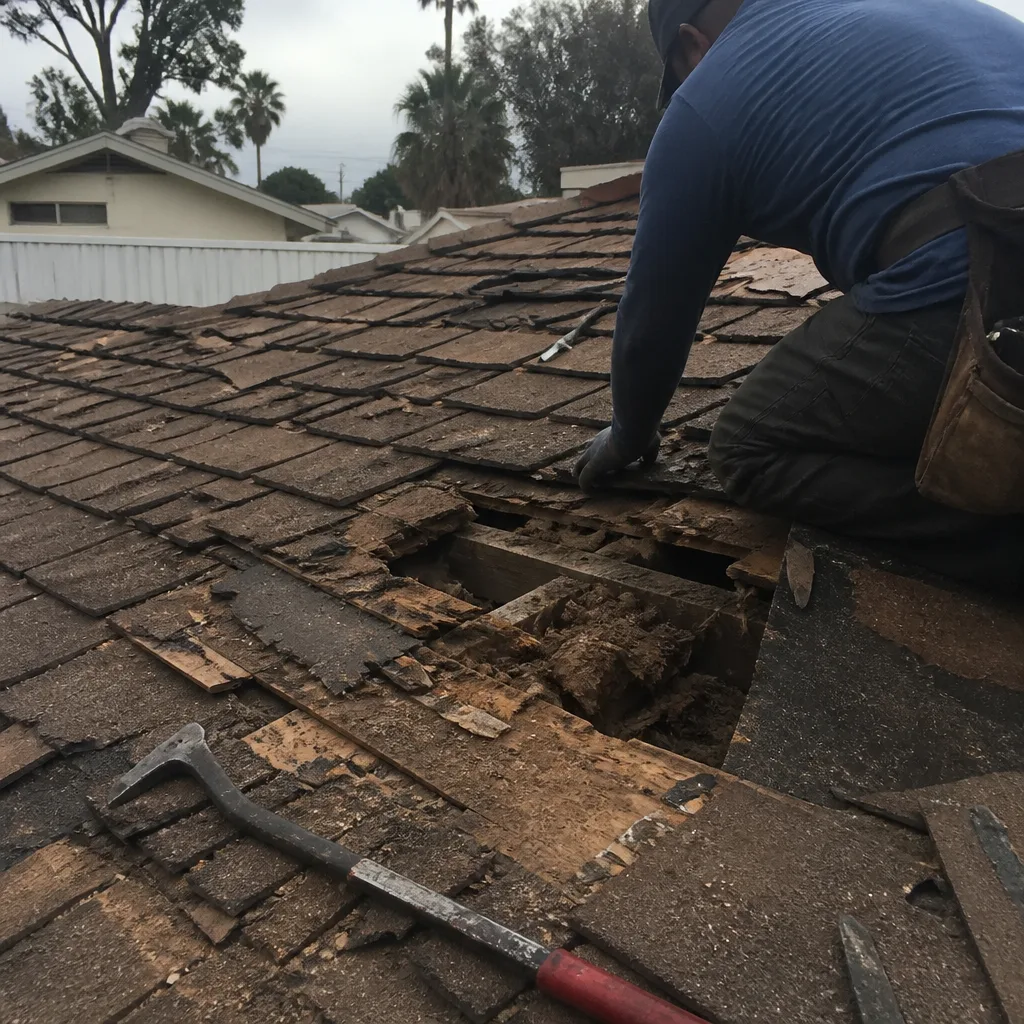 Before
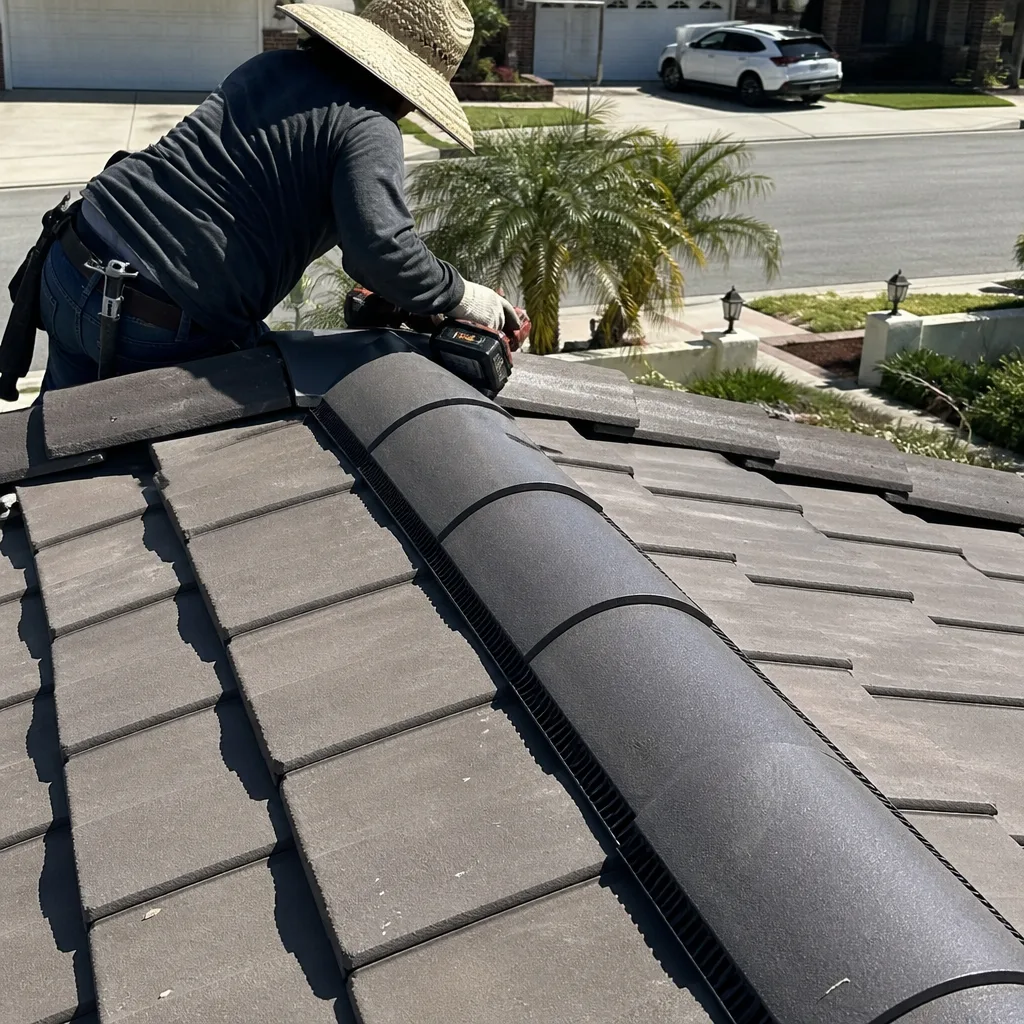 After
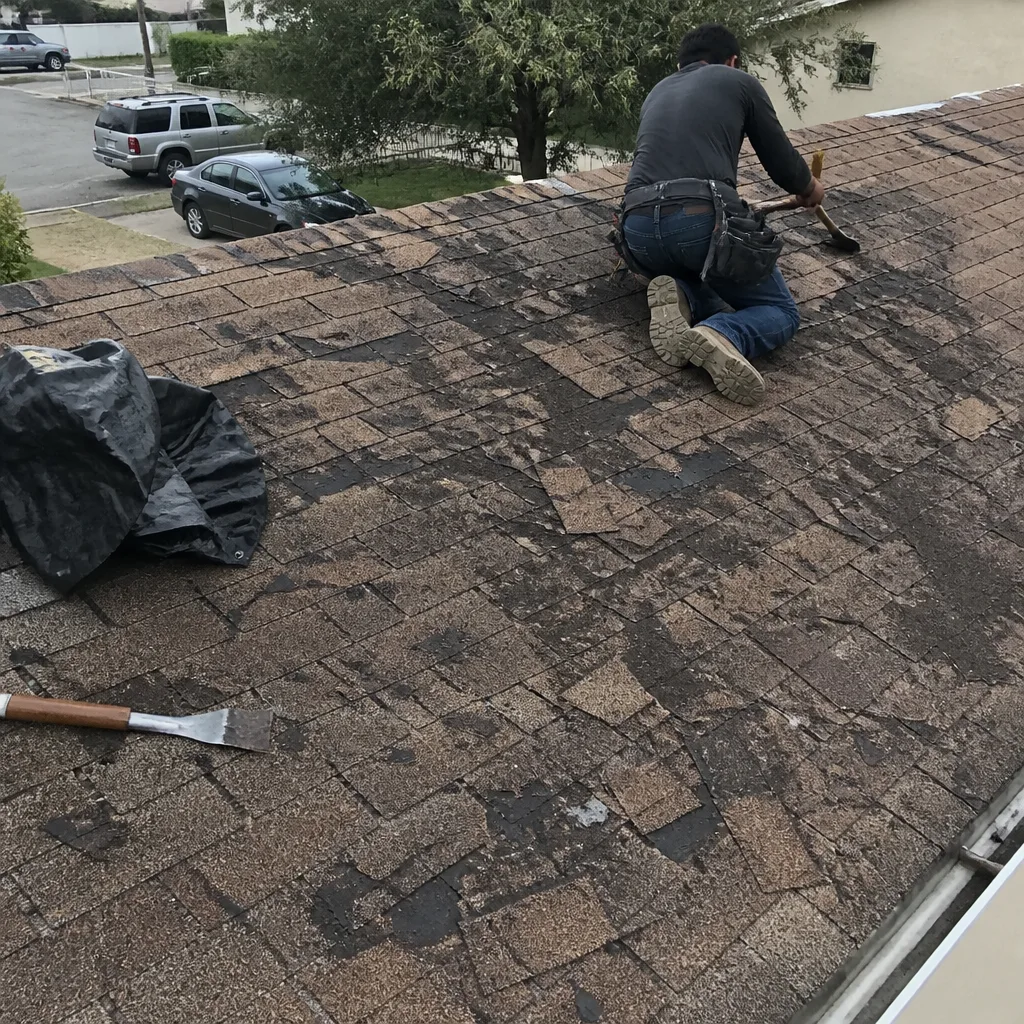 Before
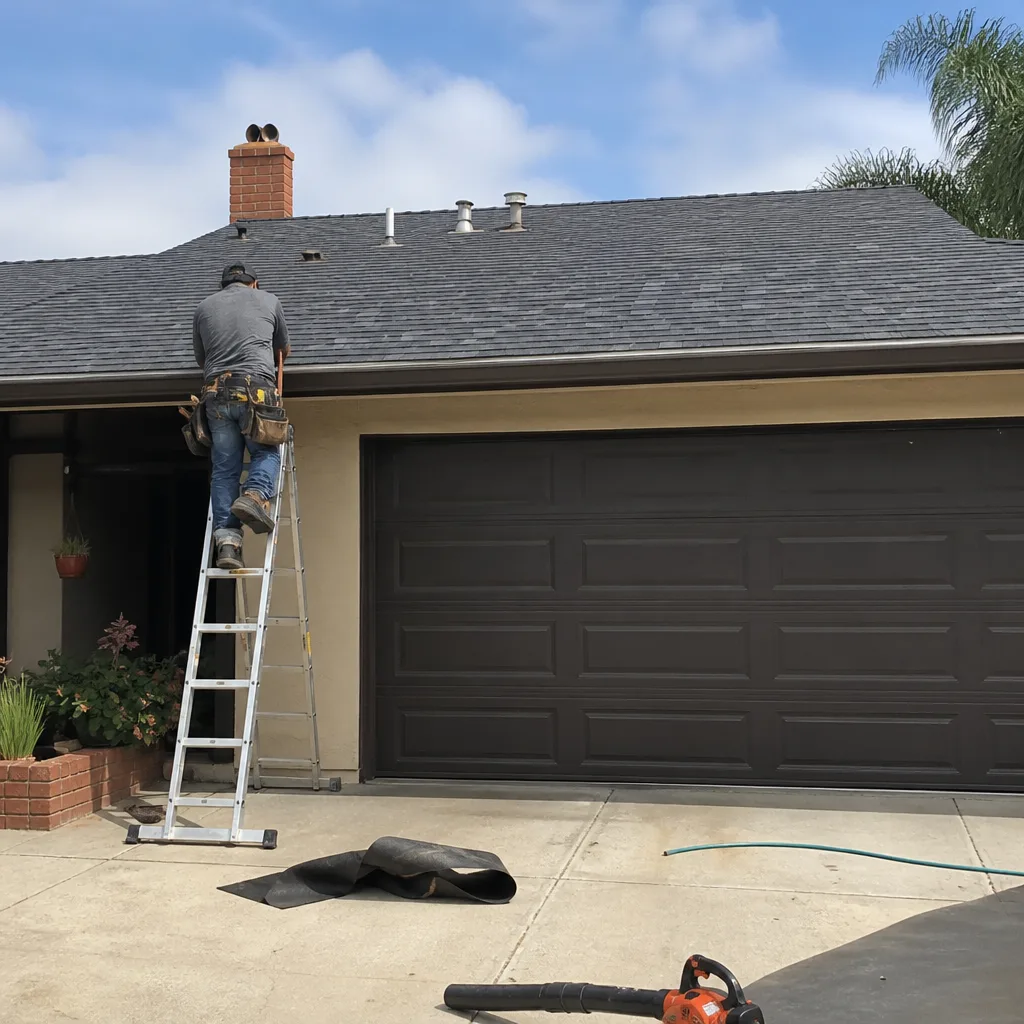 After
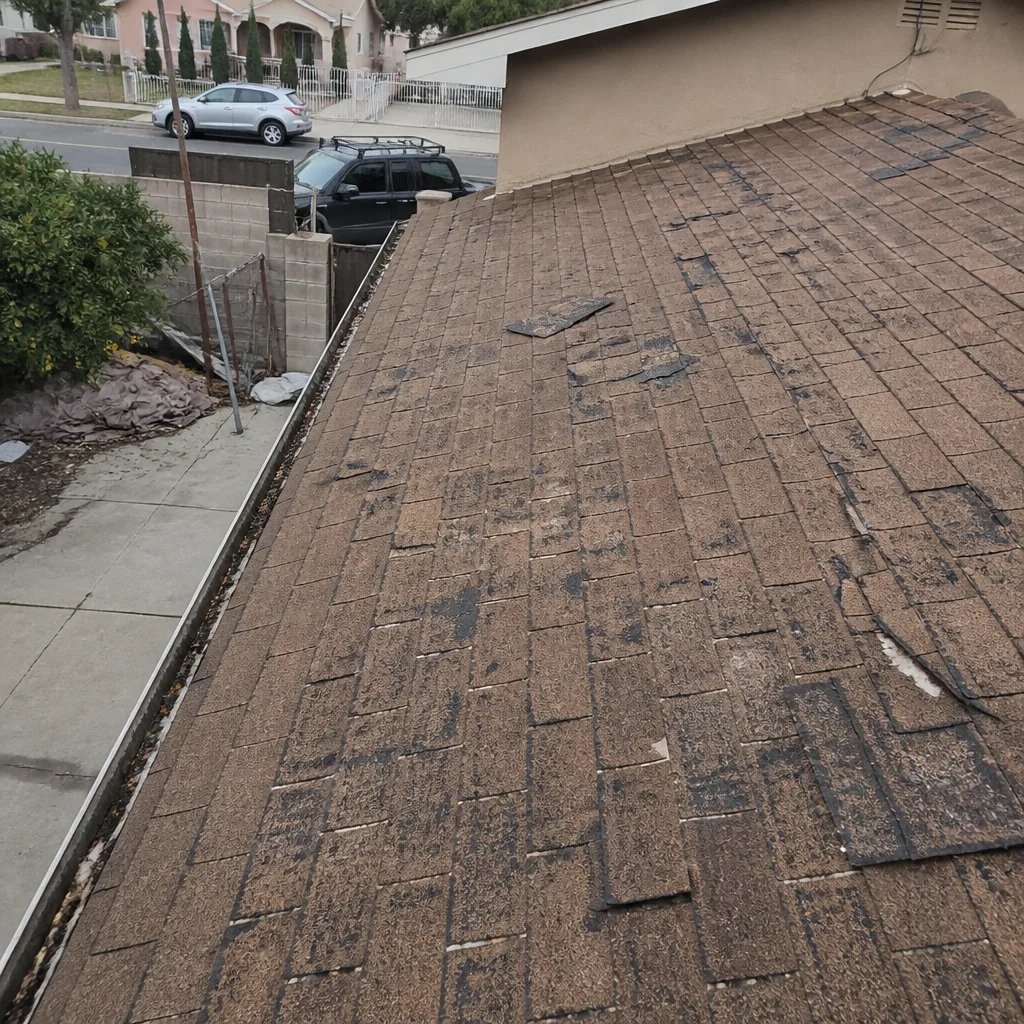 Before
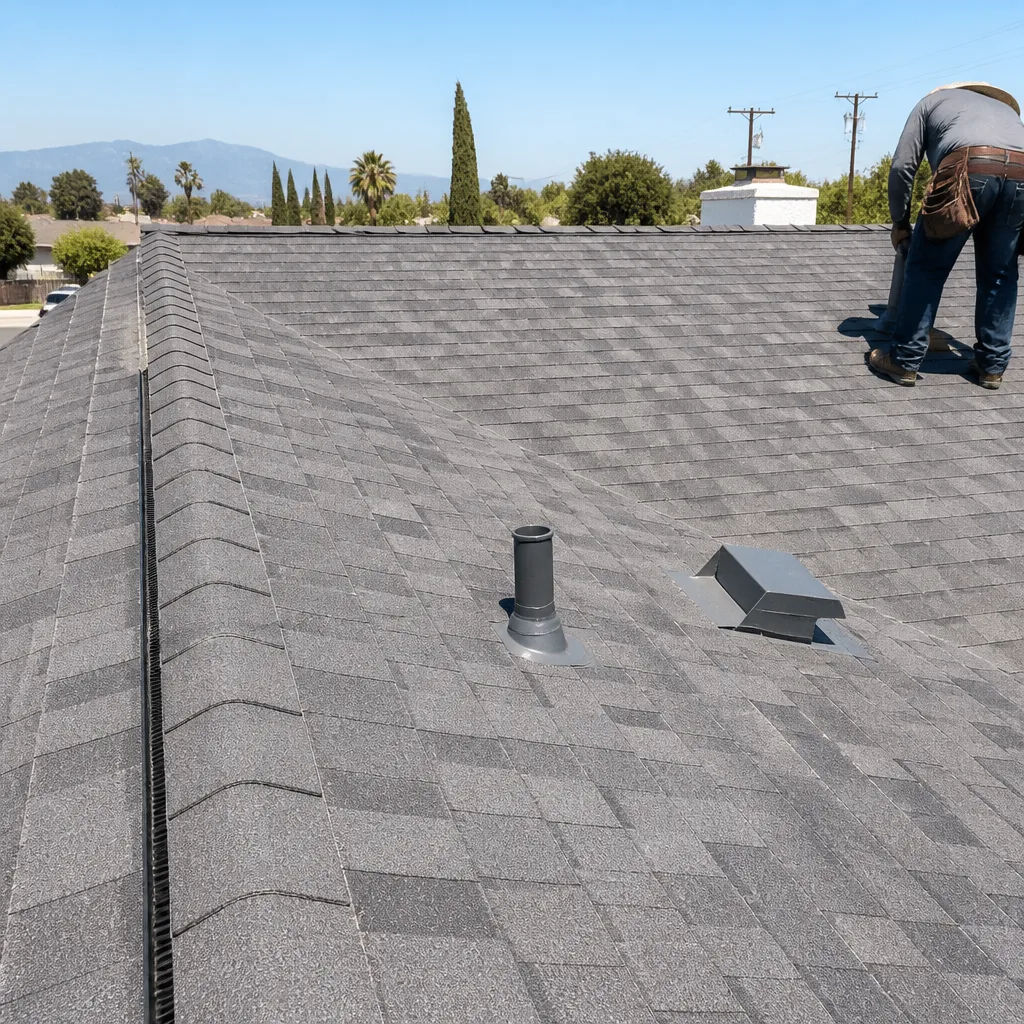 After