Last updated October 31, 2026
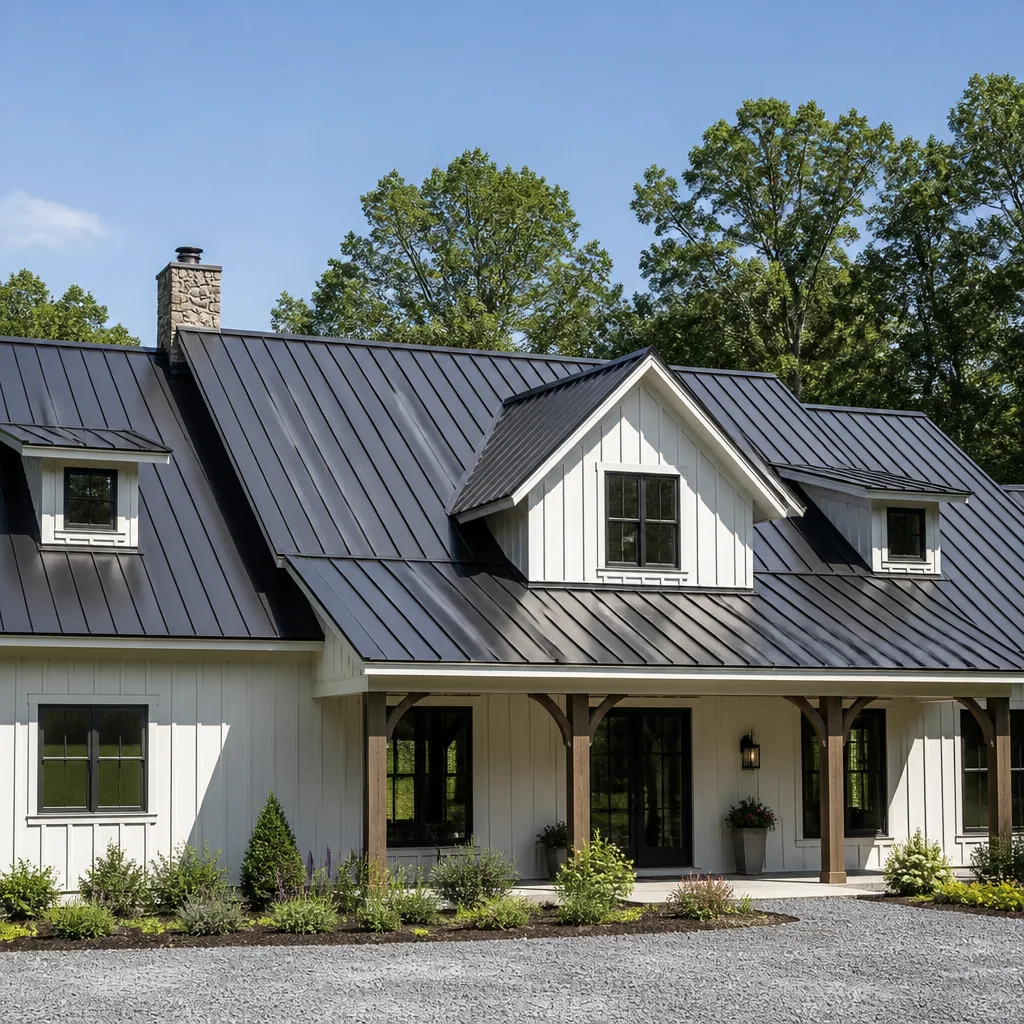 Metal roofing
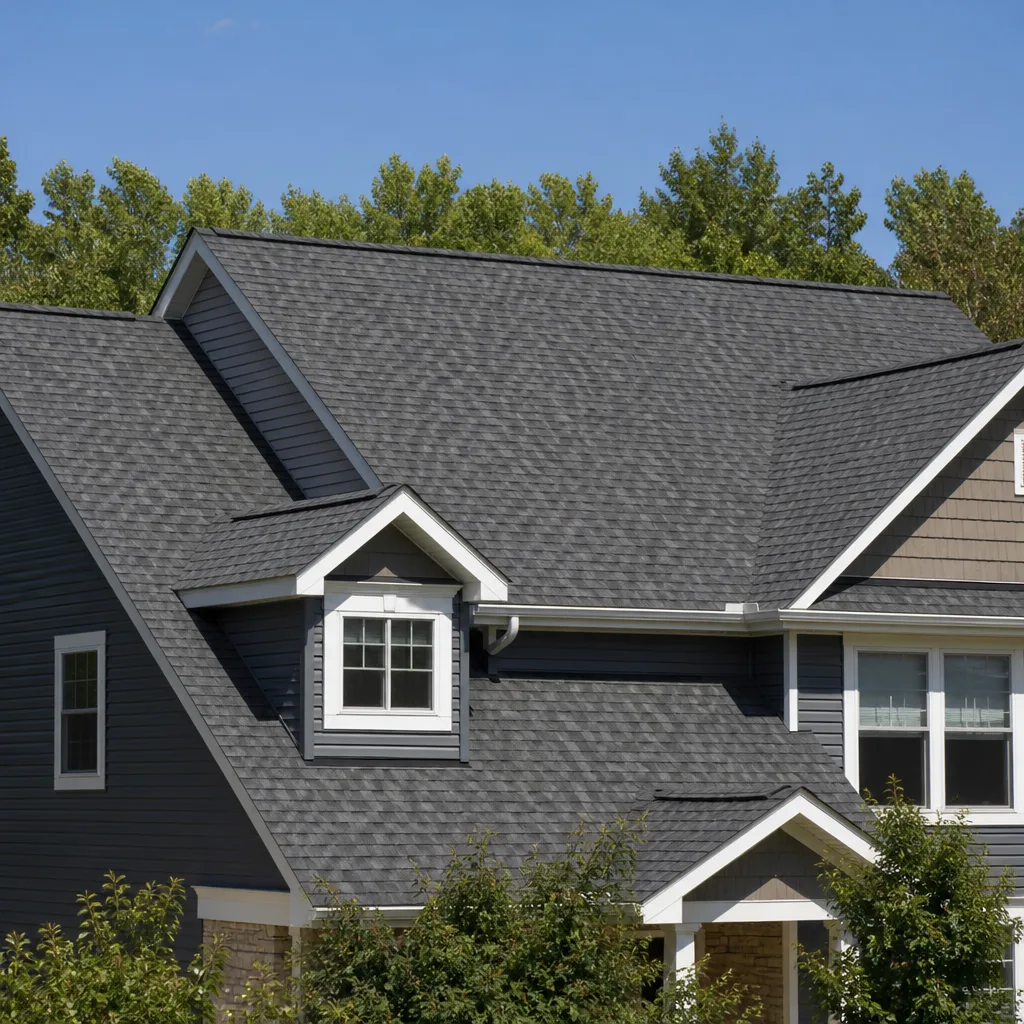
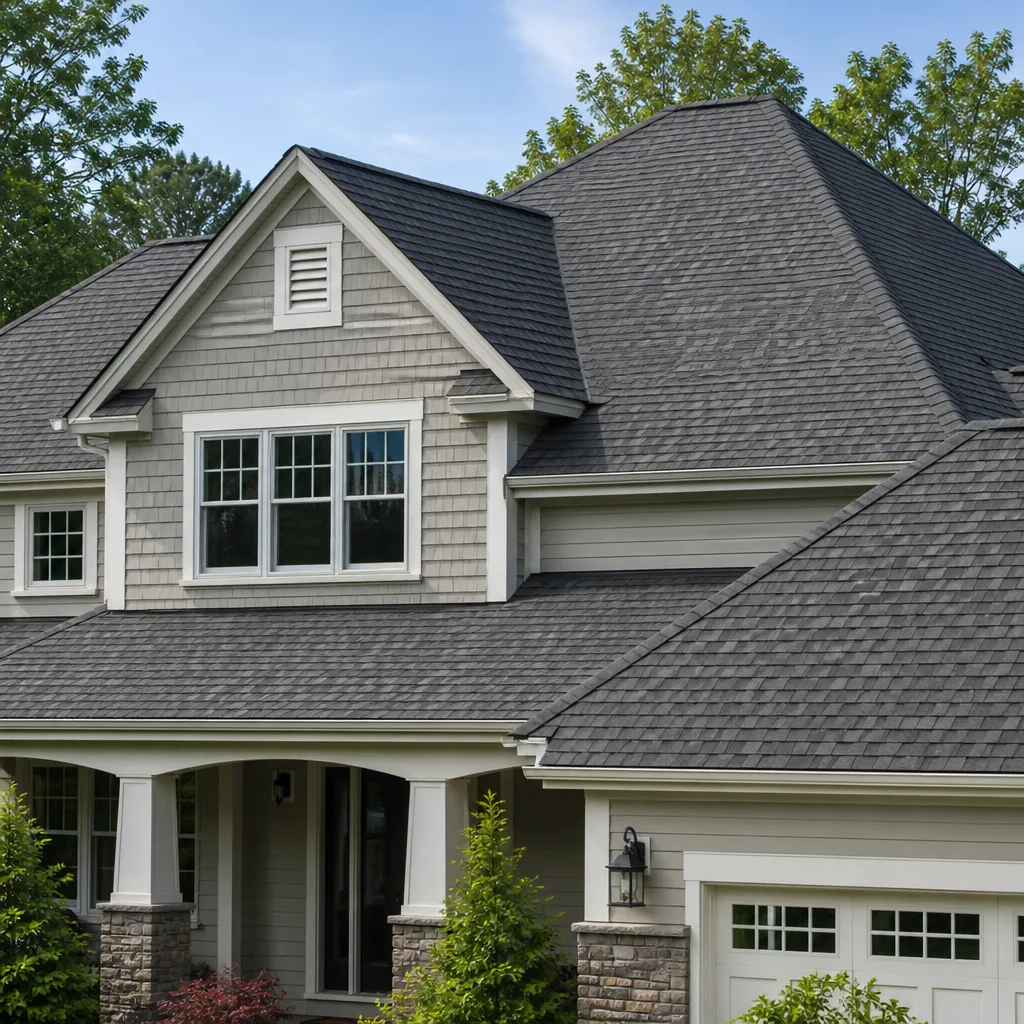 Architectural shingles
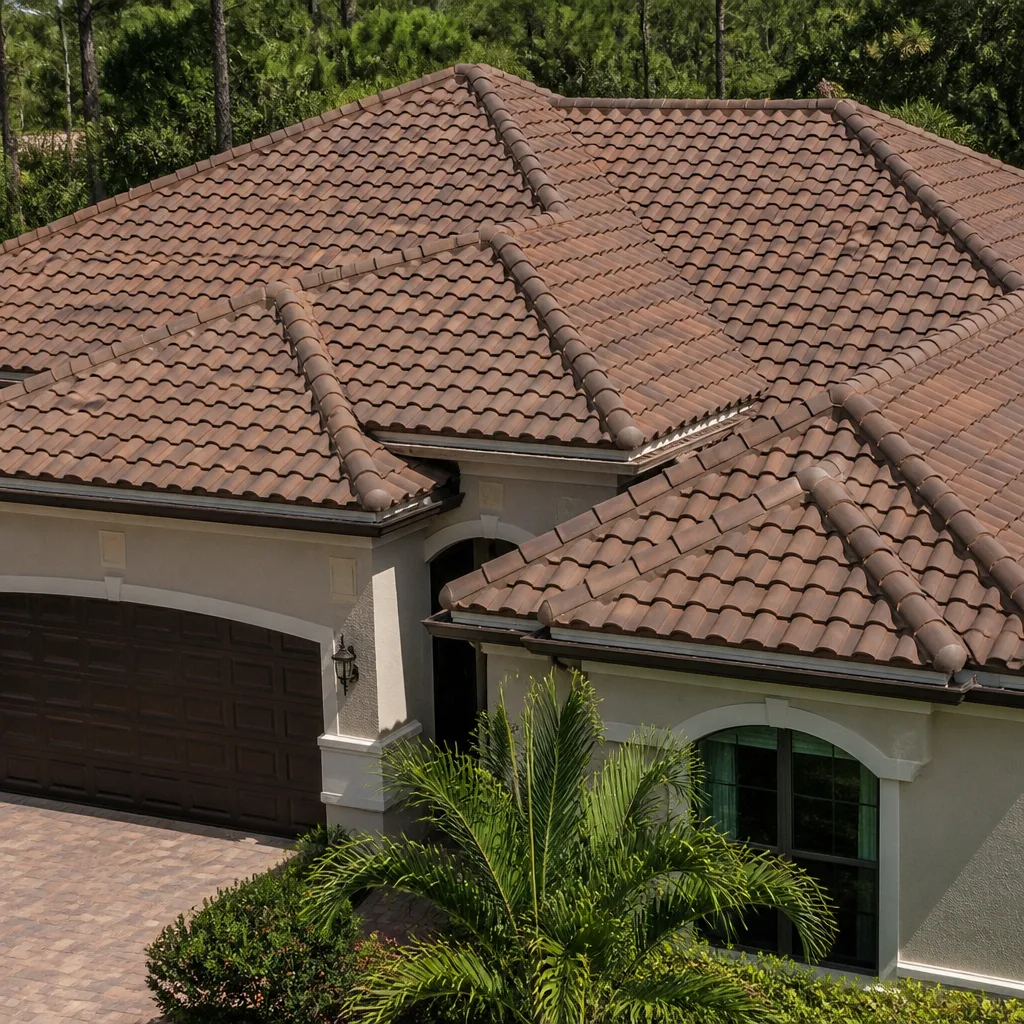 Tile roofing
 GAF
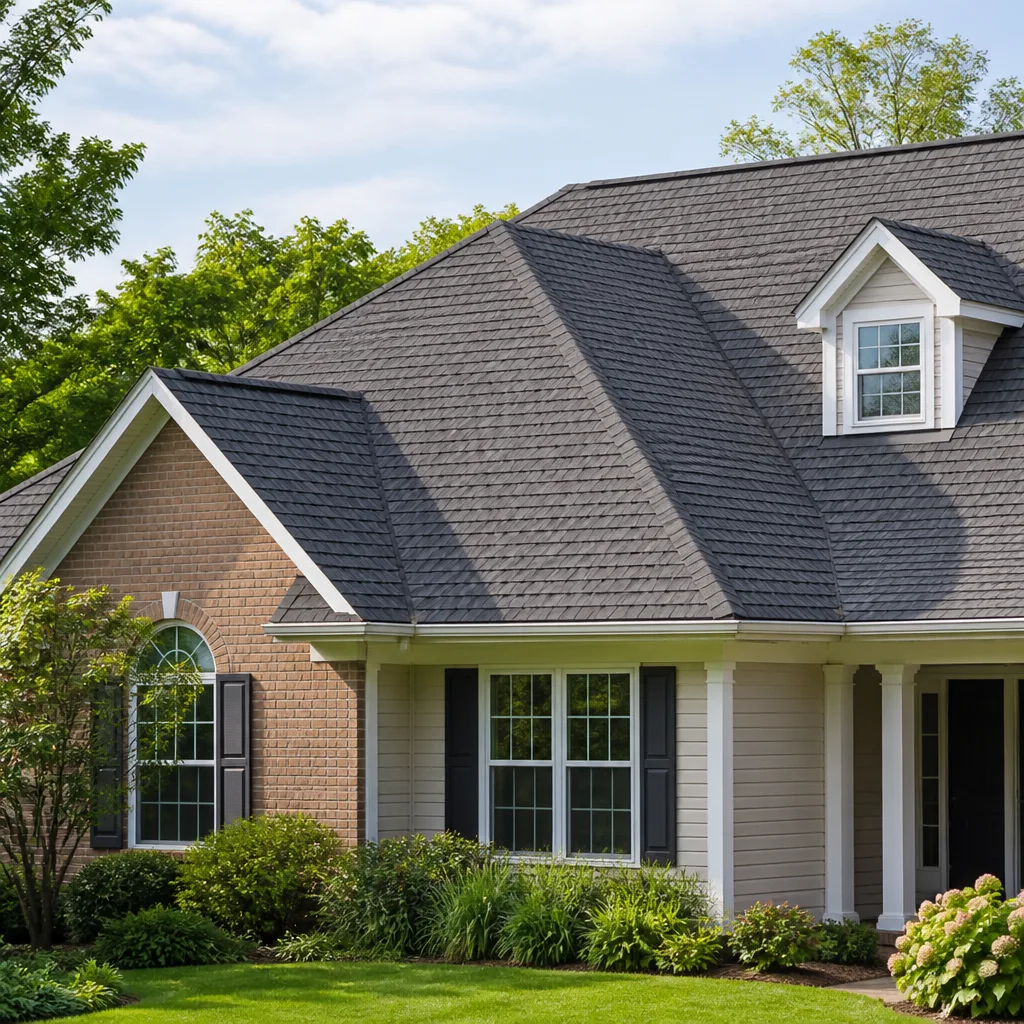 Owens Corning
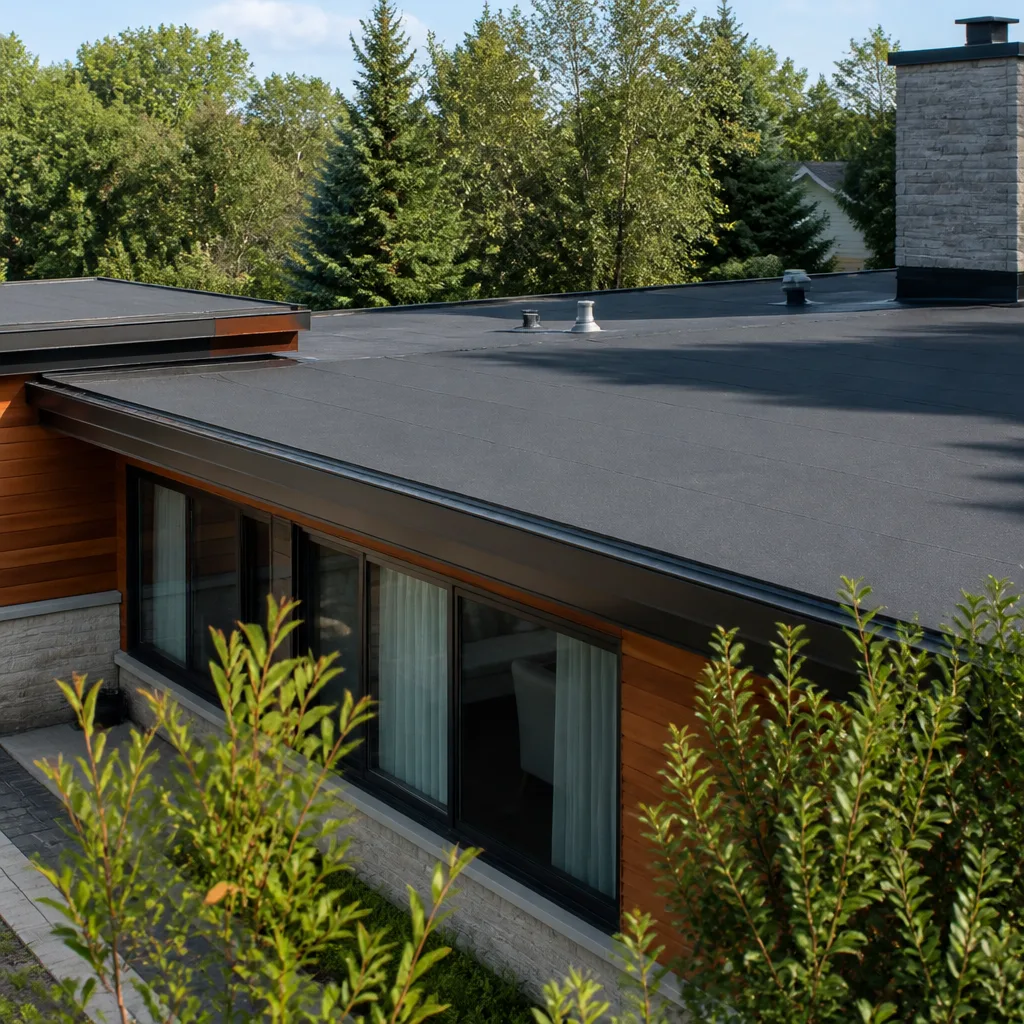 Flat & low-slope
Free roof inspection with deck photos before we talk money - GAF and Owens Corning certified installation
The Complete Guide to Roofing in Rialto
Rialto sits inside one of California’s strictest cool-roof mandate zones, yet a drive down any street built before 2010 shows the same thing: dark asphalt shingles soaking up Inland Empire sun. That mismatch is not a style choice. It’s a quiet tax on every homeowner who pays a summer electric bill here. This guide explains exactly how Rialto’s climate zone, wind patterns, housing stock, and fire-adjacent geography should shape every decision you make about your roof, from the first inspection to the final shingle.
Quick Answer
Roofing in Rialto means choosing materials rated for IECC climate zone 10 heat exposure, installing them with fastener schedules built for 210 Freeway wind-corridor uplift, and verifying Class A fire ratings where the city meets wildfire-adjacent foothill zones. Most Rialto homes built before 2000 need more than a reshingle: they need deck assessment, ventilation correction, and an honest conversation about whether repair or full replacement makes financial sense before the next Santa Ana season.
Styles & brands we work with
Table of Contents
- Why Rialto Roofs Age Faster Than National Averages
- Title 24 and Rialto Material Requirements Explained
- The 210 Freeway Wind Corridor and Uplift Risk
- Rialto Housing Stock and What It Means for Tear-Off Costs
- Class A Fire Ratings and Wildfire-Adjacent Zones
- Material Lifespans Calibrated to Rialto UV, Not National Averages
- Roof Inspection, Repair, or Replacement: How to Know
- Cost Realities for Rialto Roofing in 2026
Why Rialto Roofs Age Faster Than National Averages
A 30-year shingle in Rialto does not last 30 years. That is not a manufacturer lie. It is physics interacting with geography. Rialto averages over 280 sunny days per year, and summer surface temperatures on a dark roof regularly exceed 160°F. That sustained thermal load breaks down the petrochemical compounds that keep asphalt shingles flexible. When shingles lose flexibility, they crack. When they crack, water gets in.
The national lifespan estimates you see on manufacturer packaging are calculated using test conditions that do not include Rialto’s combination of high UV index, low humidity, and rapid nighttime cooling. A shingle here heats all day, then contracts sharply at night. That thermal cycling is the thing that pulls nails loose and separates sealant strips. We’ve seen shingle roofs in the older Rialto tracts near Foothill Boulevard that look structurally sound from the ground but fail a basic lift test across forty percent of the field once you actually get up there.
What this means for homeowners is simple: when you are comparing materials, compare them using Inland Empire performance data, not the national brochure. A material rated for 25 years elsewhere may perform more like 16 to 18 years here. That changes the math on whether you invest in a premium product or a value product. It also changes how often you should schedule an inspection. In Rialto’s climate, every three years is realistic, not conservative.
This is the starting point for every roofing conversation we have in Rialto. Before anyone talks brand or color, we talk about what this specific climate does to roofs. It sets expectations honestly, and it makes every later decision more rational.
Title 24 and Rialto Material Requirements Explained
Rialto falls under California Energy Code Title 24, Part 6, and specifically within IECC climate zone 10. Zone 10 is the hottest designation in California’s energy code, covering the warmest parts of the Inland Empire and desert regions. This is not a minor classification. It means any roof replacement or significant re-roof in Rialto is legally required to meet minimum solar reflectance and thermal emittance standards unless the project qualifies for a specific exception.
For most steep-slope residential roofs, the practical path to compliance is using a cool-roof rated shingle. Several of the brands we install, including CertainTeed and Owens Corning, manufacture asphalt shingle lines specifically engineered with reflective granules that meet California’s cool roof requirements. These shingles look like standard architectural shingles in most color ways, but the granules reflect a higher percentage of solar radiation, reducing attic temperatures and lowering cooling load.
The energy savings are measurable. A cool roof in Rialto can reduce attic temperatures by 20 to 30 degrees on a 100-degree day. That reduction translates directly into lower air conditioning run times during July and August, when Rialto’s electrical rates peak. For a 1,600 square foot ranch on a slab foundation, which describes thousands of Rialto homes, annual cooling savings of $150 to $300 are realistic.
There is an important exception to know. If your roof has a steep slope and is shaded for most of the day by mature trees, the energy benefit of a cool roof shrinks. The code still applies, but the performance difference between a standard shingle and a cool-roof shingle narrows. A good inspector evaluates your actual solar exposure before recommending a product, rather than defaulting to the code-maximum option. That is the difference between a compliance strategy and a cost strategy.
The takeaway for buying decisions is this: when a contractor in Rialto proposes a re-roof, the quote should specify which Title 24-compliant material is included. If it does not, you are dealing with someone who is either uninformed about local code or hoping you are. Either way, you will own the consequences at final inspection.
The 210 Freeway Wind Corridor and Uplift Risk
The 210 Freeway runs through Rialto and acts as a natural wind channel for the Santa Ana winds that blow from the northeast each fall. When wind hits a structure, it creates uplift: a negative pressure force that pulls roofing materials upward and away from the deck. In most inland California cities, uplift is a concern mostly for tile roofs. In Rialto, the 210 corridor makes uplift a factor for every roof type, including composition shingle.
Uplift risk changes two things about a roof installation: the fastener schedule and the sealing method. A standard asphalt shingle installation uses four nails per shingle in normal wind zones. In Rialto’s wind corridor, particularly for homes within a quarter mile of the freeway or on exposed north-facing slopes, six nails per shingle is the minimum we specify on our own installations. The additional fasteners resist the repeated lift cycles that loosen shingles over time, especially along eaves and rakes where uplift forces concentrate.
Sealant strips matter too. Shingle manufacturers design their products with thermal sealant that bonds overlapping courses together. That sealant must be allowed to cure properly. If a roof is installed during cooler months, the sealant may not activate fully, leaving the field vulnerable to the first strong Santa Ana event. It is one more reason fall inspections in Rialto are common: we see the damage from the previous wind season and get the roof ready for the next one.
Tile roofs present their own uplift variables. Concrete and clay tile are heavy, which provides natural resistance to modest wind. But in high-uplift conditions, individual tiles can lift, crack, or slide if the attachment system is insufficient. The answer is not necessarily more fasteners. It is the right fastening system for the tile profile and the specific deck condition. A tile roof on a 1970s-era Rialto home with 1×6 spaced decking requires a different attachment approach than the same tile on a modern plywood deck.
The practical implication for homeowners: a roofing quote in Rialto should be priced based on wind zone, not copied from a template. When we inspect a home near the 210 corridor, we look at exposure direction, slope, and surrounding structures before we ever specify a fastener schedule. It is one of the ways a roofing-only contractor approaches the job differently than a generalist looking at a checklist.
Rialto Housing Stock and What It Means for Tear-Off Costs
Rialto’s housing was built in distinct waves. The post-World War II tracts near downtown and along Baseline Road are heavy on smaller ranch homes with low-slope or nearly flat roof sections. The 1970s subdivisions further north and east often feature larger footprint homes with more conventional gable and hip roof geometries. Neither era is a problem on its own. But each comes with a predictable set of deck conditions that affect the cost and scope of a re-roof.
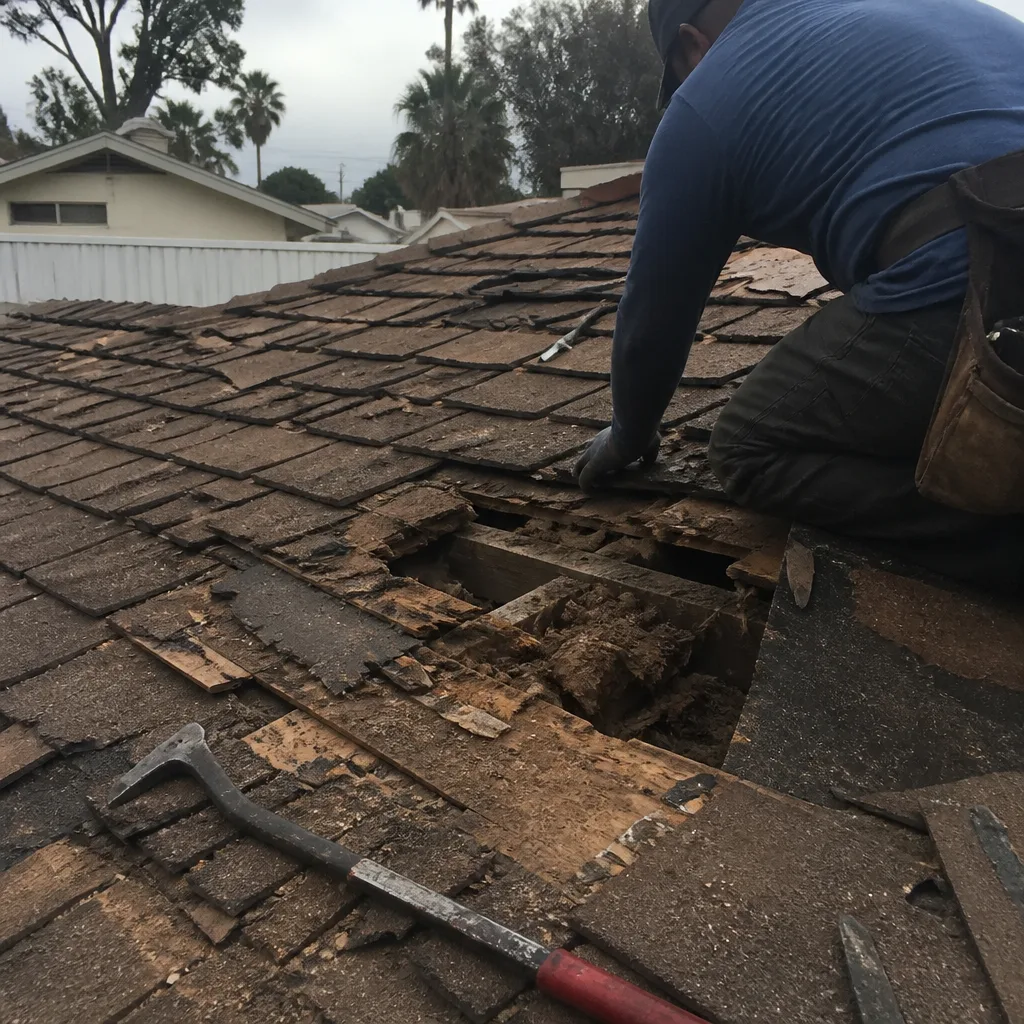
In the post-war homes, the most common deck material we encounter is skip sheathing or spaced 1×6 boards. These decks were built for wood shake or early composition shingles that had rigid backings. Modern architectural shingles perform poorly on spaced decking because they require continuous support across the entire surface. That means a reshingle on one of these homes usually requires a re-deck first: installing a layer of plywood or OSB over the existing spaced deck before the underlayment and shingles go down.
Re-decking is not a hidden scam cost. It is a material necessity, and it is usually one to three thousand dollars that the homeowner did not anticipate. A competent contractor identifies this during the inspection phase and puts it in the quote the first time, rather than discovering it after tear-off and hitting you with a change order. The phrase “won’t know until we open it up” is not acceptable on a Rialto home with a known construction era. The deck type is predictable, and an experienced roofer checks it from the attic side before tearing anything off.
Homes built in the 1970s and 1980s present a different but equally common condition: plywood decking that is structurally sound but has localized rot along eaves, around plumbing vents, or under valleys. The rot usually follows the leaks, and the leaks usually follow the flashing failures. The cost of repairing four sheets of rotted plywood is minor compared to the cost of ignoring it and allowing moisture into the framing. We tell Rialto homeowners that a proper tear-off estimate includes a contingency line for deck repair, specified as a per-sheet cost and capped at a stated maximum. That way you know the worst-case price before the job starts.
The point is not to scare you about old homes. The point is that Rialto’s housing age makes an honest pre-tear-off assessment more valuable than in a newer suburb where every roof is on uniform plywood. When deck condition is unknown, the quote is a guess. When deck condition is verified from the attic, the quote is a plan.
Class A Fire Ratings and Wildfire-Adjacent Zones
Rialto sits at the base of the San Bernardino foothills, and the northern edge of the city borders terrain that carries elevated wildfire risk. Even if your specific home is not inside a mapped Cal Fire hazard severity zone, the broader Rialto area is subject to ember-driven fire exposure during high-risk Santa Ana events. Embers can travel more than a mile from a fire front. A roof assembly with a poor fire rating is an invitation.
California building code requires Class A fire-rated roof assemblies for most residential construction, and Class A is the highest rating available. The rating applies to the entire roof assembly, not just the surface material. That means the underlayment, the decking, and the installation method all contribute to the fire performance of the finished roof. A Class A shingle over an inadequate underlayment does not deliver Class A protection.
Several of the product lines we work with across GAF, CertainTeed, and Owens Corning are Class A fire-rated systems when installed per manufacturer specifications. Fiberglass-reinforced asphalt shingles, concrete tile, and clay tile all carry strong fire performance records. The key word is “system.” A fire rating is not a shingle feature. It is an assembly feature, and the contractor’s installation practices are part of the assembly.
For Rialto homeowners in the northern neighborhoods closest to the 210 corridor and the foothill transition, we recommend keeping fire rating as a primary material criterion rather than a secondary one. The cheapest shingle brand might meet code. The question is whether it meets your actual risk tolerance. You live in a city where a wind-driven fire event is a possibility, not an abstraction. That fact should inform the product conversation.
One practical note: maintaining a Class A roof assembly includes keeping the roof surface and gutters clear of accumulated dry debris. Pine needles and leaf litter trapped in a valley create a fuel bed. A rating on paper does not protect a roof that has been acting as a debris trap for two years. This is one of the things we check during every structured inspection in Rialto, because it is a zero-cost fix with real fire-safety payoff.
Material Lifespans Calibrated to Rialto UV, Not National Averages
Every roofing manufacturer publishes a lifespan estimate. Those estimates are not wrong, but they are national averages, and Rialto is not an average climate. The Inland Empire’s UV index is among the highest in California, and sustained UV exposure is the primary driver of material deterioration in every steep-slope roofing category. Here is what life expectancy actually looks like in Rialto, based on what we observe in the field across the city’s housing stock, and you can find more guides & resources on our blog.
Composition Asphalt Shingle
National average: 25 to 30 years. Rialto realistic: 16 to 22 years for standard architectural shingles, with the shorter end applying to unshaded south-facing roofs and the longer end applying to homes with significant tree cover. Cool-roof reflective shingles from CertainTeed and Owens Corning tend to outperform standard shingles in Rialto because reduced thermal cycling means less sealant fatigue and fewer stress cracks.
Concrete Tile
National average: 40 to 50 years. Rialto realistic: 35 to 45 years for the tile itself, with the underlayment requiring replacement every 20 to 25 years. Most of what we see in Rialto’s 1980s-era tile tracts is not tile failure. It is underlayment failure that went undetected because the tile above it looked fine from the street.
Clay Tile
National average: 50+ years. Rialto realistic: 40 to 50 years for the tile profile, with the same underlayment replacement caveat. Clay tile in Rialto performs well against UV but is more susceptible to chipping from impact and more expensive to repair in small quantities.
Wood Shake and Shingle
National average: 25 to 30 years. Rialto realistic: 12 to 18 years without aggressive maintenance, and even then, the material fights against UV degradation, rot from morning dew cycles, and fire rating concerns that make it a poor choice for Rialto’s fire-adjacent geography. We rarely recommend wood in Rialto anymore.
Standing Seam Metal
National average: 40 to 60 years. Rialto realistic: 40 to 50 years, with excellent performance. Metal roofs carry a high upfront price, but they handle Rialto’s UV load better than any asphalt product and the reflective finishes reduce cooling costs substantially. For homeowners planning to stay in a Rialto home for 20-plus years, metal is an under-appreciated option.
The pattern is clear: Rialto’s UV index compresses the lifespan of every organic material and leaves inorganic materials largely unaffected. That does not mean everyone should buy metal. It means you should run your cost-per-year calculation using Rialto-realistic numbers, not the numbers on the manufacturer’s website. A $40,000 metal roof that lasts 45 years costs $889 per year. A $22,000 architectural shingle roof that lasts 18 years costs $1,222 per year. The “expensive” option is sometimes cheaper on the only metric that matters: annualized cost of ownership.
Roof Inspection, Repair, or Replacement: How to Know
Every roof decision we make in Rialto starts with one question: what is actually true about this roof right now? The answer comes from a structured inspection, not from an estimate dressed up as an assessment. Knowing what you are dealing with before you commit changes every downstream conversation.
When an Inspection Is the Right Call
If your roof is less than 10 years old and you have no active leaks, the right move is an inspection. Schedule one every three years in Rialto’s climate. The goal is not to sell a roof. The goal is to catch minor failures, resealed flashing, cracked boots around plumbing vents, lifted shingles along eaves, before they become major failures. A structured inspection produces a written condition report that tells you what is okay, what needs attention now, and what to watch in the next 12 to 24 months.
When Repair Makes Sense
Repair is the right call when damage is localized and the surrounding roof system is sound. Common examples in Rialto include wind-lifted shingles after a Santa Ana event, flashing failures around chimneys or skylights, valley leaks, and dry rot around fascia boards. If the roof is under 15 years old and the decking is intact, a repair that costs $800 to $2,500 extends the life of the roof meaningfully. The key discipline is confirming that the repair is actually localized. A leak in the living room ceiling can originate halfway up the roof slope. Without an inspection, you are guessing.
When Replacement Is Unavoidable
Replacement becomes the financial reality in Rialto when the roof has reached 17 to 20 years on standard shingles, when multiple leaks are appearing in different areas, when granule loss is heavy enough that the shingle surface has become smooth in patches, or when a recent inspection reveals that the decking under a significant portion of the roof is compromised. Replacement is also the right call if your current roof does not meet Title 24 cool-roof standards and you are planning to sell the home in the next few years. A non-compliant roof is a negotiation point a buyer will use against you.
- Get a structured inspection from a roofing-only contractor, not a sales pitch from a company whose goal is to replace the roof the same day.
- Ask for the findings in writing, with photo documentation of any damaged areas.
- Match the finding to the decision: minor failure equals repair, systemic failure equals replacement.
- Request quotes for the recommended scope only, with no pressure to expand it.
The same company should be able to handle all three outcomes. That is the lifecycle advantage of working with a specialist: the contractor who finds the problem can fix it or replace it without handing you off to another crew. From inspection to repair to full replacement, one company, one accountability.
Cost Realities for Rialto Roofing in 2026
Roofing costs in Rialto have risen with the cost of materials and labor across Southern California, but the range for any specific job depends almost entirely on four variables: roof size, pitch, deck condition, and material selection. Here is what a homeowner should expect when budgeting for a Rialto roof in the current market.
Typical Rialto Roof Estimates by Scope
- Structured roof inspection: $150 to $350 for a written condition report with photos, depending on roof size and access difficulty.
- Minor repair (flashing, small leak, single shingle patch): $500 to $1,200, with the range driven by the difficulty of access and the type of flashing involved.
- Moderate repair (multiple leak points, valley rebuild, stack boot replacement): $1,200 to $3,500, depending on the extent of decking replacement required.
- Full composition shingle replacement on a 1,600 square foot Rialto ranch: $16,000 to $26,000, including tear-off, deck repair allowance, underlayment, Title 24-compliant shingles, and all flashings.
- Full concrete tile replacement on the same home: $28,000 to $45,000, with the cost heavily influenced by tile profile and the condition of existing deck framing.
- Standing seam metal roof on the same home: $32,000 to $48,000, with the premium justified by longer lifespan and higher solar reflectivity.
No honest roofer in Rialto gives a fixed quote over the phone without seeing the roof. What we can do on a first call is establish a realistic budget range based on your home’s square footage, roof style, and construction era, and then confirm it with a site visit. The free estimate is standard practice. If a contractor refuses to put the assessment in writing before you commit, walk away.
On the material side, this is where working with a roofing company that has access to multiple brands changes the conversation. We are not locked into one manufacturer’s pricing structure. That means the material recommendation is driven by your budget and your roof’s actual performance needs, not by whatever happens to be in a warehouse. Seven brands, one recommendation, yours.
We price jobs as fixed-scope contracts, which means the number on the quote is the number you pay unless decking or structural conditions are discovered that could not have been identified during the inspection. We cap deck repair allowances and review them with the homeowner before proceeding. No silent change orders. No end-of-job surprises. Written line-item quotes are the only kind we produce, and we recommend Rialto homeowners accept nothing less from any contractor.
If you are planning a roof replacement in Rialto, contact us at Ridgeway Roof Repair home to schedule a free estimate. We also serve the broader Inland Empire from our Roof Repair in San Bernardino service area for repair-specific needs, and provide Roof Replacement in San Bernardino for full re-roof projects across the region. For the critical first step on any roofing decision, see our Roof Inspection in San Bernardino page for details on the structured assessment process.
Common Mistakes to Avoid
- Skipping the attic inspection. A contractor who quotes a Rialto re-roof without entering the attic and checking deck condition from beneath is guessing. The attic tells you what the tear-off will reveal. Anyone who skips this step is setting up a change order.
- Choosing dark shingles by default. Title 24 compliance aside, the performance gap between dark and cool-roof reflective shingles in Rialto’s heat is significant. Dark shingles on an unshaded roof raise cooling costs for the entire life of the roof.
- Accepting a quote that does not specify a fastener schedule. Rialto’s wind corridor makes uplift resistance a real factor. If the quote does not commit to a six-nail fastener pattern or equivalent wind-rated installation, you do not know what you are paying for.
- Treating underlayment as an afterthought. The underlayment is the waterproofing layer. On tile roofs in Rialto, underlayment typically fails before the tile does. Ask what underlayment is specified and how many layers are included.
- Delaying repairs until the next leak appears. A visible leak means the problem has been progressing for months. By the time you see water inside, the decking damage is often broader than the leak’s entry point.
- Assuming the lowest quote is the best deal. A low price usually means something was excluded: deck repair allowance, Title 24-rated materials, proper flashing, or the warranty that should protect the work. Compare line items, not bottom lines.
- Skipping the pre-replacement inspection because the house is being sold. A buyer’s inspector will find the roof problems you ignored. Addressing them before listing puts you in control of the negotiation rather than surrendering a credit at close.
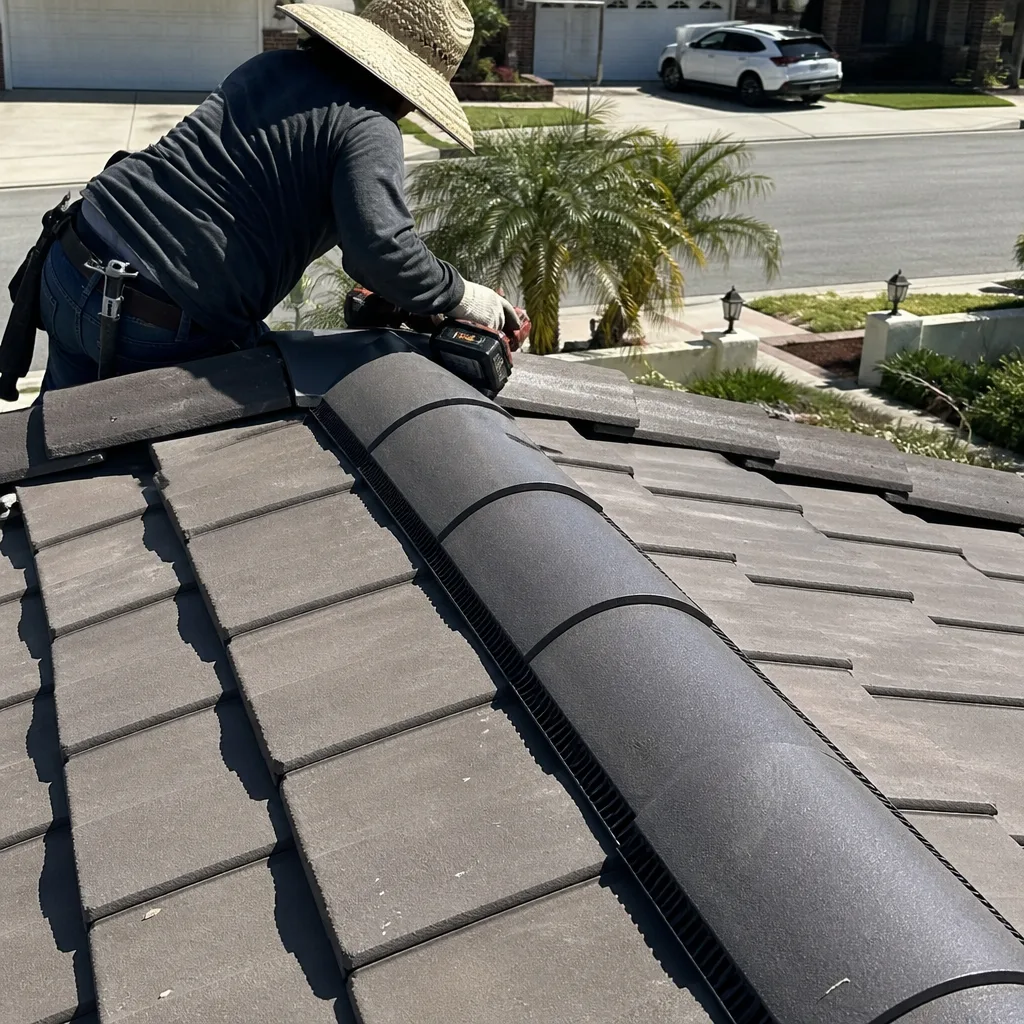
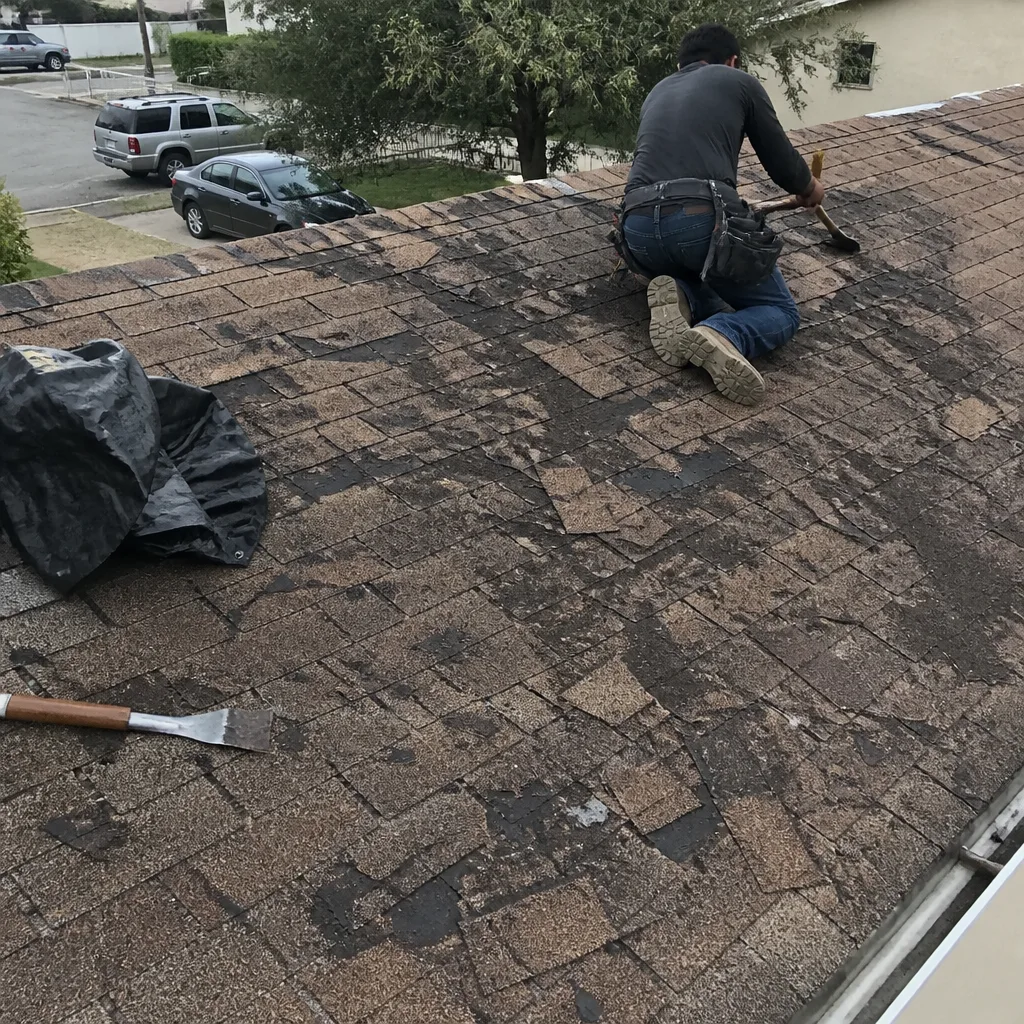
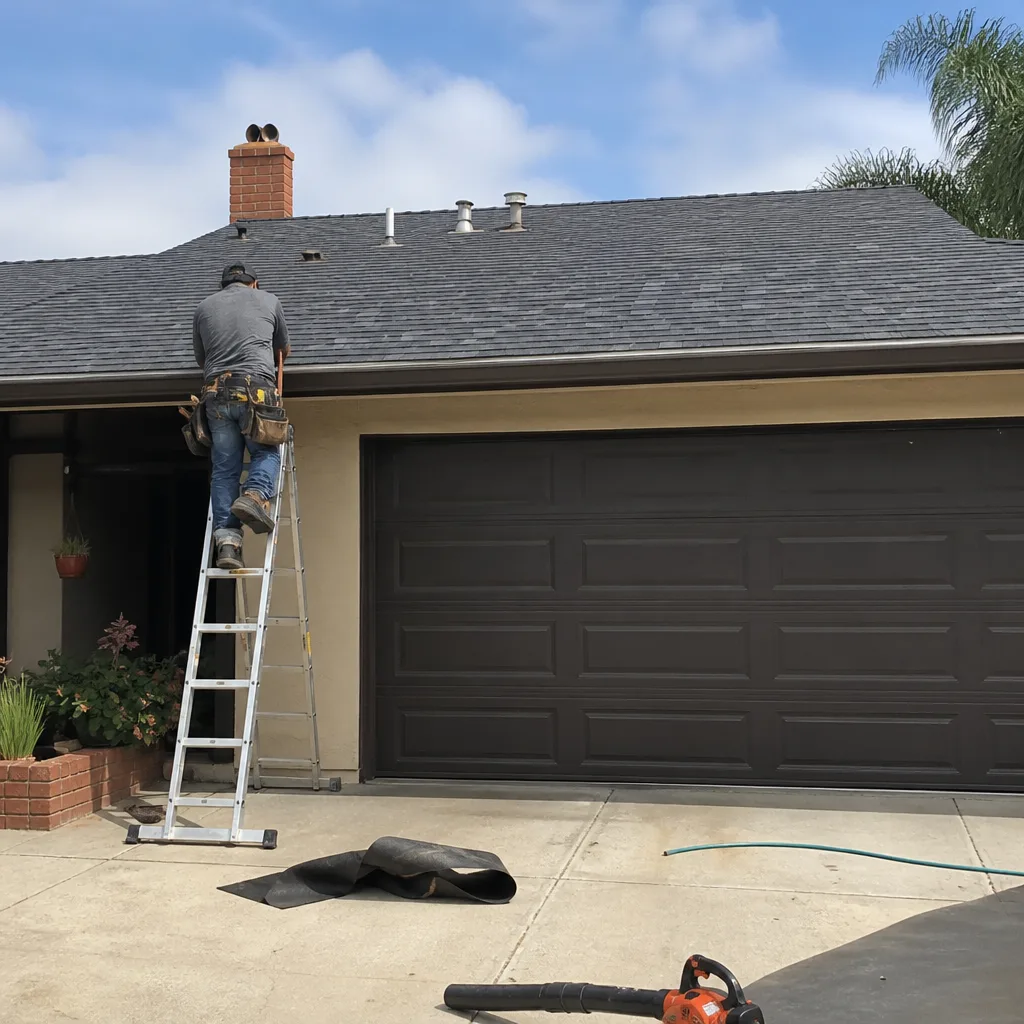
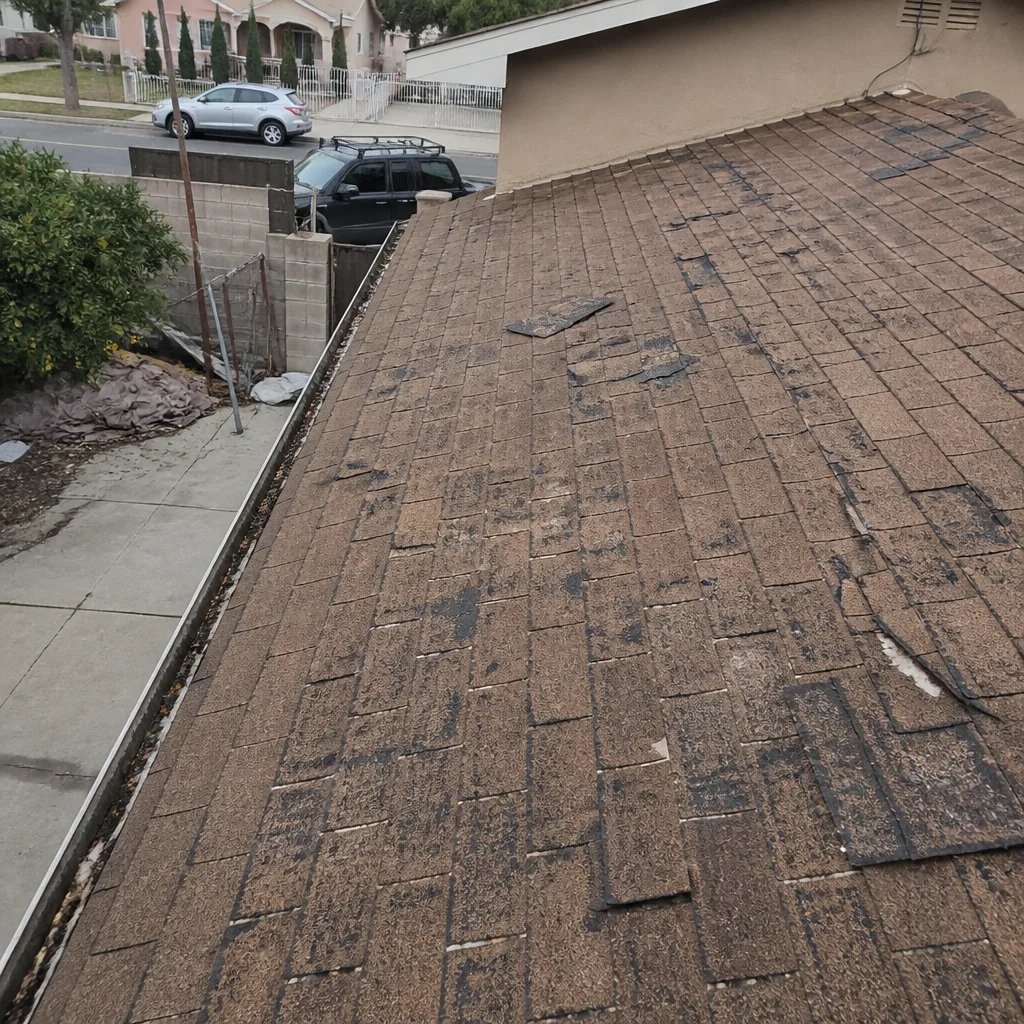
See the difference
 Before
 After
 Before
 After
 Before
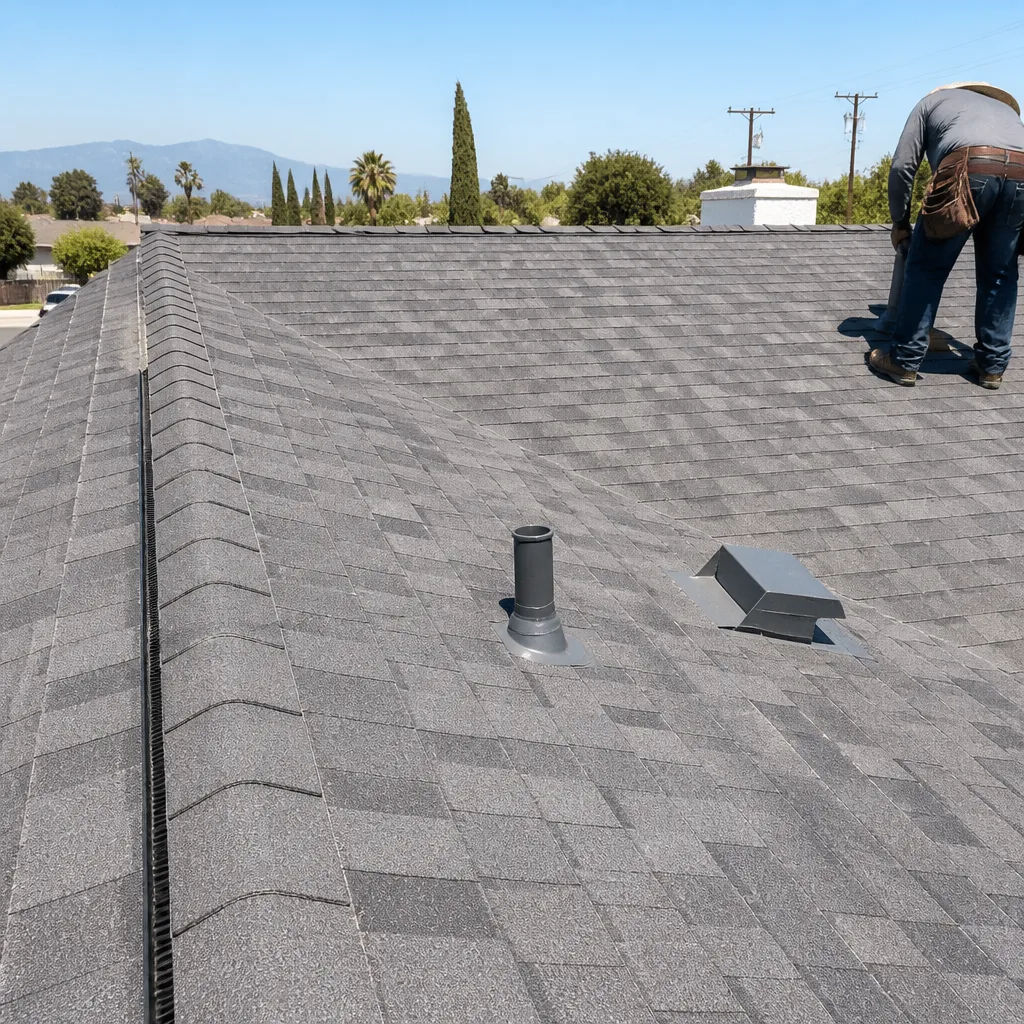 After
When to Call a Professional
You should call a roofing professional in Rialto when you see curled or lifting shingles along the roof edges after a wind event, when you find granules collecting in the gutters, when you notice staining on the ceiling that appears after rain, when daylight is visible through the attic decking, or when your roof has simply passed its 15th or 18th birthday without a formal inspection. These conditions do not improve on their own. What they do is compound while you wait. Ridgeway Roof Repair offers free estimates in Rialto, and we have experience diagnosing the specific failure patterns common to this city’s housing stock. Call (877) 588-7942 to schedule a structured inspection and get the condition of your roof documented in writing before you make any decisions.
Frequently Asked Questions
A full composition shingle replacement on a typical 1,600 square foot Rialto home currently runs $16,000 to $26,000, with concrete tile and metal options running $28,000 to $48,000 depending on the specifics. The exact cost depends on roof pitch, deck condition, and material choice. Call (877) 588-7942 for a free on-site estimate and a written line-item quote for your specific home.
Yes, for any full re-roof, unless your home qualifies for a narrow set of exceptions. Rialto is in IECC climate zone 10, and Title 24 compliance requires minimum solar reflectance standards on most steep-slope residential roofs. We install Title 24-compliant shingle lines from manufacturers including GAF, CertainTeed, and Owens Corning that meet the standard without looking industrial.
Every three years is realistic for a Rialto home, given the heat, UV, and wind-cycle exposure. Homes over 15 years old should be inspected at first roof age 15, then every two years. A structured inspection that produces a written report costs less than a single missed leak. Book yours by calling (877) 588-7942.
Not with a properly specified contract. We price Rialto jobs as fixed-scope with a capped deck-repair allowance, and we verify deck condition during the pre-quote inspection rather than after tear-off. The number you sign is the number you pay unless you approve a change in scope in writing.
The answer depends on your budget and how long you plan to stay in the home. For annualized cost, standing seam metal performs exceptionally well against Rialto’s UV load. For a balance of upfront cost and Title 24 compliance, reflective asphalt shingles from CertainTeed or Owens Corning are the most common choice. For the tile look common across Rialto’s 1980s neighborhoods, concrete tile offers longevity with proper underlayment maintenance.
We prioritize emergency repairs for active leaks, and in many cases we can dispatch a technician quickly enough to stop water entry on the same day. The right first step is a call to (877) 588-7942. We will assess the urgency over the phone and schedule a repair or inspection accordingly.
The Bottom Line
Rialto is not a generic roofing market. The city’s climate zone 10 heat loading, 210 Freeway wind corridor, post-war and 1970s housing stock, and wildfire-adjacent geography all shape what materials belong on your roof and how they should be installed. The right roof for a Rialto home is one that meets Title 24 compliance, resists wind uplift, carries a Class A fire-rated assembly, and is priced using honest local cost data rather than national averages. Whether you need an inspection, a repair, or a full replacement, the smartest move is to get a written assessment from a contractor who only does roofing and can install across competing brands rather than forcing a single product line. Call Ridgeway Roof Repair at (877) 588-7942 to schedule your free estimate and start with the facts.
Written by the team at Ridgeway Roof Repair, serving Rialto since 2018.