Last updated October 31, 2026
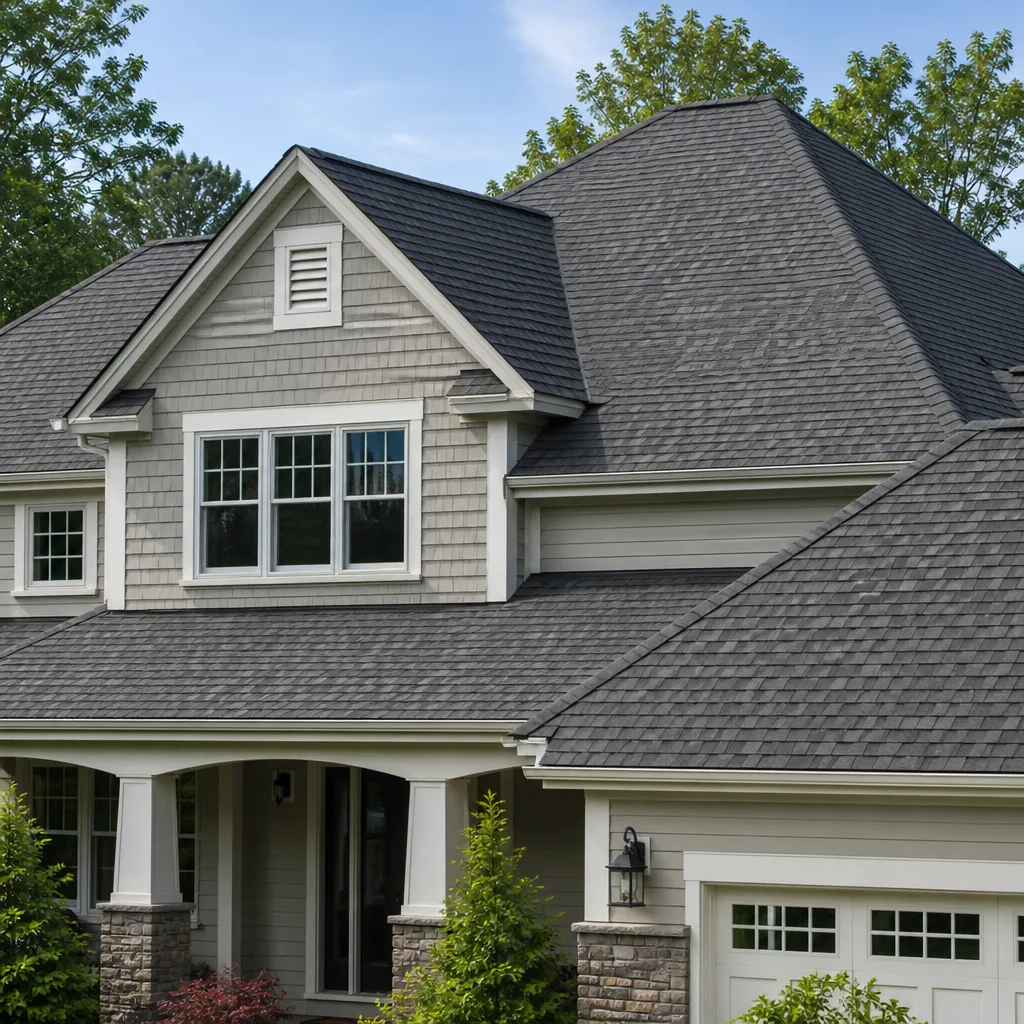 Architectural shingles
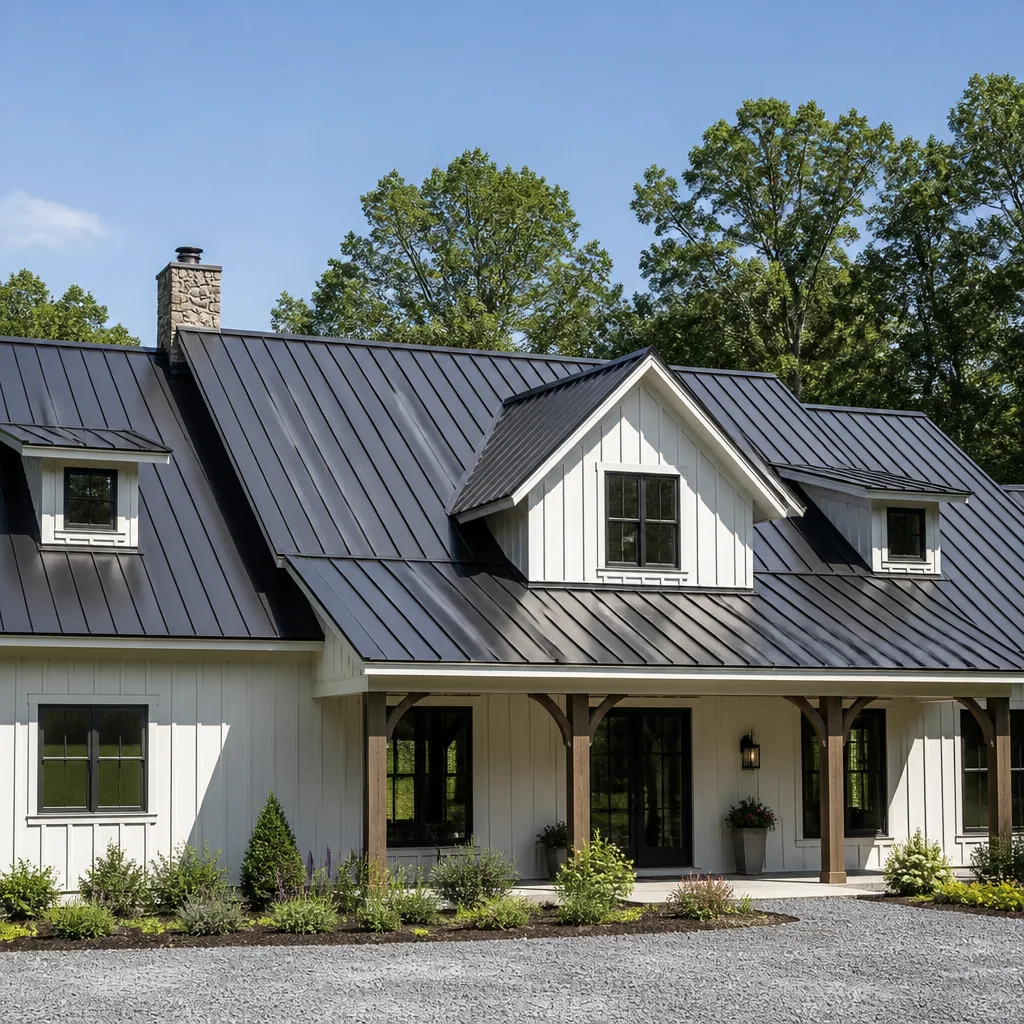 Metal roofing
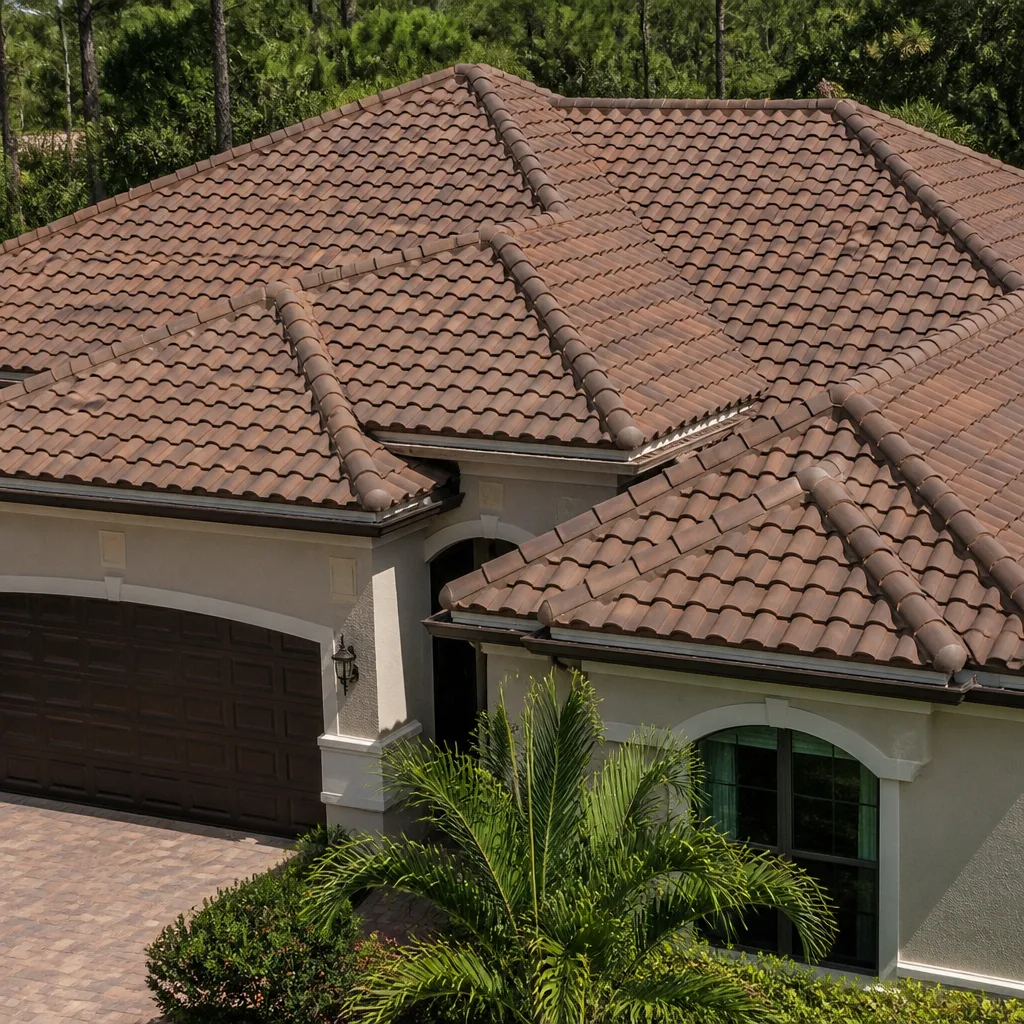 Tile roofing
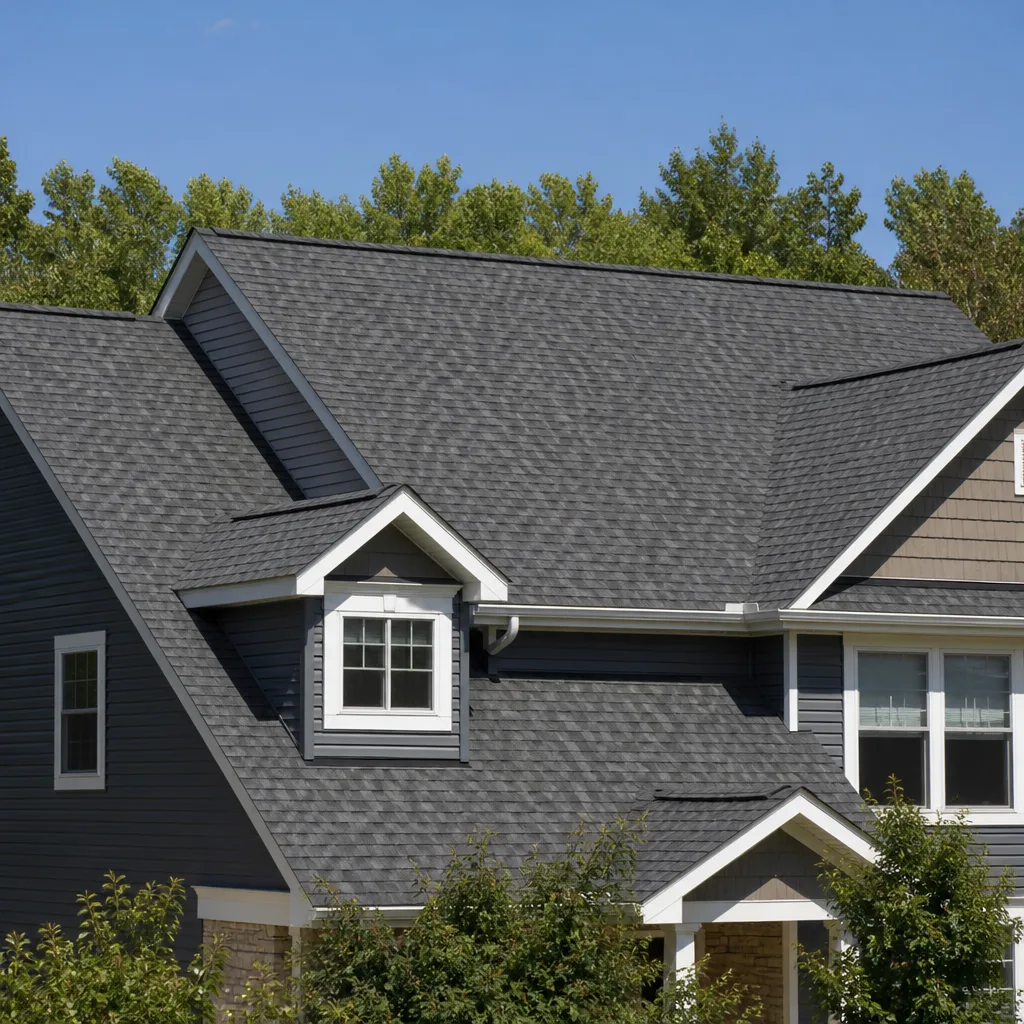 GAF
 Owens Corning
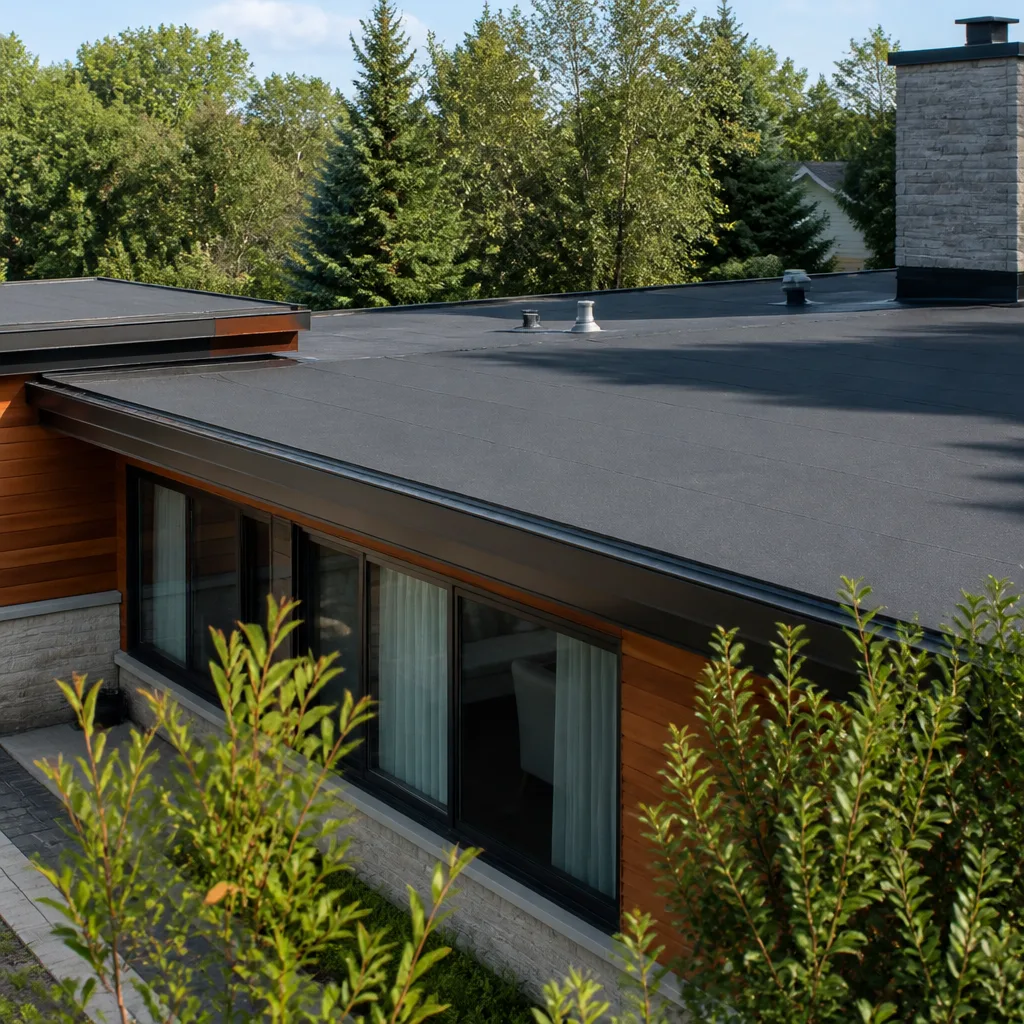 Flat & low-slope
Free roof inspection with deck photos before we talk money - GAF and Owens Corning certified installation
The Complete Roof Repair Guide for Rialto Homeowners
Rialto roofs don’t fail the way roofs fail in other parts of the country. We don’t get moss, we don’t get ice dams, and we don’t get months of steady rain. What we get is relentless ultraviolet exposure, summer attic temperatures that routinely push 150 degrees, and Santa Ana wind events that can turn a small lifted shingle into a 40-square-foot tear-off in about twenty minutes. Most national roof repair guides miss this entirely. They’ll tell you to check for algae streaks in your valleys (useful in Georgia, pointless here) and say nothing about granule loss from UV degradation, which is the single most common roof issue we see across Rialto’s tract home neighborhoods. This guide is different. It maps roof repair decisions to Rialto’s actual climate, construction eras, and building code requirements, so you can make decisions based on what’s really happening above your head. You’ll learn what fails first on Rialto roofs, which repairs hold up to wind uplift, when a patch makes sense versus a full replacement, what the City of Rialto requires permit-wise, and how to think about matching materials when you’re repairing a roof that’s been baking in the Inland Empire sun for two decades.
Styles & brands we work with
Quick Answer
Roof repair in Rialto typically costs between $350 and $1,700 depending on the scope, with minor shingle replacement and flashing repair at the low end and larger decking repair or valley rebuilds at the high end. Most Rialto homeowners need repairs driven by three local factors: UV granule loss on south- and west-facing slopes, wind-lifted shingles along eaves and rakes, and flashing failures around chimneys and vent pipes. A professional inspection is the fastest way to know which of these you’re dealing with and whether a targeted repair or our Roof Repair services for a full replacement makes more financial sense.
Table of Contents
- The Climate Reality: Why Rialto Roofs Age Differently
- The Five Most Common Roof Failures in Rialto
- Age-Based Repair Logic: What Your Home’s Era Tells You
- Santa Ana Wind Uplift: Where Rialto Roofs Actually Fail
- The Shingle Matching Problem (And How Multi-Brand Access Solves It)
- Rialto Permit Requirements: When You Need One and When You Don’t
- Repair vs. Replacement: A Decision Framework for Rialto Homes
- What a Real Roof Inspection in Rialto Should Include
- Common Mistakes to Avoid
- When to Call a Professional
- Frequently Asked Questions
- The Bottom Line
The Climate Reality: Why Rialto Roofs Age Differently
Rialto sits at roughly 1,200 feet of elevation at the base of the San Bernardino Mountains, and that position creates a specific set of roof stresses that national guides don’t account for. The city gets about 287 sunny days per year. That’s not just a Chamber of Commerce statistic. It’s a roof lifespan statistic. Ultraviolet radiation breaks down the asphalt binders in shingles through a process called photo-oxidation. Over enough time, the shingle loses its flexibility, the granules start releasing, and the mat underneath becomes brittle. In Rialto, this happens faster than in coastal Southern California cities because the inland heat amplifies the process.
Here’s what that means in practical terms. A 30-year architectural shingle installed in Rialto should probably be inspected with real scrutiny starting around year 12 to 15, not year 20. The south-facing and west-facing slopes will show wear first. We’ve seen homes in the Las Colinas and Hunter’s Ridge areas where the south slope is functionally end-of-life while the north slope still looks almost new. That’s normal for our climate. It also means a roof repair strategy for a Rialto home should focus on the sun-exposed planes first, because that’s where the next leak is statistically most likely to originate.
Heat cycling compounds the problem. Rialto summers push attic temperatures well past 140 degrees during the day, then nighttime temperatures drop back to the 60s. That’s an 80-degree swing in a single day. Shingles expand and contract with every cycle. Over 300 hot days, that’s hundreds of expansion-contraction events per year. The nails hold, but the shingle material around them slowly fatigues. The result is shingles that crack, curl at the corners, or lose their seals. When a shingle loses its seal, wind gets under it. And in Rialto, wind is the second big factor.
The takeaway: Rialto’s climate means roof inspection should happen more frequently than the national “every two years” advice suggests. For most homes here, an annual visual check from the ground plus a professional inspection every two to three years catches problems before they become interior damage. If your roof is over 15 years old, that professional inspection should probably be annual. The Roof Inspection in San Bernardino process we use applies the same logic to Rialto homes, with specific attention to UV damage and wind-lift zones.
The Five Most Common Roof Failures in Rialto
If you know what fails first on a Rialto roof, you know what to look for before it becomes a ceiling stain. Here are the five issues we see most often across the city’s neighborhoods, from the older tracts near downtown to the newer subdivisions north of the 210. For additional context, see our DIY vs Professional Roofing: The Rialto Homeowner’s Decision Guide.
1. Granule Loss from UV Exposure
Granules are the ceramic coating that protects the asphalt from the sun. When they wear off, the asphalt is exposed directly to UV rays and degrades quickly. You’ll see granules in your gutters after heavy rain, or you’ll notice bald spots on shingles when you look at the roof from a ladder. This is progressive and irreversible. Once granule loss is significant, replacement is the only real fix.
2. Wind-Lifted Shingles at Eaves and Rakes
Santa Ana winds hit Rialto from the northeast, funneling through the Cajon Pass and across the city. The edges of your roof, especially the eaves and rakes, take the brunt. Shingles get lifted, seals break, and the shingle folds back. In severe cases, entire sections peel away. A lifted shingle is repairable if caught early. A peeled section usually means replacing the affected plane.
3. Flashing Failure at Penetrations
Every pipe boot, chimney, skylight, and vent that pokes through your roof is a potential leak point, because the flashing that seals those transitions degrades faster than the shingles around it. In Rialto, rubber pipe boots crack from heat exposure. Metal flashing corrodes over time, and chimney flashing takes a beating from wind-driven rain. These are among the most common, easiest-to-fix repair items, and also among the most commonly overlooked.
4. Valley and Dormer Leaks
Valleys, where two roof planes meet, channel a lot of water during Rialto’s occasional heavy rain events. If the valley metal is old or the shingles in the valley were installed without proper overlap, water gets through. Dormer sidewalls are another weak point. The flashing where a dormer wall meets the roof plane is a classic leak source, especially on 1960s and 70s-era homes in Rialto where original flashing has outlived its useful life.
5. Attic Ventilation Problems That Accelerate Everything Else
Poor attic ventilation doesn’t cause leaks directly, but it makes every other problem worse. A poorly ventilated attic gets hotter, which bakes shingles from below, which accelerates granule loss and seal failure. It also increases the moisture load inside the attic during winter months, which can lead to sheathing rot. If you’re repairing a Rialto roof, addressing ventilation at the same time often extends the life of the repair.
Age-Based Repair Logic: What Your Home’s Era Tells You
Rialto’s housing stock falls into three broad eras, and each era has its own predictable roof issues. Knowing which era your home belongs to gives you a head start on understanding what a repair might involve.
1960s-1970s tract homes: Rialto’s early expansion produced thousands of ranch-style homes, many concentrated in the neighborhoods between Baseline and the railroad tracks. These homes were typically built with wood shake or three-tab asphalt shingles over solid board sheathing. Many have been re-roofed at least once, but the underlying decking is now 50 to 60 years old. When we inspect these homes, we’re looking at decking condition more than shingle condition. Water intrusion through an old penetration can rot the board sheathing, and that rot has to be repaired before any new roofing goes down. If your home falls in this era and hasn’t had the decking replaced, expect any significant repair to potentially uncover hidden decking work.
1980s-mid 1990s builds: This era saw a shift to plywood sheathing and fiberglass-mat shingles, but also a lot of builder-grade three-tab product. These roofs are typically on their second or third layer by now. The most common issue we see in these Rialto homes is age-related seal failure. The shingles aren’t necessarily worn out from UV exposure yet, but they’ve lost their adhesive bond and are vulnerable to wind uplift. A repair on this era of roof might involve re-sealing or replacing shingles across a whole plane rather than just a patch.
1990s-2000s expansion builds: The subdivisions in the northern part of Rialto and near the 210 corridor were built during a period of rapid construction, and the quality of original roofing varies widely. Some of these homes got 25-year architectural shingles installed over minimal underlayment. Others got better materials. The key challenge with this era is consistency of installation. We often see nails overdriven through the shingle, which creates a water channel, or underlayment that has degraded because it was never rated for the heat loads in this part of the Inland Empire.
Age-based logic also applies to repair economics. A 10-year-old roof with a small flashing leak is almost always a repair. A 22-year-old roof with granule loss on both sun-exposed planes and seals failing at the eaves is usually a replacement conversation. The Roof Repair in San Bernardino approach we take with every home applies the same age-aware logic, because patching a roof that’s already past its service life just delays an inevitable replacement.
Santa Ana Wind Uplift: Where Rialto Roofs Actually Fail
Santa Ana wind events are the single most destructive weather factor for Rialto roofs, and they create a very specific failure pattern. Wind doesn’t hit a roof evenly. It creates uplift pressure at the edges and corners, and it creates negative pressure zones on the leeward side. In Rialto, with winds typically coming from the northeast through the Cajon Pass, the northeast-facing eaves, rakes, and corners take the worst of it.
What does that mean in practical terms? When we inspect a Rialto roof after a Santa Ana event, we walk the perimeter first. The field shingles in the middle of the roof are usually fine. The damage clusters at the edges. Shingles get folded back. Ridge cap pieces get torn loose. If the roof has a hip design, the hip cap shingles are a frequent casualty. If it’s a gable design, the gable end overhang is where the uplift pressure concentrates.
There’s a difference between a repair that holds up to Santa Ana winds and one that doesn’t. A properly executed wind repair involves more than nailing the shingle back down. The underlying shingle needs to be inspected for seal integrity. The nails need to be placed in the nail line, not at the edges where the next wind event will rip through them. And the replacement shingles need to be sealed down, either with the factory adhesive or with a compatible sealant, so the first 40-mph gust doesn’t undo the work. This is also where material quality matters. Some shingle brands have significantly better wind ratings than others. The GAF Timberline line, for example, is rated for wind uplift resistance that exceeds the minimums required in our area. But the right choice depends on your specific roof geometry and exposure, not just the brand name on the wrapper.
If you live in a neighborhood with heavy tree cover, like parts of north Rialto near the foothills, wind-blown debris adds another variable. Branches strike the roof surface, puncturing shingles or cracking tiles. After a major wind event, a professional inspection is worth the cost even if you don’t see obvious damage from the ground, because edge damage specifically is easy to miss from a driveway view.
The Shingle Matching Problem (And How Multi-Brand Access Solves It)
One of the most frustrating realities of roof repair in Rialto is the shingle matching problem. Here’s how it plays out. Your 18-year-old roof has a section of damaged shingles. You call a contractor. They tell you they can fix it. Then they show up with shingles that are the wrong color, a different profile, or both. The repair is technically functional but visually obvious, and now you have a patch that looks like a patch.
This happens because shingle manufacturing is done in batches called dye lots. Even the same product from the same brand can vary slightly in color between production runs. After 15 years of Rialto sun exposure, the shingles on your roof have faded, while a new bundle of the “same” shingle looks noticeably different. The longer the roof has been baking in the Inland Empire sun, the more pronounced the mismatch. It’s a real problem for older Rialto homes, especially those in the original tract developments where shingle colors were limited and specific colorways are no longer in production.
This is where working with a contractor who has access to multiple brands, rather than one who’s locked into a single manufacturer, makes a practical difference. Ridgeway Roof Repair has access to seven major roofing manufacturers, including GAF, Atlas, Tamko, and Boral. That isn’t just a marketing point. It means when we’re trying to match a discontinued color or an unusual profile, we can check across competing product lines to find the closest visual match. A GAF shingle in a particular tone might not be available anymore, but a Tamko or Atlas shingle in a similar colorway could be close enough that the repair blends acceptably. That kind of match is impossible when a contractor only has access to one brand’s catalog.
The alternative, when no match exists, is a conversation about replacing the entire affected plane rather than patching it. A plane-level replacement means you can choose a new color and profile intentionally, and the slope will be uniform, even if it differs slightly from the other slopes. That’s a legitimate strategy, but it costs more than a patch. Knowing your options before committing is the point.
Rialto Permit Requirements: When You Need One and When You Don’t
The City of Rialto’s Building and Safety Division regulates roof work through the California Building Code and local ordinances. The general rule is that roof repair involving minor shingle replacement, flashing repair, or sealing of small areas does not require a permit, provided the work covers less than a certain percentage of the roof area and does not involve structural changes. The specific threshold varies by municipality, and in Rialto, the Building and Safety Division is the authority you should confirm with before proceeding with any significant repair.
What does require a permit in most cases? Any roof replacement, regardless of size. Any repair that involves removing and replacing roof sheathing. Any work that changes the roof structure, including adding or removing roof features. If the work involves reroofing more than a set percentage of the roof area in a single calendar year, the city will likely classify it as a reroof, which triggers the full permit process.
The practical takeaway is this: a small repair is usually fine without a permit, but a significant repair, a plane-level replacement, or a full reroof needs one. The permitting process in Rialto involves submitting plans or specifications, paying fees, and scheduling inspections. For help navigating this, read our How to Hire a Roofing Contractor in Rialto: A Step-by-Step Guide. A licensed contractor handles this as part of the job. If a contractor tells you they can do a full roof replacement without a permit in Rialto, that’s a red flag, not a selling point. Unpermitted work can cause problems when you sell the home, and it may not meet current code requirements for wind uplift resistance, which matters in a city that gets 60-mph Santa Ana gusts.
For homeowners who want to understand the full scope of work before pulling the trigger, the Ridgeway Roof Repair home page provides an overview of how inspection, repair, and replacement fit together, including when permit work is part of the process.
Repair vs. Replacement: A Decision Framework for Rialto Homes
Every roof eventually reaches a point where patching no longer makes financial sense. The decision is different for every home, but here’s a framework that works for most Rialto properties.
- Assess the roof’s age. If the roof is under 10 years old and the damage is localized, repair almost always makes sense. If it’s over 20 years old and the damage is on a sun-exposed plane, replacement is likely the better call.
- Evaluate the extent of the damage. One flashing leak or a few missing shingles is a repair. Granule loss across an entire plane, widespread seal failure, or decking rot in multiple locations is a replacement.
- Calculate the cost per year of remaining life. A $1,500 repair on a roof with five years of service life left costs $300 per year. A $12,000 replacement on the same roof, if it lasts 25 years, costs $480 per year. But if the repair only buys two years and the roof needs another $3,000 in repairs in year three, the math shifts quickly.
- Consider the wind factor. If your roof has already lost shingles to Santa Ana events, the next event is likely to cause more damage. Repetitive wind repairs signal that the roof’s overall seal integrity is failing. At some point, the cumulative repair cost exceeds the cost of a properly installed replacement with a good wind warranty.
- Think about the matching problem. If you can’t match the existing shingles and the repair will be visually obvious, a plane-level or full replacement may be the better long-term answer, especially if you’re planning to sell the home within a few years.
When replacement is the answer, the conversation shifts to material selection. This is where multi-brand access changes the outcome. Rather than being limited to one manufacturer’s color palette, warranty structure, and price point, you can compare options across competing brands. Roof Replacement in San Bernardino is one option for homeowners ready to think about a full reroof, with the same multi-brand approach we apply to Rialto properties.
What a Real Roof Inspection in Rialto Should Include
Not all roof inspections are created equal. A real inspection is a structured, documented process that produces actionable findings. Here’s what should happen when someone inspects a Rialto roof properly.
- Interior attic assessment. The inspection should start inside, in the attic. The inspector should look for daylight penetration through the decking, water stains on rafters or sheathing, signs of mold or mildew, and inadequate ventilation. This step catches leaks that haven’t yet reached the ceiling.
- Exterior surface walk. The inspector should walk the roof, not just look at it from the ground or from the eaves. The walk covers the entire surface, checking for granule loss, cracked or curling shingles, nail pops, and seal failure. In Rialto, particular attention goes to the south- and west-facing planes.
- Perimeter and flashing inspection. Every penetration, every valley, every ridge cap, every eave, every rake. The inspector should photograph problem areas and document them systematically, not just verbally describe them.
- Wind damage assessment. After Santa Ana events, the inspection should specifically evaluate edge uplift, folded shingles, and loose ridge caps. This is where a Rialto-specific inspection differs from a generic one.
- Written findings with photos. You should receive a documented report that shows what was found, where it was found, and what the recommended actions are. A verbal summary with no documentation isn’t a real inspection.
A structured inspection does two things. It tells you what’s actually wrong, and it tells you what’s not wrong. That second part matters, because a homeowner who knows the rest of the roof is in good condition can make a repair decision confidently, without wondering if they’re about to open a can of worms. We treat roof inspection as a standalone service for exactly this reason. The goal is an honest, factual assessment, not a sales pitch disguised as a report.
Common Mistakes to Avoid
- Ignoring granule loss because there’s no leak. Granule loss is the early warning sign that the shingles are degrading. By the time a leak appears, the underlying damage is typically more extensive and more expensive to fix. If you see granules accumulating in your gutters, schedule an inspection.
- Patching wind-damaged shingles without addressing the seal problem. Nailing a lifted shingle back down works until the next Santa Ana event. If the shingle’s adhesive seal is compromised, you need to address the seal or the same shingle will lift again, often taking others with it.
- Assuming Rialto permits aren’t required for any repair. Small repairs often don’t need a permit, but significant work does. The Building and Safety Division is the final authority. It’s worth confirming before work starts, not after.
- Letting the matching problem drive you to an ugly patch. If the shingles can’t be matched, have the conversation about plane-level replacement before the work starts. An intentional contrast is better than an accidental one.
- Delaying repair until after a heavy rain season. Rialto doesn’t get much rain, but when it comes, it often comes in intense bursts. A small leak during a dry spell becomes a ceiling collapse during a winter storm. The repair doesn’t get cheaper by waiting.
- Choosing the cheapest bid without checking what it includes. A repair bid that’s significantly lower than others usually means something is being left out: underlayment, flashing, proper fastening, or the permit. Get the scope in writing before comparing prices.
When to Call a Professional
Some roof issues are visible from the ground. Others require getting on the roof, and that’s where the calculus changes. Working on a roof is inherently risky. Falls from roofs cause serious injuries every year, and walking on a damaged roof adds another layer of hazard. If you see water stains on your ceiling, granules in your gutters, or shingles lifting at the edges, that’s a sign to call someone who does this work every day. If you’re uncertain whether a problem is a simple fix or a bigger issue, a professional inspection answers that question without you having to get on a ladder. Ridgeway Roof Repair offers free estimates in Rialto. Call (877) 588-7942 to schedule one, and we’ll tell you what’s actually going on up there.
Frequently Asked Questions
Minor repairs like a pipe boot replacement or a few shingles usually run between $350 and $700. More involved repairs, like valley rebuilds or decking replacement, can exceed $1,500. The total depends on the size of the affected area, the accessibility of your roof, and whether matching materials are available. Call (877) 588-7942 for a free estimate specific to your home.
Small repairs that don’t involve structural changes or large areas of reroofing typically don’t require a permit. Full replacements, sheathing replacement, and structural changes do. The City of Rialto Building and Safety Division is the place to confirm requirements for your specific situation.
Given Rialto’s UV intensity and Santa Ana wind exposure, an annual ground-level check is wise, plus a professional inspection every two to three years. Explore more guides & resources for ongoing roof maintenance tips. For roofs over 15 years old, professional inspections should be annual. After any major wind event, a professional inspection is worth scheduling even if you don’t see visible damage.
Sometimes, but not always. Shingle colors fade over time, and some older colorways are no longer manufactured. Access to multiple brands, including GAF, Atlas, and Tamko, gives us the best chance of finding a close match. When no match exists, we’ll discuss plane-level or full replacement options openly before any work begins.
Most repairs are completed in a single day. Larger repairs involving multiple issues, decking replacement, or permit-required work may take longer. We’ll give you a specific timeline as part of the estimate so you know exactly what to expect.
The south-facing and west-facing slopes receive the most direct sun exposure, which accelerates UV degradation and heat cycling. That’s normal for Rialto’s climate. The sun-exposed planes often need attention years before the shaded planes do, and a good inspection accounts for that asymmetry.
The Bottom Line
Rialto roofs face a specific set of challenges: intense UV exposure, extreme heat cycling, and episodic Santa Ana winds that concentrate damage at the eaves, rakes, and ridge lines. The right roof repair strategy accounts for these local conditions. Know your roof’s age and construction era. Watch for granule loss and edge lifting between inspections. Understand local permit requirements before work starts. Work with a contractor who has access to multiple shingle brands, so matching and material selection aren’t determined by what one manufacturer happens to stock. A targeted repair on a younger roof makes sense. An older roof on its sun-baked planes may be better served by replacement. Either way, the decision starts with a real inspection that gives you honest, documented findings. If you’re ready to know exactly what’s happening on your Rialto roof, call (877) 588-7942 to schedule a free estimate.
Written by the team at Ridgeway Roof Repair, serving Rialto since 2018.
See the difference
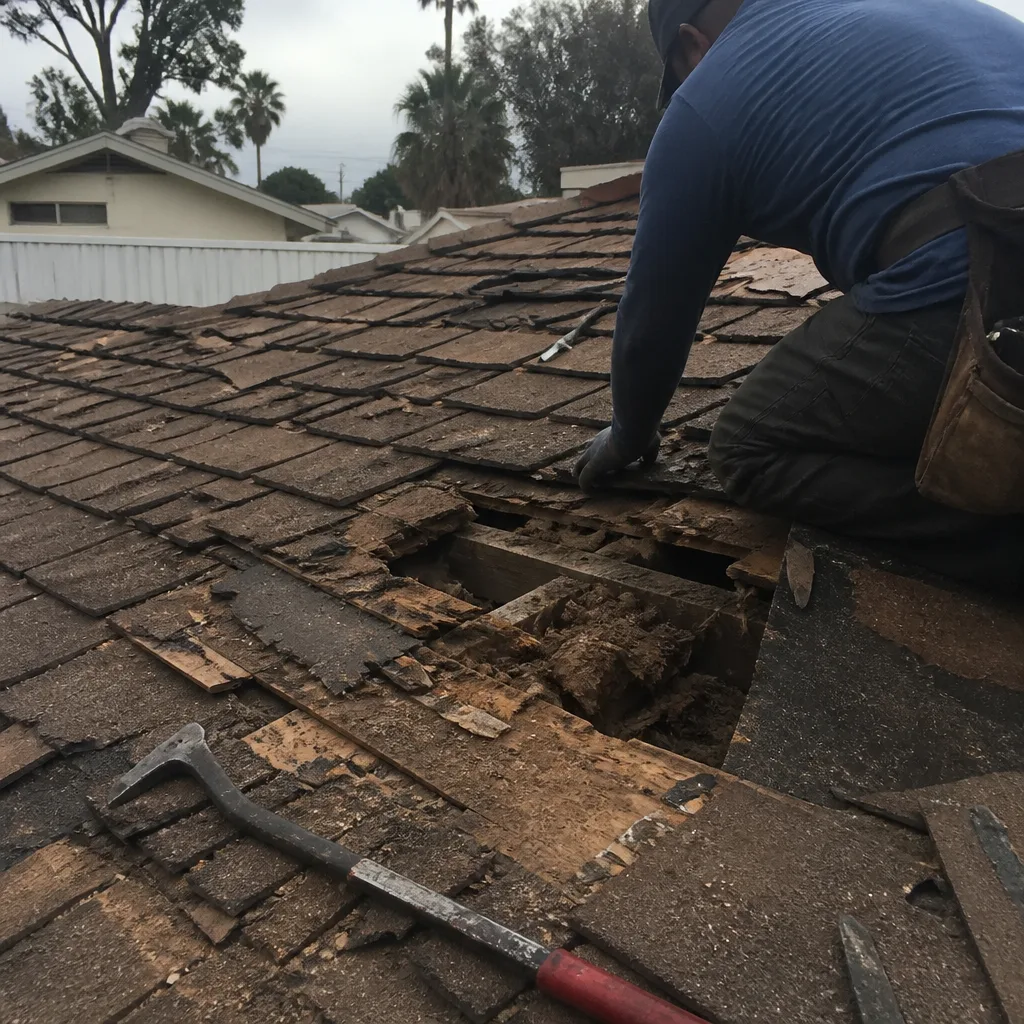 Before
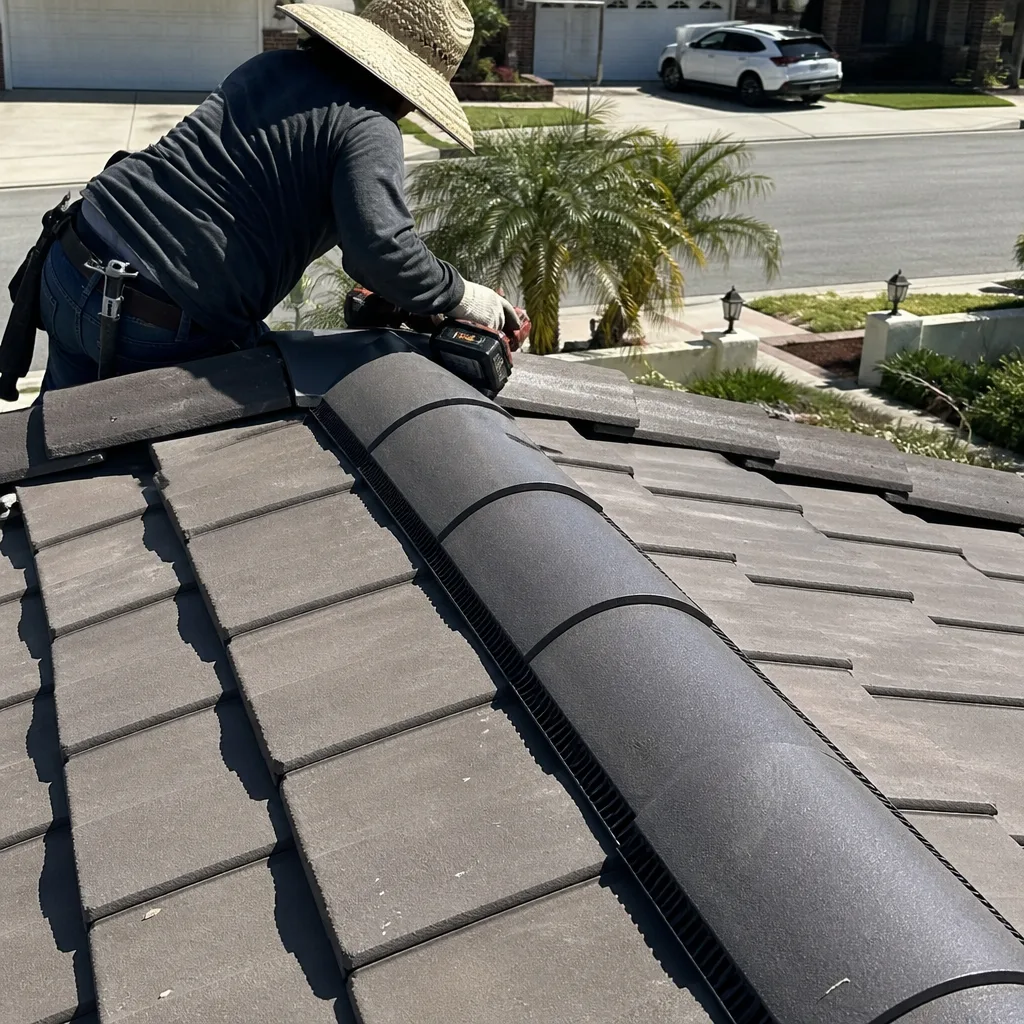 After
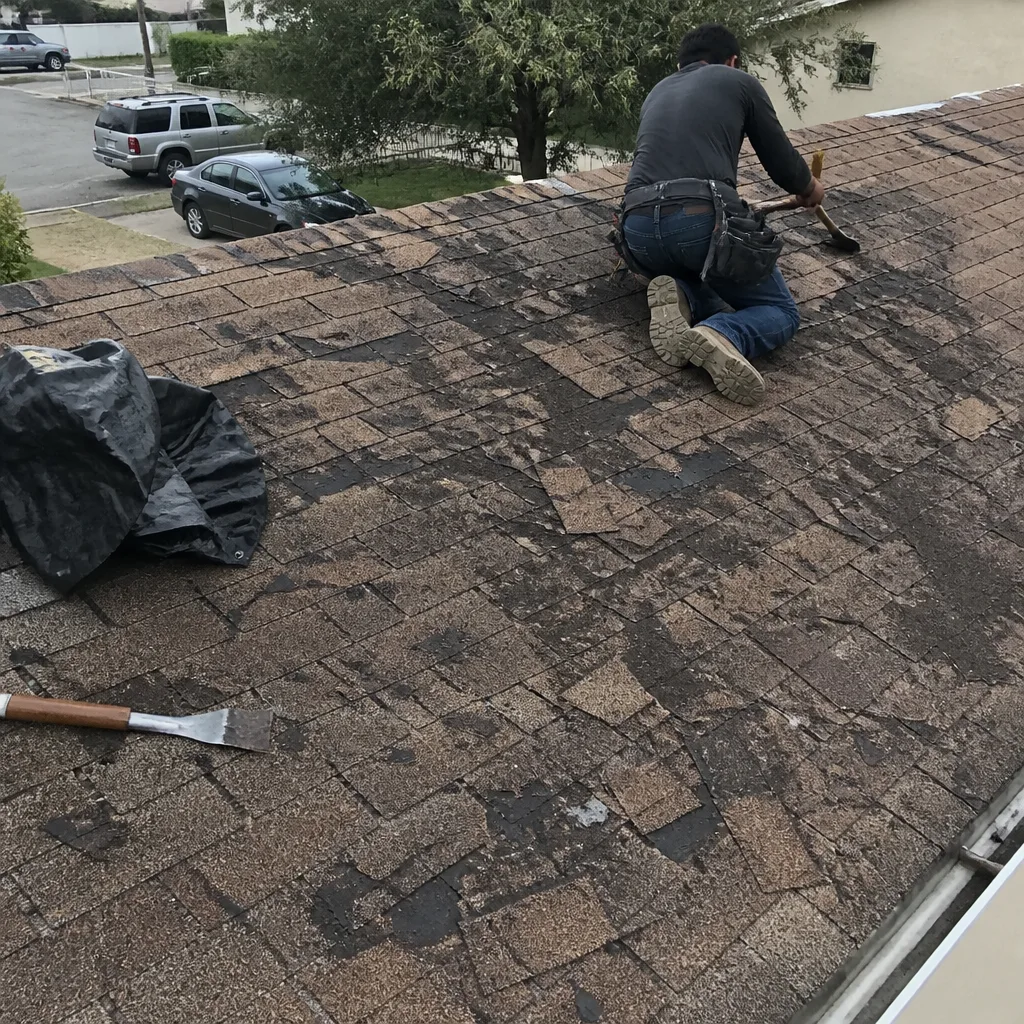 Before
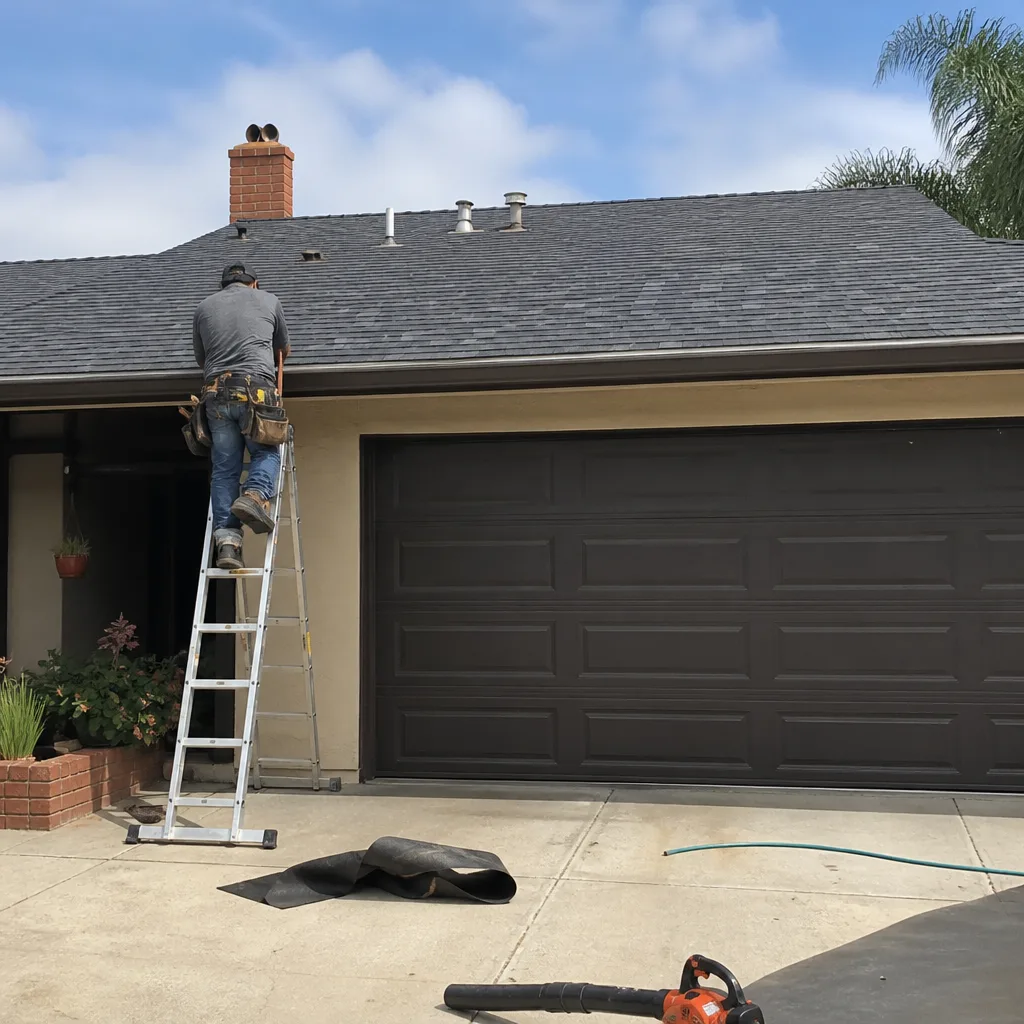 After
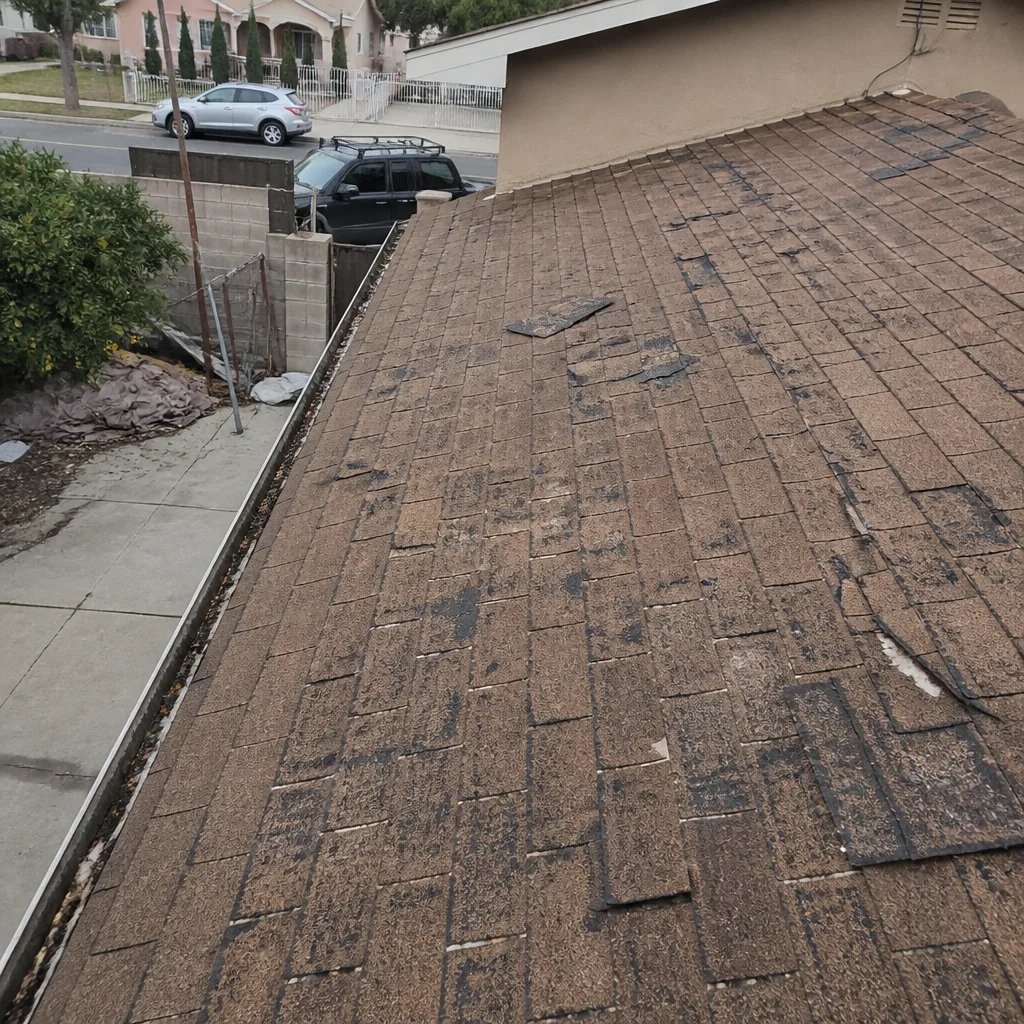 Before
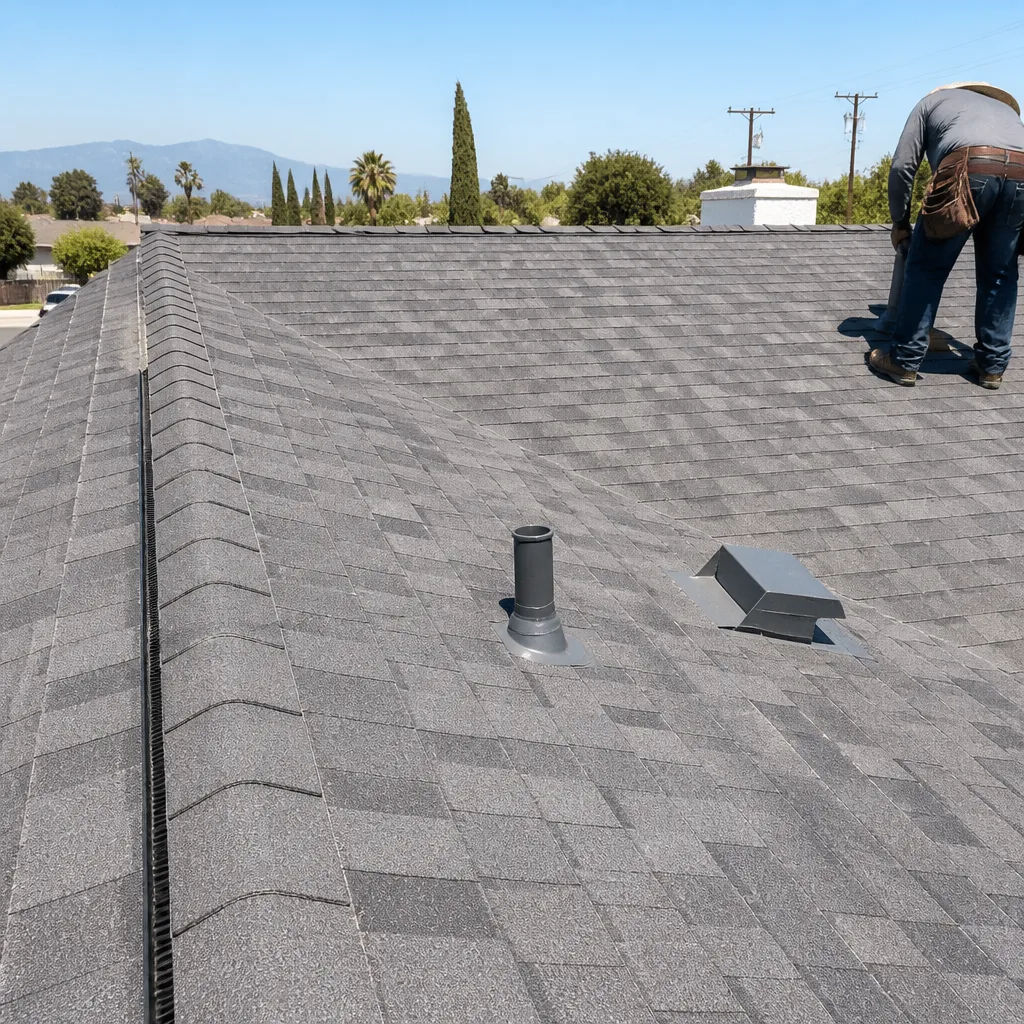 After