Last updated October 31, 2026
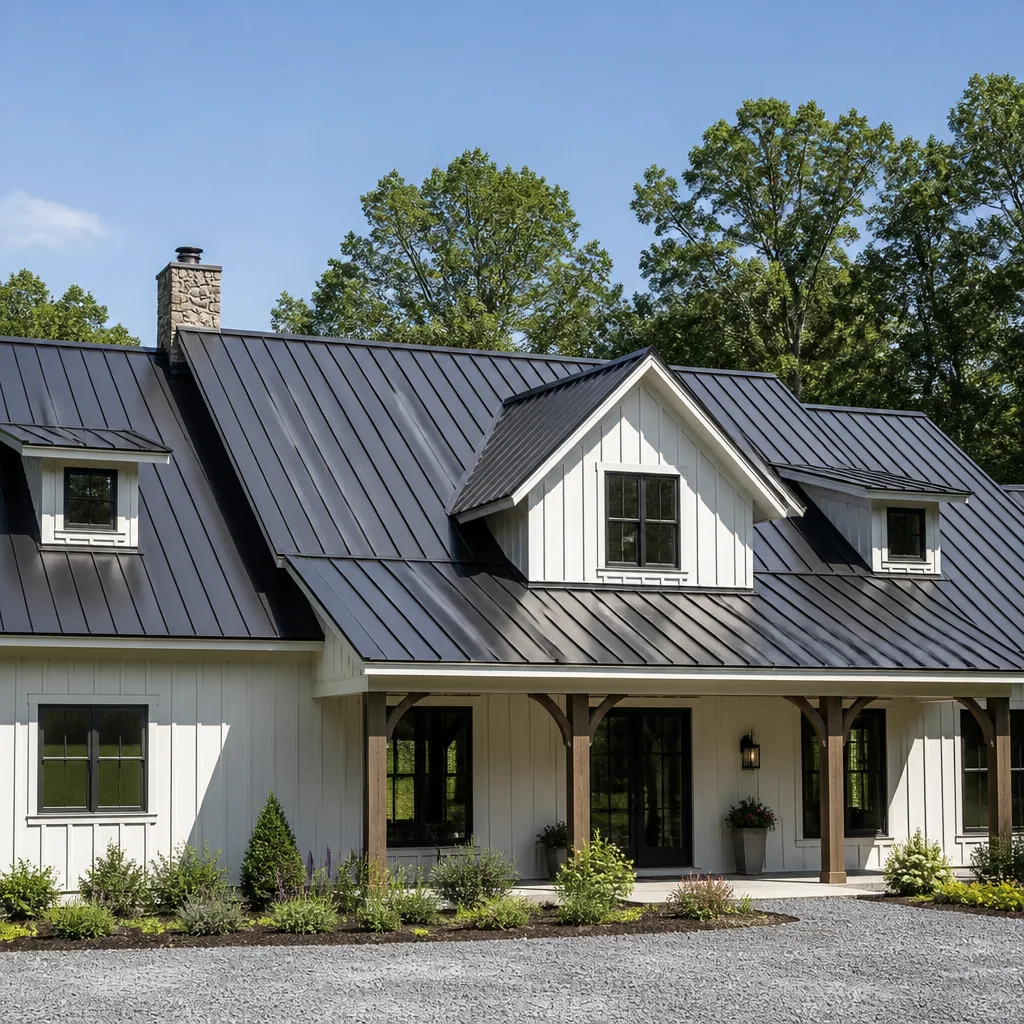 Metal roofing
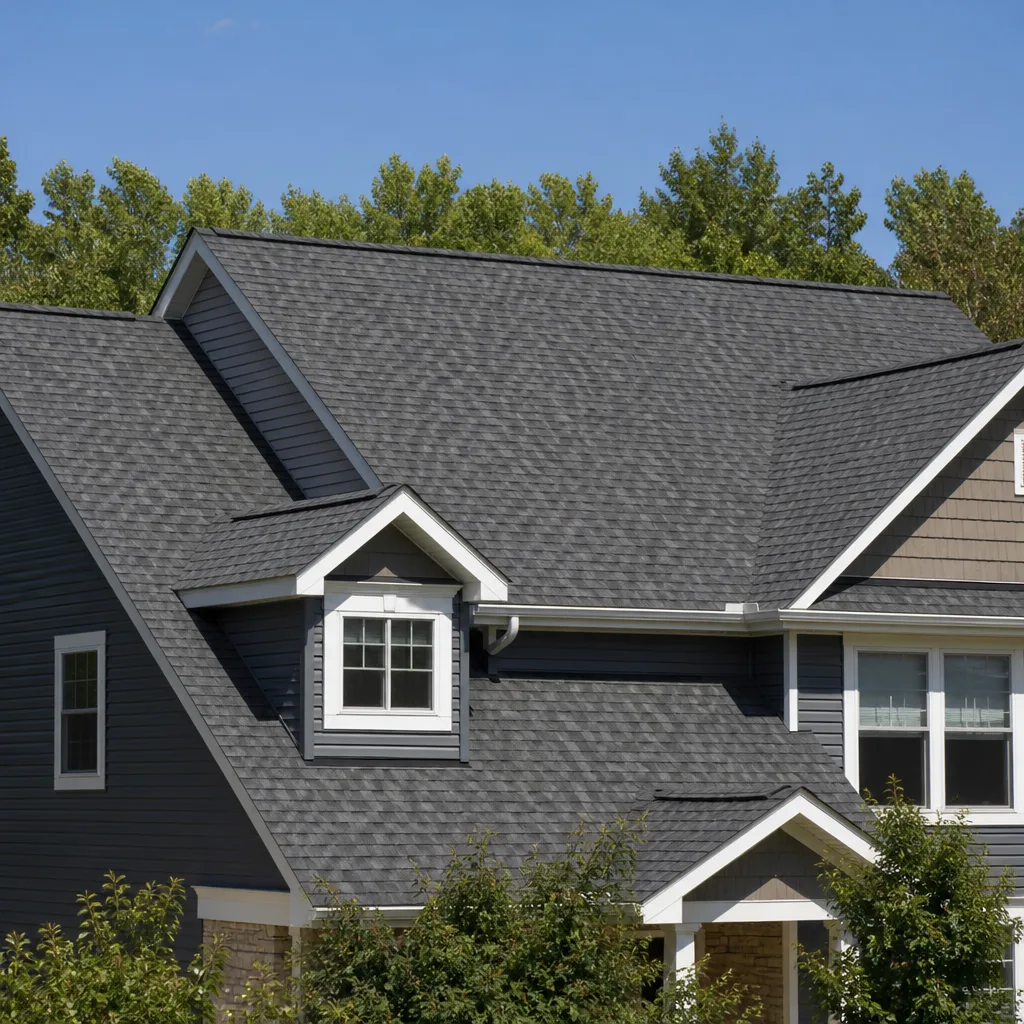
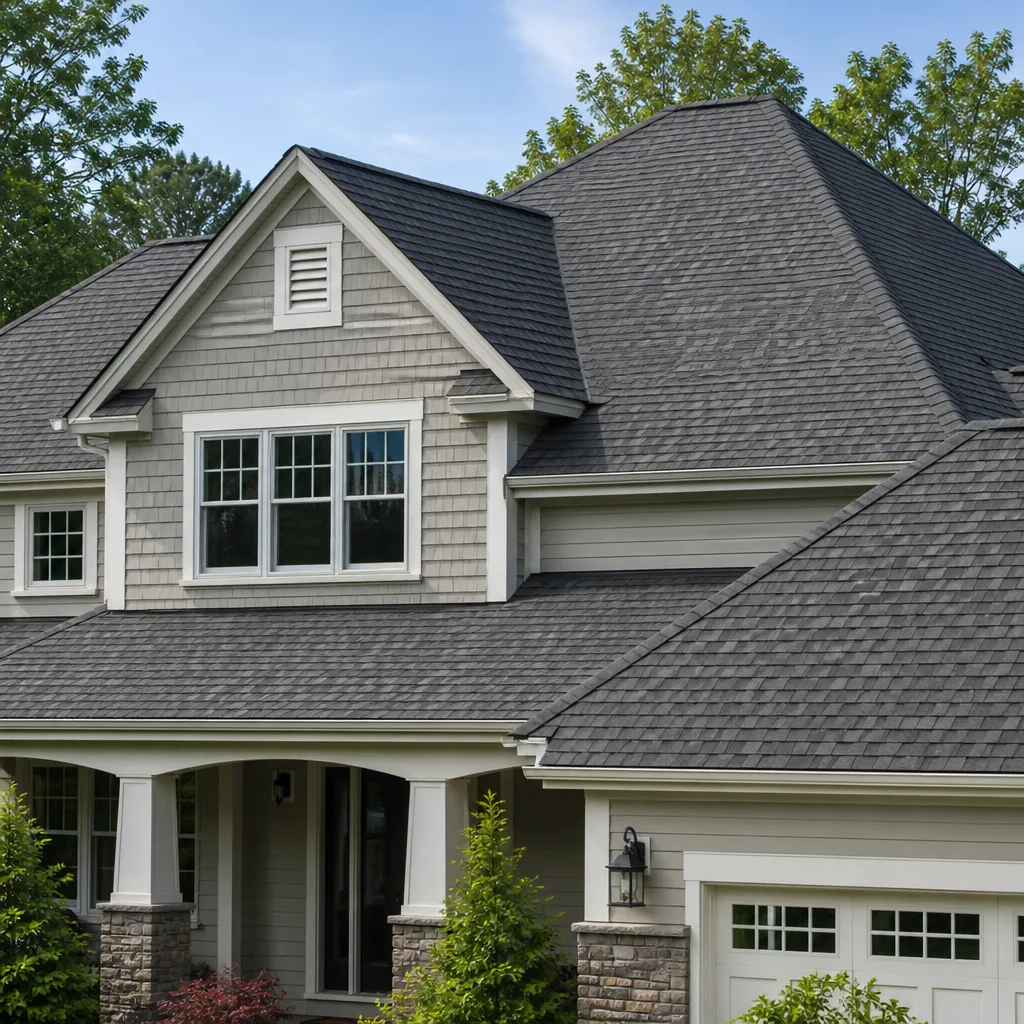 Architectural shingles
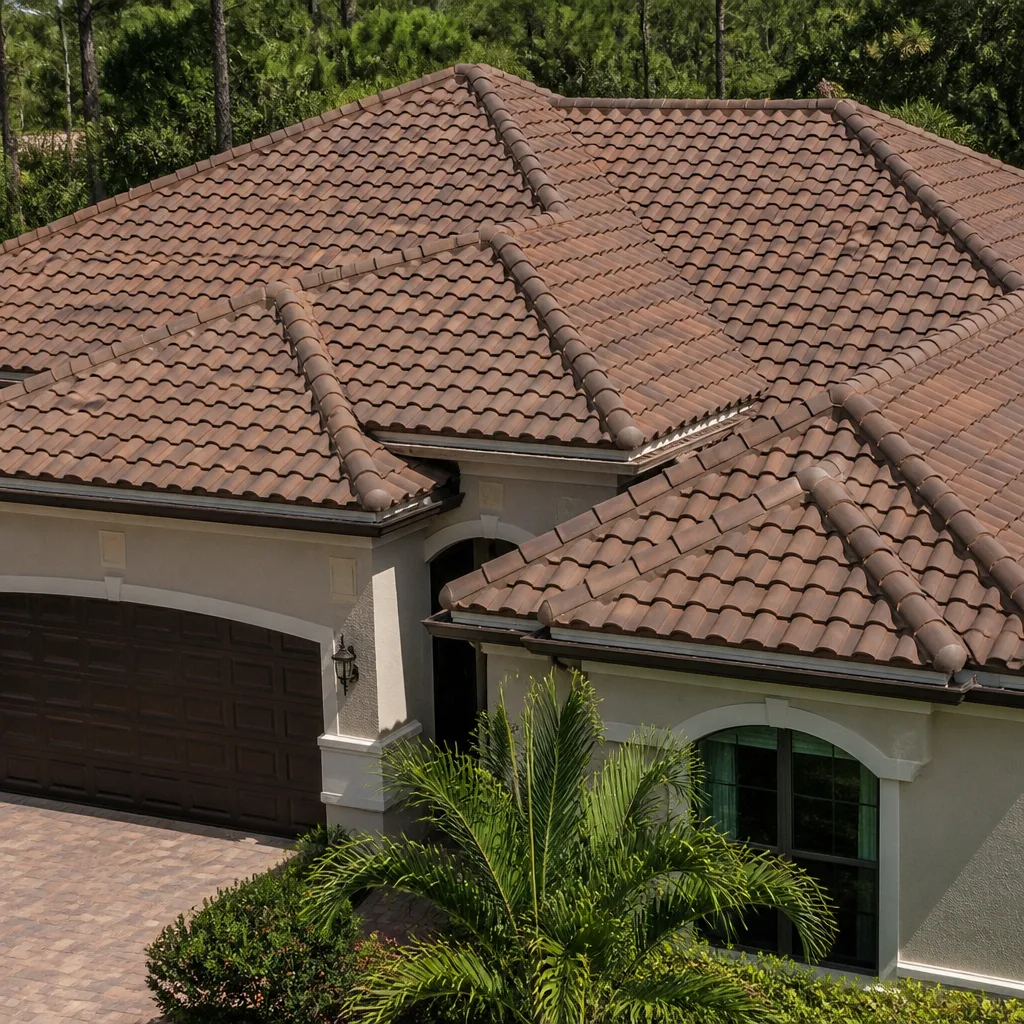 Tile roofing
 GAF
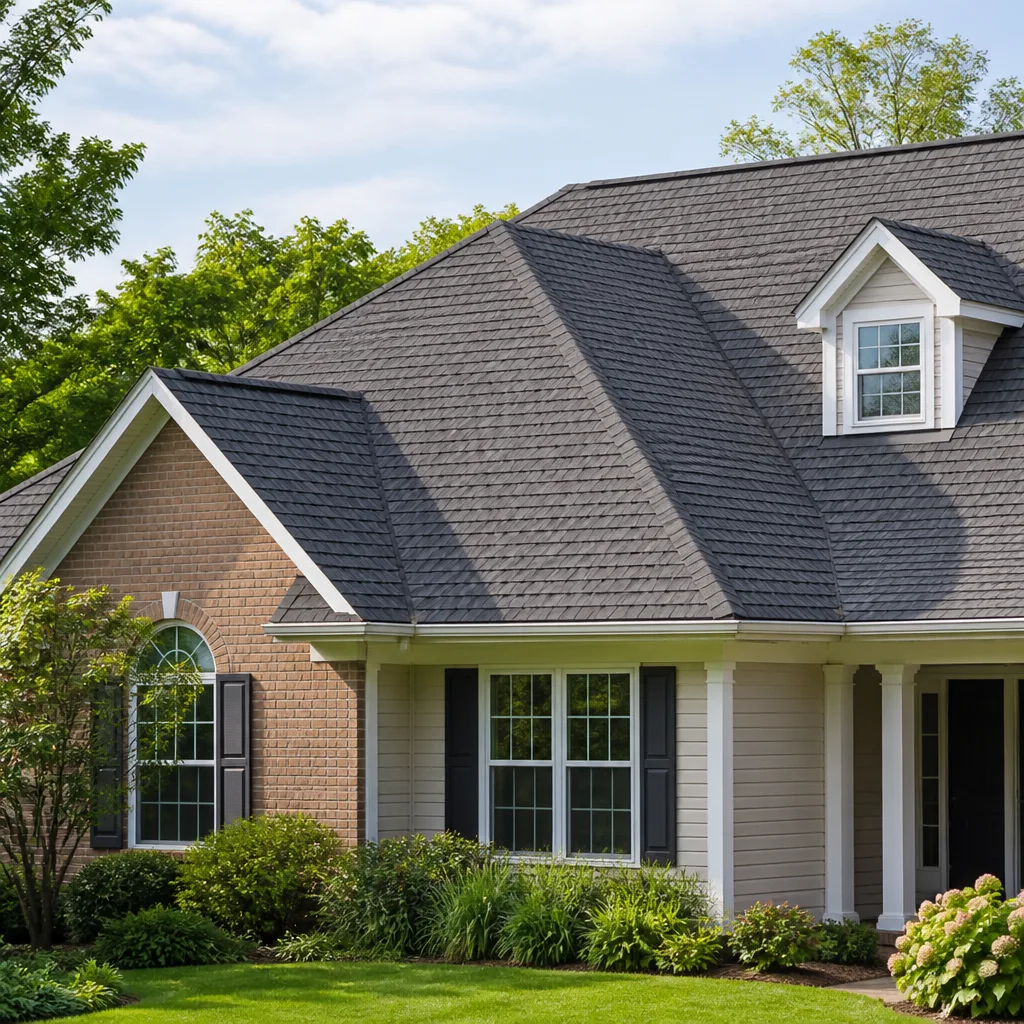 Owens Corning
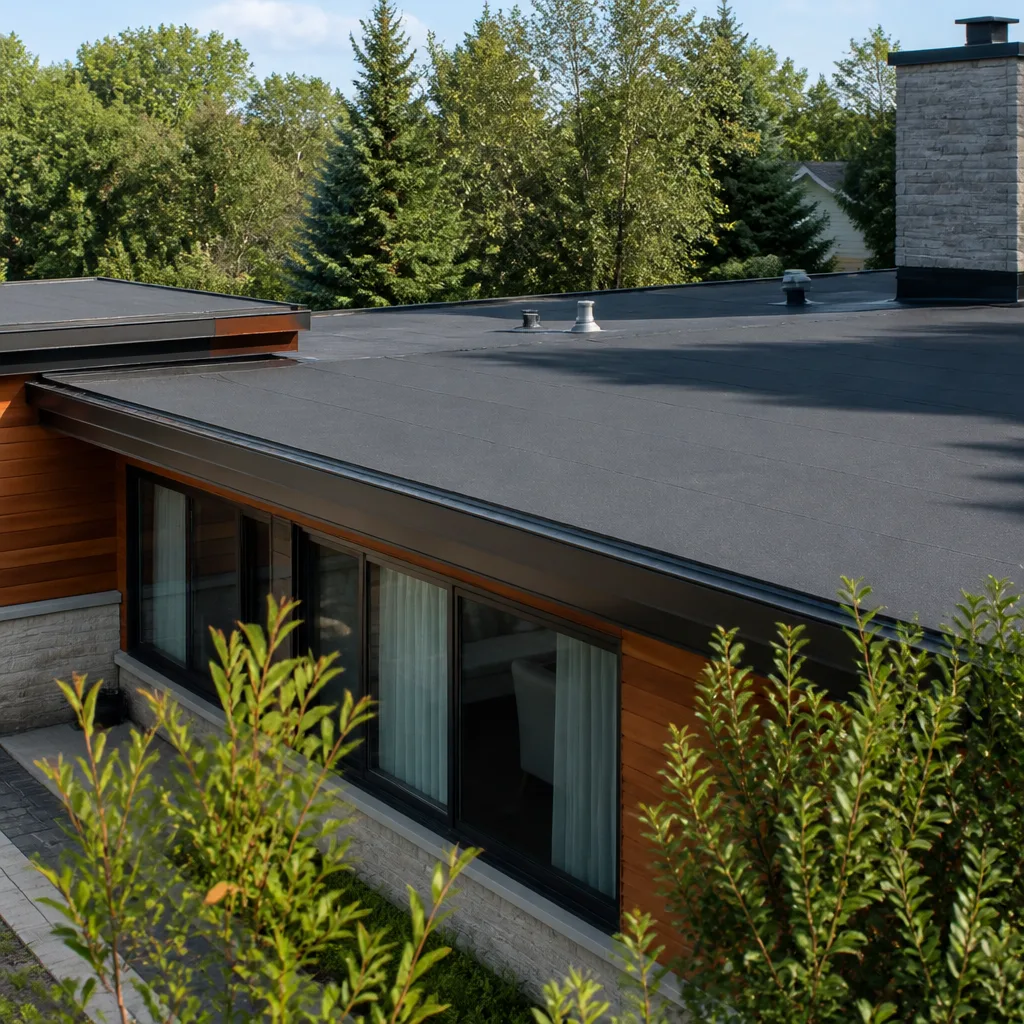 Flat & low-slope
Free roof inspection with deck photos before we talk money - GAF and Owens Corning certified installation
Roofing Cost Breakdown: The Rialto Homeowner’s Reference for 2026
In Rialto, we regularly see roofing quotes for the same address land $4,000 to $8,000 apart, and the gap rarely has anything to do with greed. It has to do with what’s actually written into the bid: permit costs, deck sheathing allowances, disposal fees, and the shingle line specified. This guide pulls apart every line item on a 2026 roofing quote so you can compare bids on substance, not just the number at the bottom. If you’re planning a roof repair, reroof, or full replacement in Rialto this year, this is the reference we wish every homeowner had before they started making calls, and you can find more guides & resources on our blog.
Quick Answer
A full roof replacement on a typical Rialto single-family home in 2026 costs between $9,800 and $22,000 depending on material choice, roof pitch, deck condition, and whether the existing roof must be torn off. Architectural asphalt shingles are the most common choice and run $11,500 to $16,500 for an average 1,800-square-foot roof. The single biggest price variable is material grade, followed closely by deck replacement, which most homeowners don’t budget for.
Styles & brands we work with
Table of Contents
- Material Costs by Roofing Type: What 2026 Inland Empire Suppliers Actually Charge
- Why Labor Rates Vary by $3,000 in San Bernardino County
- How to Read a Roofing Quote for Hidden Exclusions
- Roof Pitch, Access, and Existing Layers: The Three Price Multipliers
- What a Warranty Upgrade Actually Costs and What It Protects
- Rialto-Specific Cost Factors: Code, Climate, and Housing Stock
- Repair vs. Replacement Cost Logic in 2026
- Common Mistakes to Avoid
Material Costs by Roofing Type: What 2026 Inland Empire Suppliers Actually Charge
Roofing material prices in the Inland Empire have shifted noticeably since 2024. Distribution costs, petroleum-based asphalt pricing, and regional demand from the ongoing Inland Empire housing expansion all play a role. Here’s what we’re seeing on supplier invoices in Rialto as of early 2026, expressed as material-only cost per square (one square equals 100 square feet of roof area).
3-Tab Asphalt Shingles
$95 to $130 per square installed, material cost running $45 to $60 per square. These are the cheapest residential option and carry the shortest lifespan: 15 to 20 years in Rialto’s sun exposure. Wind resistance tops out around 60 mph, which matters in the Santa Ana season when gusts through the Cajon Pass can hit 70 mph or higher. For most Rialto homeowners, 3-tab shingles represent a short-term solution on rental properties or homes slated for sale within five years. They are rarely the right financial choice for a long-term hold.
Architectural (Dimensional) Asphalt Shingles
$130 to $185 per square installed, material cost $70 to $100 per square. This is the workhorse of Rialto residential roofing. Architectural shingles from manufacturers like GAF, CertainTeed, and Owens Corning deliver 25 to 30 years of service, handle 110 to 130 mph wind ratings, and hold up better to the intense UV exposure Rialto roofs endure from May through October. The aesthetic upgrade over 3-tab is significant: thicker profile, deeper shadow lines, and better dimensional appearance. Most of the homes we quote in Rialto fall into this category.
Concrete and Clay Tile
$380 to $650 per square installed, material cost $180 to $300 per square. Tile is everywhere in Rialto’s older Rancho West and Las Colinas neighborhoods, where Spanish and Mediterranean architectural styles dominate. Tile roofs last 50 to 80 years but require structural evaluation: a home framed for lightweight shingles may need reinforcement before tile goes on, and that’s a $3,000 to $8,000 framing upgrade. Boral concrete tile is a common choice for Rialto homeowners who want the tile look with better impact resistance than clay.
TPO (Single-Ply Membrane)
$170 to $240 per square installed, material cost $75 to $110 per square. TPO is the standard for flat and low-slope sections common on Rialto ranch-style homes with additions, patios, and carport roofs. White TPO reflects heat well, which matters when summer temperatures in Rialto routinely cross 100 degrees. A properly installed TPO membrane can deliver 20 to 25 years but requires specialized welding equipment and trained installers; this is not a general handyman product.
The 2026 reality: material costs are roughly 12% to 18% higher than 2023 across all categories, driven by asphalt pricing and transportation costs from distribution hubs in Fontana and Ontario. When you look at a quote, the material line should roughly track the ranges above. If a bid shows architectural shingle material at $45 per square, you’re being quoted a contractor-grade shingle that carries no residential warranty. That’s not a discount; it’s a different product.
Why Labor Rates Vary by $3,000 in San Bernardino County
Labor is the line item on a Rialto roofing quote that confuses homeowners the most, because it looks like pure profit. It’s not. The spread between a $2,800 labor bid and a $5,800 labor bid for the same roof reflects real differences in who’s doing the work and what they’re responsible for.
The General Contractor Approach
A general contractor quoting a roof replacement is typically subcontracting the work to a roofing crew, which means the GC adds a markup of 15% to 25% on top of the sub’s price. That markup buys you coordination, but it also means your warranty runs through two parties: if something goes wrong, the GC and the sub can point at each other. General contractors who also handle plumbing, siding, and remodels rely on the same subcontractor pool, and their labor pricing often reflects the markup layer.
The Roofing-Only Contractor Approach
A dedicated roofing contractor carries direct labor costs: in-house or long-term crew relationships, workers’ compensation insurance at roofing’s higher risk classification (roughly 18% to 25% of payroll, versus 8% to 12% for general carpentry), and specialized equipment. There’s no subcontractor markup, but there’s also no dilution of accountability. A Ridgeway Roof Repair home inspection, quote, and install all flow through the same company, which matters when a warranty claim comes up three years later.
The High-Low Labor Gap Explained
- Low-end labor ($2,500 to $3,500): often a crew of 4 to 6 working under a cash payment arrangement or 1099 subcontracting. Insurance may be thin, and the crew may be rushing to finish by Thursday to start another job Friday. Quality control is spot-dependent.
- Mid-range labor ($3,500 to $4,800): established roofing companies with proper payroll, workers’ compensation, and a foreman on site. This is the sweet spot for most Rialto homes.
- High-end labor ($4,800 to $6,500+): specialized work: steep pitches requiring harness rigging, multi-layer tear-offs done by hand, tile roofs where each piece is individually set and fastened, or complex flashing details around chimneys and skylights.
When you see a $3,000 labor spread between two quotes, ask one question: “Who is actually on my roof, and what insurance covers them while they’re up there?” The answer usually explains the difference.
How to Read a Roofing Quote for Hidden Exclusions
The cheapest roofing quote in Rialto is often priced that way because it excludes three specific things: permit fees, deck replacement allowances, and disposal costs. Understanding Roofing Permits, Codes & Inspections in CA: What You Need to Know can help you spot what’s missing. Those three omissions add $4,000 to $8,000 to the real cost of the job, and they don’t show up until the crew is already on your roof.
Exclusion #1: Permits and Inspections
Rialto requires a building permit for roof replacements and for repairs exceeding a certain square footage threshold. The permit fee for a typical reroof runs $250 to $600, and the inspection process requires the roof to be exposed at specific stages. Some contractors quote without permits and tell you it’s your responsibility to pull them. If the quote doesn’t list a permit line item, ask whether it’s included. A contractor who handles permits for you is doing work the city is watching. A contractor who asks you to pull the permit is shifting liability to you. This is the same dynamic we see with Roof Replacement in San Bernardino, where code compliance follows the same structure.
Exclusion #2: Deck Board Replacement Allowances
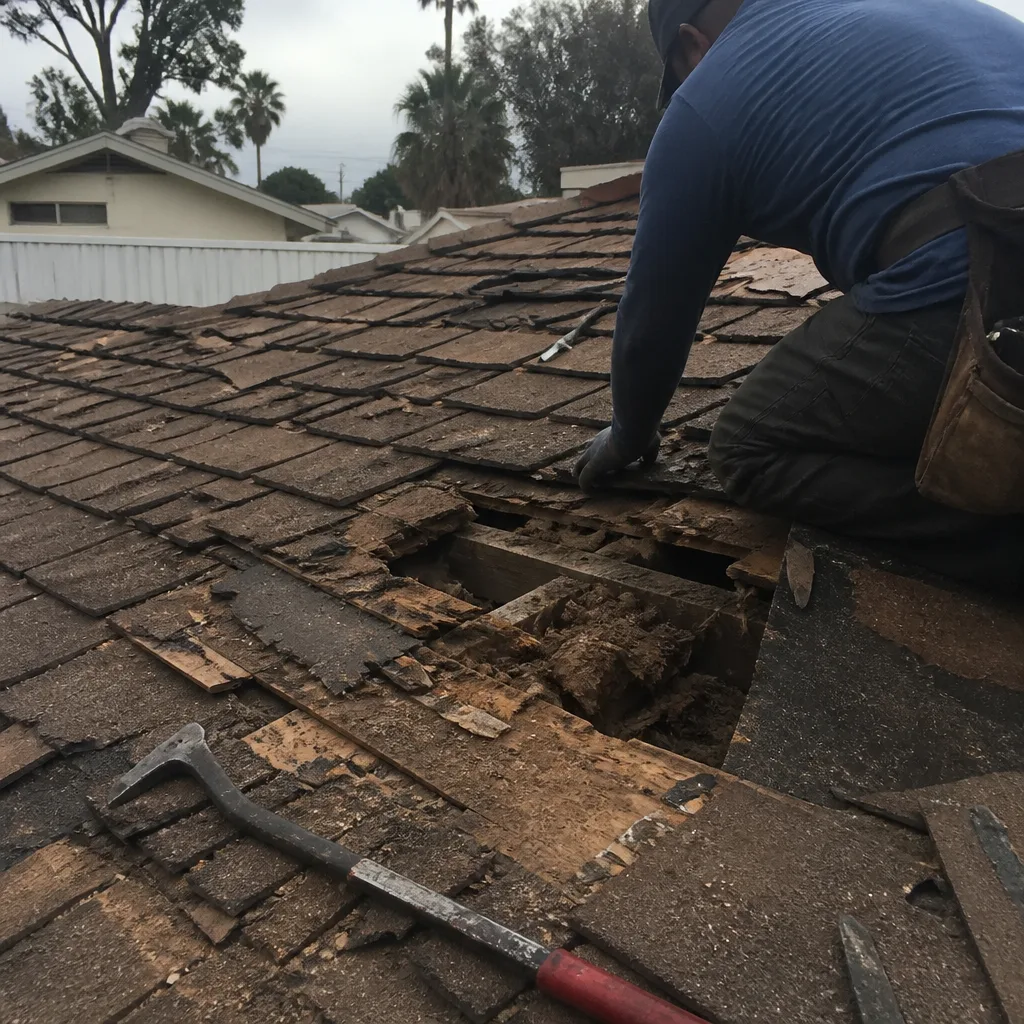
Roof decking, the plywood or OSB layer under your shingles, does not last forever. In Rialto, where summer heat cycles bake roof decks and winter rains (when they come) expose leaks, deck rot is common. A quote that says “includes up to 2 sheets of deck replacement” is telling you that sheet three, four, five, and six will be billed separately at $85 to $120 per sheet. On a 1,800-square-foot roof, that’s 22 sheets. If even a third need replacing, you’re looking at $700 to $900 in surprise costs. A proper quote should specify a sheet-allowance or state the per-sheet rate up front.
Exclusion #3: Disposal and Dump Fees
Tearing off an old roof produces 3 to 5 tons of debris. The dump fee at Inland Empire waste facilities runs $60 to $90 per ton, and the labor to load and haul adds $300 to $600. Most quotes include “disposal” as a line item, but some don’t, and you’ll find out when the dumpster shows up and the charge is added to your final invoice. Always confirm: does “tear-off” include hauling everything away?
The Rule for Comparing Bids
- Line up every quote side by side.
- Check each for: permit fees, deck replacement terms, disposal, underlayment, flashing, and ventilation.
- Eliminate any quote missing more than one of these line items.
- Compare the remaining quotes on material line and labor line separately.
Most homeowners in Rialto never get past the total at the bottom. The homeowners who compare line items are the ones who don’t get surprised.
Roof Pitch, Access, and Existing Layers: The Three Price Multipliers
Two Rialto homes with identical square footage can have roof replacement quotes that differ by 30% or more. The reason comes down to three factors that have nothing to do with square footage.
Roof Pitch
Most Rialto homes built in the 1970s through the 1990s have a 4:12 or 5:12 pitch, which is comfortably walkable. But a growing number of newer homes in the northern sections of the city and custom builds in the foothill areas north of the 210 have steeper pitches, 8:12 and up. Once the pitch crosses 7:12, installers need harness rigging, roof jacks, and additional safety equipment. Labor increases 15% to 25% at that threshold, and the crew moves slower. It’s not a surcharge; it’s the cost of not having someone slide off your roof.
Access Difficulty
Rialto lots vary: older neighborhoods in the city’s core have narrow driveways and tight side yards, while newer subdivisions have broader frontages. If the crew can’t park a truck close to the house, they’re hand-carrying materials 40 or 50 feet, and that’s time. A second-story roof with no direct ladder access, or a roof with a backyard that’s been heavily landscaped or pool-fenced, adds complexity. Quotes should reflect this. If a contractor gives you a ballpark price over the phone without asking about access, the quote is placeholder.
Existing Layers
Here’s a Rialto-specific pattern we see consistently: homes that have been sold in the last 15 years often carry two layers of shingles, because a previous owner or flipper overlaid the original roof instead of tearing off. When that second layer reaches end of life, both layers must come off before the new roof goes on. Tear-off of a single layer on a typical Rialto home takes 4 to 6 hours; tearing off two layers takes 8 to 12 and generates double the debris. Most quotes reflect single-layer tear-off by default, which means the two-layer home gets a change order on day one.
The fix is straightforward: ask any contractor who quotes your roof whether they’ve confirmed the layer count. A quick visual inspection along the eave edge takes 30 seconds and tells us the answer.
What a Warranty Upgrade Actually Costs and What It Protects
Roofing warranties come in tiers, and the gap between a basic manufacturer warranty and an enhanced system warranty is real money. Here’s what the tiers look like in 2026 on a typical Rialto roof.
| Warranty Tier | What It Covers | Typical Cost |
|---|---|---|
| Standard Manufacturer Warranty | Material defects only, prorated after year 10. Labor not covered after year 2. | $0 (included) |
| Manufacturer System Warranty | Materials plus full system (underlayment, flashing, ventilation) 15 to 20 years, includes tear-off labor. | $400 to $900 |
| Enhanced Workmanship + Manufacturer | Contractor workmanship 10 to 15 years plus material coverage. Covers installation errors. | $600 to $1,200 |
On a $14,000 roof, a $900 warranty upgrade covers the risk that your installer makes a mistake that doesn’t show up for three years. That’s cheap insurance, but only if the warranty is backed by a company that’s still around in three years. The manufacturer-side warranty is only as good as the company’s relationship with the manufacturer. Contractors who install across multiple brands, the way we do with GAF, CertainTeed, Tamko, and Boral, can offer warranties that match your chosen product line. A contractor locked into one brand can only offer that brand’s warranty, even if it’s not the right shingle for your roof.
In Rialto, the decision usually comes down to this: if you’re staying in the home five years or less, standard warranty is fine. If this is your long-term house, pay for the system warranty. The math favors it.
Rialto-Specific Cost Factors: Code, Climate, and Housing Stock
Rialto isn’t just any Inland Empire city when it comes to roofing, and the differences show up in quote prices in ways homeowners don’t expect.
Climate and UV Exposure
Rialto sits in the high desert transition zone, which means hotter summers and colder winter nights than cities closer to the coast. Roof surfaces in Rialto routinely hit 140 to 160 degrees in July and August, which accelerates granule loss on asphalt shingles and makes ventilation critical. Underlayment choice matters here: a synthetic underlayment rated for high-temperature exposure holds up better than felt, and the material cost difference is about $10 to $15 per square. That’s $180 to $270 on an average roof, and it’s one of the most cost-effective upgrades you can make.
The Wind Factor
Santa Ana wind events, especially those that funnel through the Cajon Pass, hit Rialto with gusts that can exceed 70 mph. Building code in Rialto and the broader San Bernardino County area requires shingles rated for the wind zone. If your quote doesn’t specify the wind rating of the shingle, it probably doesn’t meet code.
Housing Stock by Era
Rialto’s housing stock splits into three eras, and each has its own cost profile:
- 1950s to 1960s Rancho West and core neighborhoods: 2×4 rafter framing, often original 1×6 skip sheathing instead of solid plywood. Skip sheathing must be overlaid with plywood before modern shingles go on, which adds $1,500 to $2,500. We see this regularly in Roof Repair in San Bernardino jobs too, where older homes present the same condition.
- 1970s to 1990s tract homes: solid OSB or plywood decking, 4:12 pitch, straightforward replacements. This is the Rialto roofing sweet spot.
- 2000s and newer: larger roofs, steeper pitches, more hips and valleys, and more architectural variety. Labor runs higher on these homes because of complexity, even though the materials are similar.
Code Requirements on Re-Roofs
Rialto follows California Building Code with San Bernardino County amendments, which means reroofs must meet current ventilation requirements. Homes built before modern ventilation codes often need additional intake or exhaust ventilation added during a reroof. Ridge vents, eave vents, and in some cases powered attic ventilation add $400 to $1,200. Again, this should be a line item, not a surprise.
Repair vs. Replacement Cost Logic in 2026
Most Rialto homeowners who call us for an inspection start with the same question: can you just fix it? Sometimes the answer is yes. Sometimes the repair calculus doesn’t make financial sense, and here’s how we walk through it.
When Repair Makes Sense
- The roof has 8 or more years of expected life remaining.
- Damage is localized: one section of flashing failed, one valley channel wore through, a small area of shingles blew off.
- The decking underneath is still sound.
- You’re planning to sell within 3 to 5 years and need a roof that will pass inspection, not a roof that will last 30 years.
A targeted repair in Rialto typically runs $350 to $1,200 for common issues like flashing replacement, shingle repair, or small leak remediation. A more involved repair, like rebuilding a chimney cricket or replacing a section of roof deck, runs $1,200 to $3,000.
When Replacement Makes More Sense
- The roof is 20 years old or older and has reached the end of its serviceable life.
- You’ve had two or more repairs in the last 18 months.
- Granules are collecting in gutters, a sign the shingle surface is failing.
- Decking has water damage in multiple locations.
The break-even logic: if your roof has 4 years of life left and a replacement costs $14,000, each additional year costs about $1,600 to $1,800 (averaging replacement cost across the full 25-30 year lifespan). Repairs that cost $3,000 now and buy you 3 years are fine. Repairs that cost $3,000 and buy you one year are a bad trade. A structured Roof Inspection in San Bernardino or Rialto should give you the data to make this call with confidence: knowing exactly what’s wrong, what it costs to fix, and how long the fix will hold.
Common Mistakes to Avoid
- Comparing quotes by total price without reading line items. Two $14,000 quotes can represent completely different scopes of work. Read every line, ask what’s missing, and compare on substance.
- Assuming the existing deck is fine. Rialto summer heat and occasional heavy rain cycles take a toll. If your quote doesn’t address deck condition, you’re carrying an open-ended cost risk.
- Pricing the job by square footage of the house instead of the roof. Roof area is always larger than floor area, sometimes by 40% or more on complex rooflines. A 1,800-square-foot house often has a 2,200- to 2,400-square-foot roof.
- Skipping the permit. Rialto code enforcement is active. An unpermitted roof replacement shows up in the title record when you try to sell, and the buyer’s lender may require correction before closing.
- Choosing shingles based on color alone. The shingle’s wind rating, granule density, and warranty structure matter more than the color chip. If you love a color that’s only available in a low-tier product, you’re buying aesthetics over longevity.
- Accepting a quote without a physical inspection. Aerial estimates and online quote tools miss deck conditions, layer counts, and access issues. In Rialto, where housing stock varies block by block, there’s no substitute for eyes on the roof.
- Deferring a small repair until the rainy season. The first real rain often turns a $600 flashing repair into a $2,400 interior drywall repair plus the original roof work. Rialto’s rain is infrequent but when it comes, it exposes every deferred issue at once.
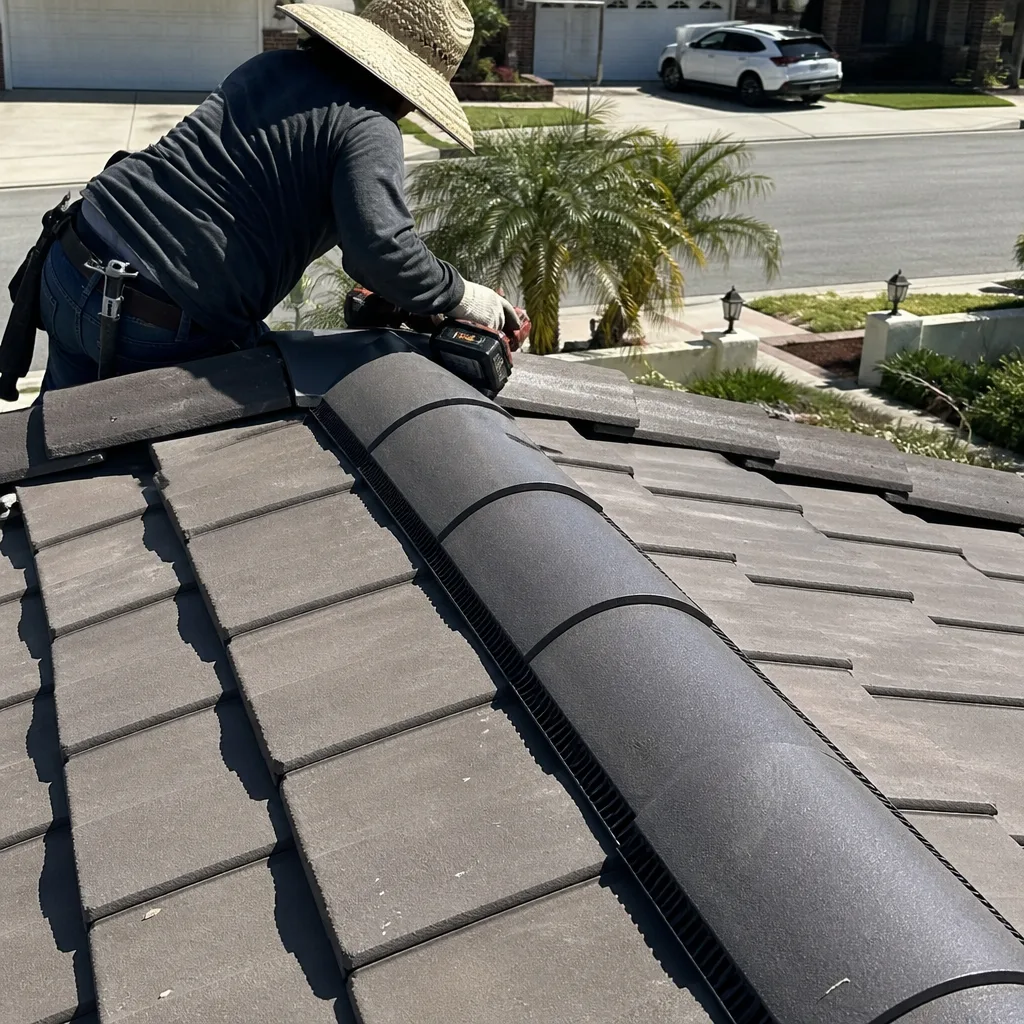
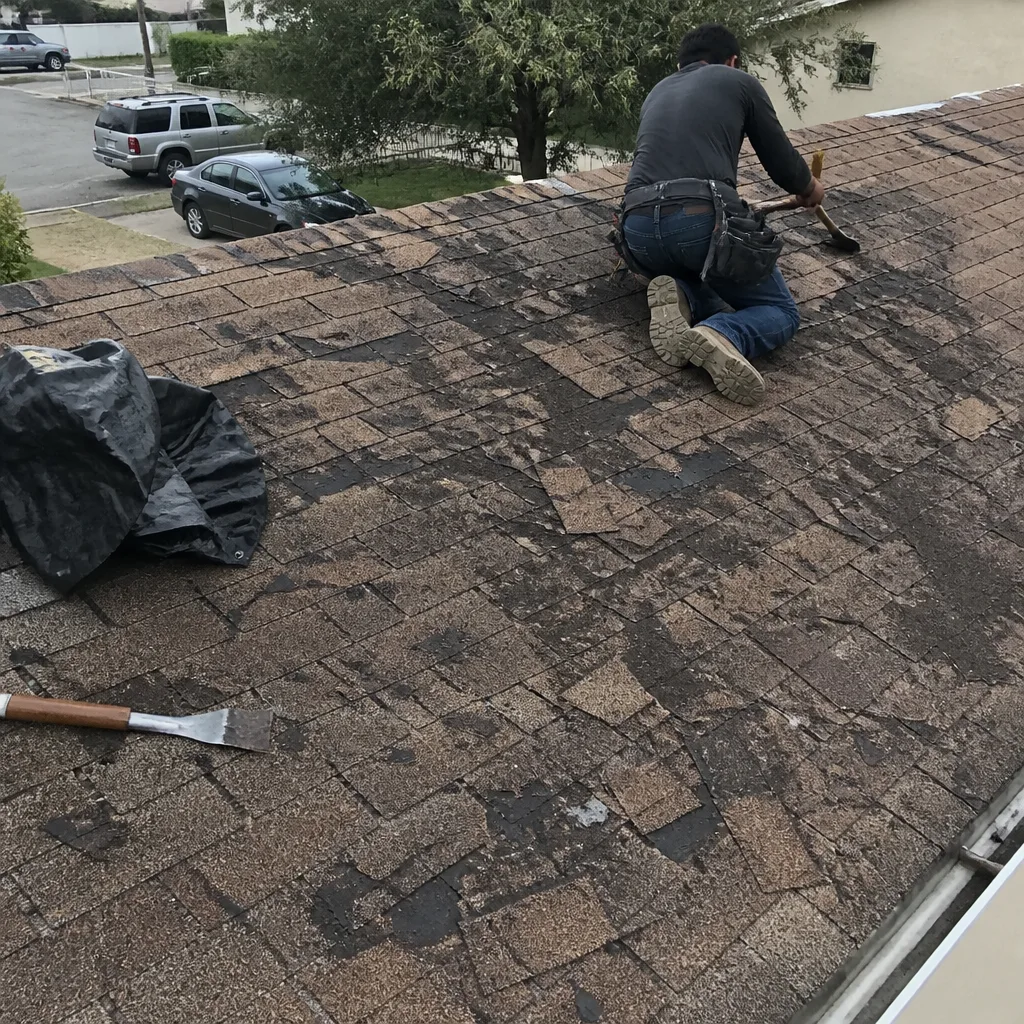
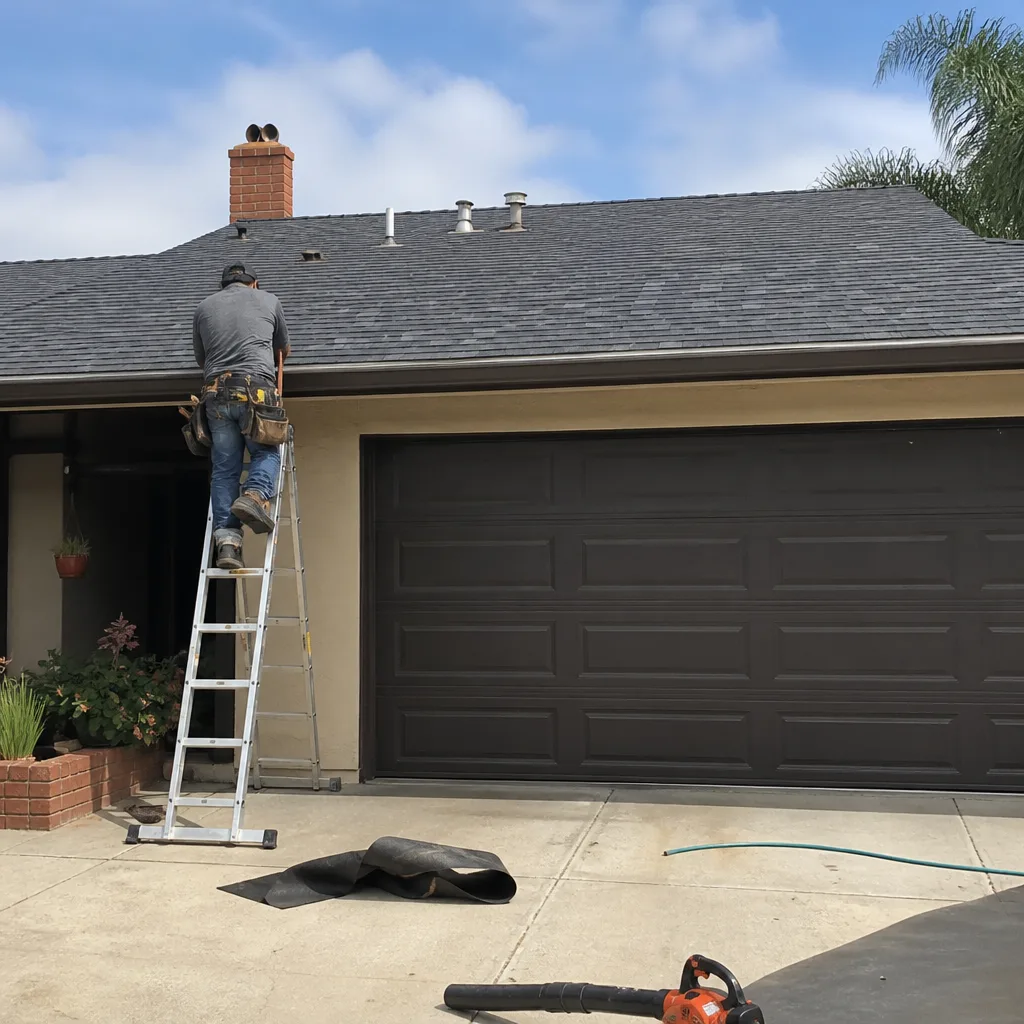
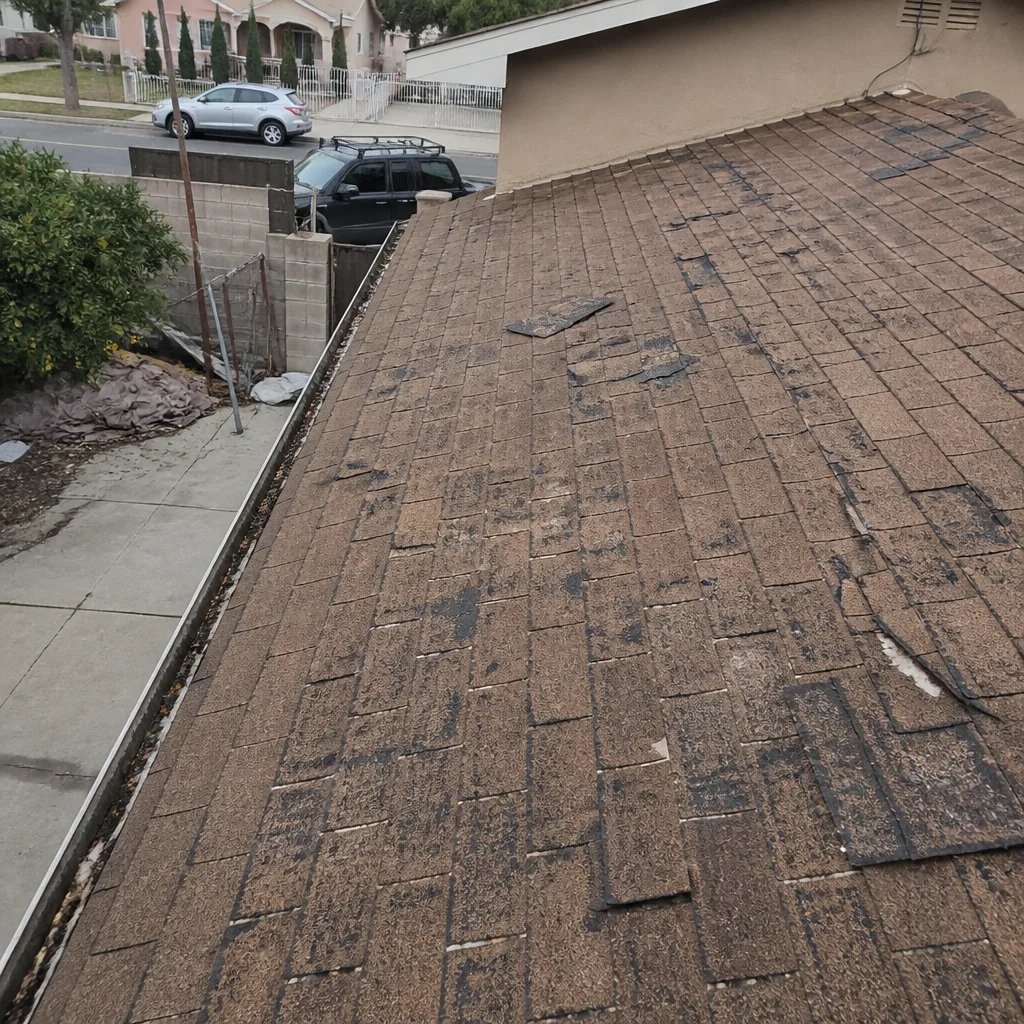
See the difference
 Before
 After
 Before
 After
 Before
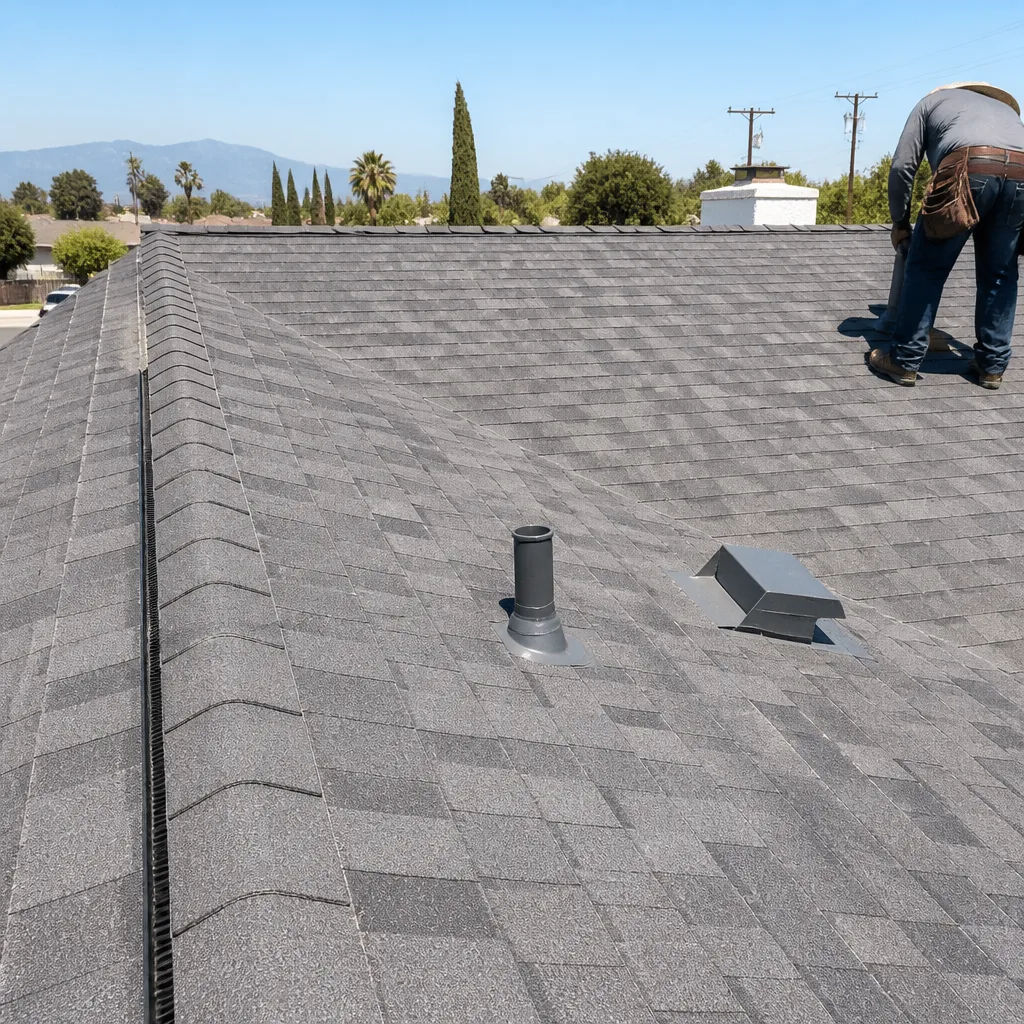 After
When to Call a Professional
You need a professional roofer when you see granule accumulation in your gutters, shingles curling or lifting at the edges, water stains on ceilings or attic rafters, daylight visible through the attic roof deck, or flashing that’s pulling away from chimneys and walls. For a complete checklist, see our Roofing Warning Signs: A Rialto Homeowner’s Reference Guide. You also need one when your roof is approaching 20 years old and you want to know what you’re dealing with before it fails. Roof work involves height, heat exposure, and structural weight loads that make it genuinely dangerous for DIY attempts; we recommend leaving it to trained crews with proper safety equipment. Ridgeway Roof Repair offers free estimates in Rialto, call (877) 588-7942 to schedule an inspection, and we’ll walk the roof with you. We only do roofing, so the person who shows up to look at your roof is the person who fixes it or replaces it, not someone passing your job to a third party.
Frequently Asked Questions
A full roof replacement on a typical Rialto home costs $9,800 to $22,000, with most architectural shingle replacements landing between $11,500 and $16,500. The final number depends on roof size, pitch, deck condition, layer count, and material grade. Call (877) 588-7942 for an exact quote; estimates are free.
Most of the variation comes from what’s included in the quote: permits, deck replacement allowances, disposal fees, and shingle quality. A quote that looks $4,000 cheaper often excludes one or more of these line items, and the cost shows up later as a change order.
Most single-family roof replacements in Rialto take 2 to 4 days from tear-off to final inspection. Tile roofs and steep-pitch homes run longer, sometimes 5 to 8 days. Weather delays are possible during winter rain events but rare in Rialto’s dry season.
Yes. Rialto requires a building permit for roof replacement and for repairs above a certain square footage. The permit process includes city inspections at specific stages of the work. A contractor who handles permits for you is doing standard, compliant work.
Technically possible in some cases, but Rialto’s heat cycles and code requirements make it a poor choice for most homes. A second layer traps heat, adds weight, and shortens the life of the new shingles. Full tear-off is the standard recommendation, and many manufacturers won’t warranty shingles installed over existing layers.
An inspection is a structured assessment of your roof’s condition: what’s failing, what’s sound, and what needs attention now versus later. An estimate is a price for a specific scope of work. We treat Roof Inspection in San Bernardino and Rialto as a standalone service that produces honest findings, not a sales pitch wearing an inspection costume.
The Bottom Line
A roof is the only structural layer between your family and the Inland Empire sun, the Santa Ana winds, and whatever rain Rialto gets in a given year. When severe weather hits, having a plan matters—our Roofing Emergency Preparedness Guide for Rialto Homes can help you prepare. In 2026, the range of reasonable prices for a roof replacement in this city is wide, but the range of fair prices is not. Fair is a quote that specifies the shingle line, includes permit and disposal costs, addresses deck condition honestly, and is backed by a contractor whose only business is roofing. Cheap is a quote that looks great until the change orders start. Read the line items, ask the questions, and if you’re not sure what you’re looking at, call (877) 588-7942 and we’ll help you understand what you’re dealing with before you commit.
Written by the team at Ridgeway Roof Repair, serving Rialto since 2018.